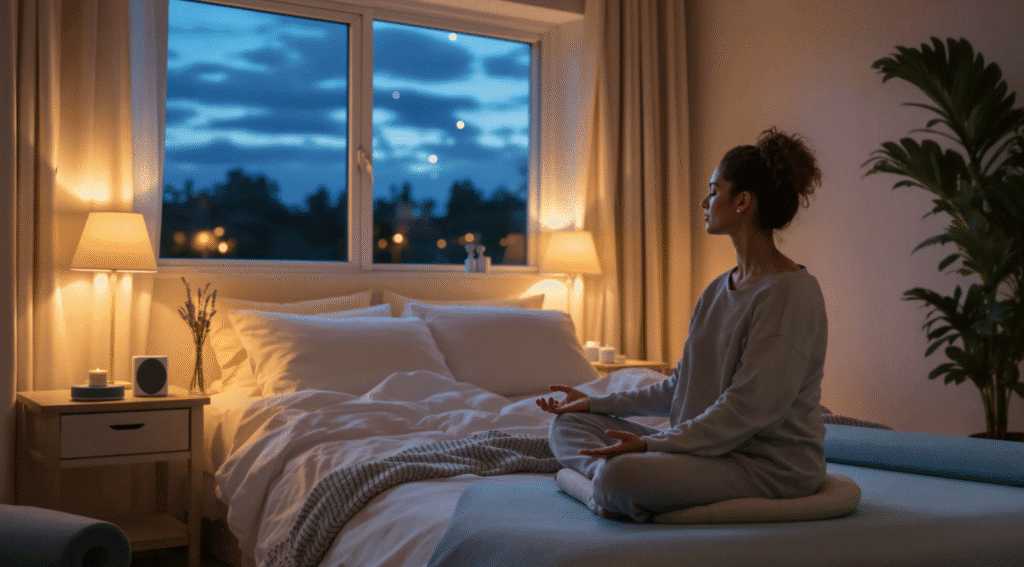
If you’ve ever stared at the ceiling at 2 a.m. wondering why your brain won’t shut off, you’re not alone. Between late-night emails, Netflix, and endless scrolling, your sleep doesn’t really stand a chance.
That’s where red light therapy for sleep has started to get a lot of attention. You’ve probably seen the glowing red panels on social media and wondered: Is this just another wellness gimmick, or is there actually some science behind it?
You’re going to see both sides in this text: what we know, what’s promising, and where you should still be cautious. By the end, you’ll understand how red light interacts with your body, how to use it as part of a realistic nighttime routine, and how to set up your sleep environment so light is finally working with you instead of against you.
Why Light Matters So Much For Your Sleep
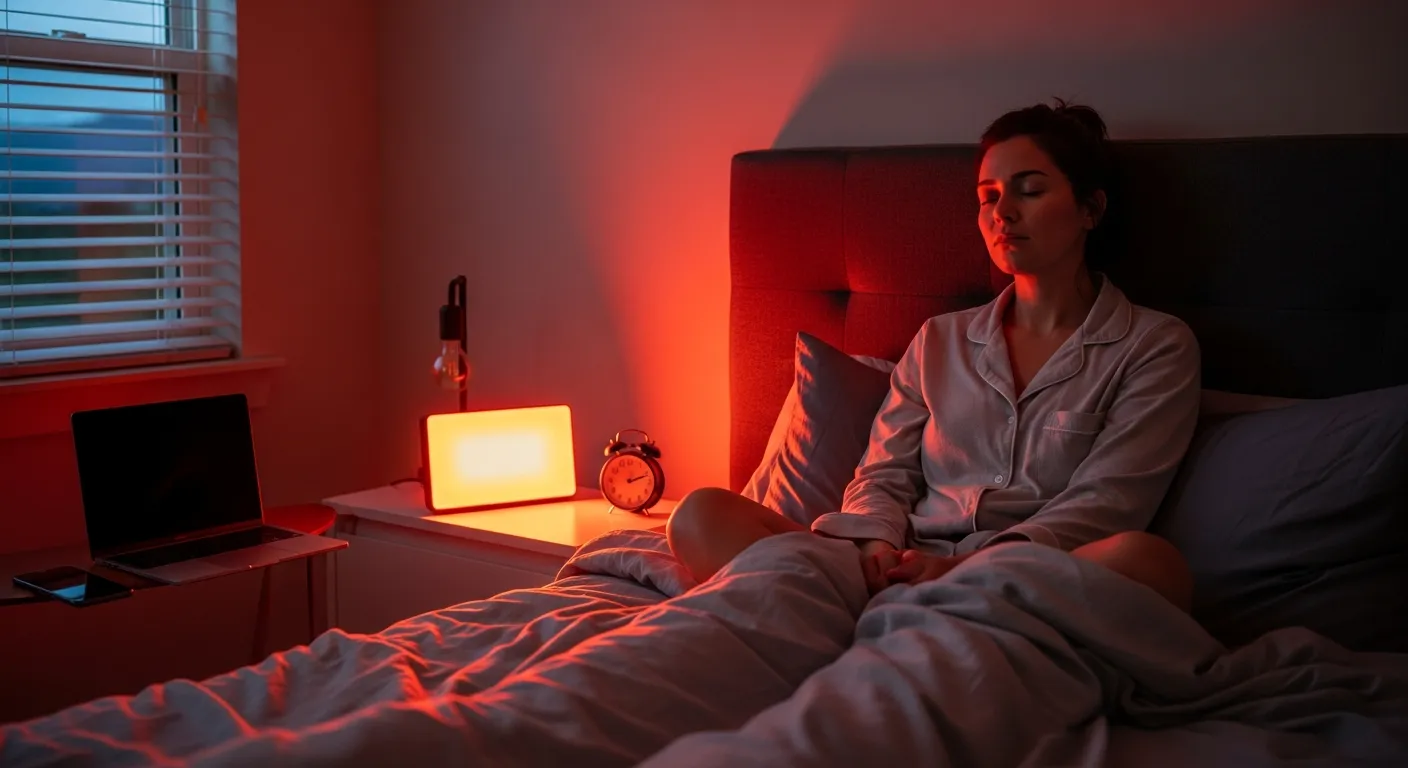
You can’t really talk about red light therapy for sleep without understanding light in general.
Your body runs on a 24-hour clock called your circadian rhythm. This internal clock sits in a tiny area of your brain called the suprachiasmatic nucleus (SCN). The SCN pays close attention to light coming in through your eyes and uses it to decide when you should be awake and when you should be sleepy.
Here’s the key piece:
- Blue light (think: daylight, LED screens) tells your brain: “It’s daytime, stay alert.”
- Blue light suppresses melatonin, your main sleep hormone.
- Darkness and warmer, redder light signal: “Nighttime, it’s safe to wind down.”
Modern life basically blasts your brain with daytime signals 24/7. Overhead LEDs, phones, TVs, laptops, they all lean heavily toward blue wavelengths. That repeated exposure in the evening can:
- Delay melatonin release
- Make it harder to fall asleep
- Lead to lighter, more fragmented sleep
Red light sits at the opposite end of the visible spectrum. It doesn’t trigger your circadian system as strongly and seems to disrupt melatonin far less than blue or white light. That’s why researchers started asking: if blue light hurts sleep, could red light, used carefully, help support it? That’s where red light therapy comes in.
What Red Light Therapy Actually Is (In Simple Terms)
Let’s strip away the hype.
Red light therapy (sometimes called low-level light therapy or photobiomodulation) is basically this:
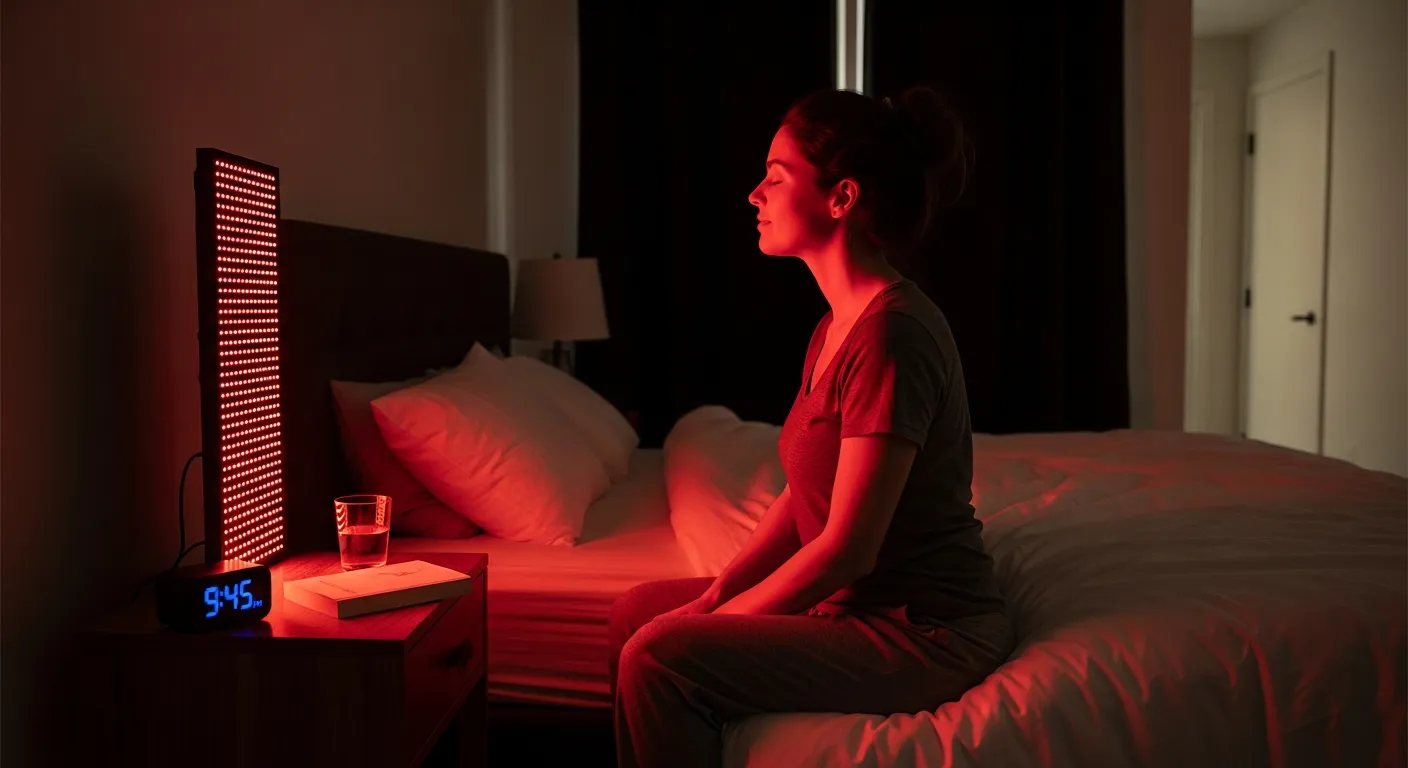
- You sit or stand near a panel or lamp.
- The device shines low-level red light, usually in the 630–670 nanometer range.
- The light penetrates your skin and is absorbed by your cells.
Unlike tanning beds or sunlight:
- There’s no UV (so no tanning or sunburn risk from the light itself).
- The intensity is relatively low compared to bright white lamps.
At a cellular level, red light seems to help mitochondria, your cells’ “power plants”, make more energy (ATP). That’s why it first became popular for things like skin health, wound healing, and recovery.
So where does sleep come in? When your cells function better, especially in areas tied to hormone production and brain health, you may:
- Regulate melatonin more efficiently
- Recover better from exercise or stress
- Feel calmer and more ready for sleep in the evening
You’re not “knocking yourself out“ with red light. You’re more like nudging your biology back toward its natural rhythm.
How Red Light Therapy May Improve Sleep Quality
Here’s where the research starts to get interesting.
What studies are finding
A small but notable study on female athletes tested red light therapy for sleep and recovery. Participants used red light for 30 minutes every night over two weeks. Results showed:
- Better scores on the Pittsburgh Sleep Quality Index (meaning their sleep felt better)
- Increased melatonin levels
- Improved endurance performance
That suggests red light at night may support:
- Deeper, more restorative sleep
- Better overnight recovery
- More stable energy the next day
More recent research (including a 2023 trial) found that people exposed to red light in the evening:
- Fell asleep faster compared to white light
- Reported better overall sleep quality
- Woke up with less sleep inertia (that heavy groggy feeling)
Crucially, red light seems to boost or support melatonin rather than suppress it, which is a big deal if you struggle to wind down.
Who it seems to help most
So far, red light therapy for sleep looks most promising for:
- Healthy adults with mild sleep issues (difficulty winding down, light sleep)
- Athletes or active people who need help with recovery and sleep quality
- People already doing the basics (dark room, less screen time) but wanting an extra edge
For people with severe insomnia, results are more mixed. In some cases, bright red light late at night may actually fragment REM sleep or increase night awakenings. That’s one reason it’s important not to treat red light like a magic fix.
What you can realistically expect
If you use red light therapy correctly, you may notice over a few weeks:
- Falling asleep a bit faster
- Waking up fewer times
- Feeling more rested and clear-headed in the morning
It’s a gentle nudge, not a sedative. Think of it as one supportive tool in a bigger sleep toolkit, not a replacement for good habits like consistent bedtimes and a calming wind-down routine.
Choosing A Red Light Device For Better Sleep
If you’re considering red light therapy for sleep, the device you choose actually matters. A random red “mood lamp” isn’t the same as a therapeutic light.
Here’s what to look for:
1. Wavelength
Aim for devices in the 630–670 nm range. This is the sweet spot often used in studies for both skin and sleep benefits.
2. Intensity (brightness)
For sleep, you want low to moderate intensity, enough to get benefits but not so bright that it feels like a spotlight.
- Research often uses around 4–75 lux of red light.
- Higher intensity may be counterproductive at night and could bother your eyes or brain.
Most good brands provide an estimated lux level at a given distance. If not, that’s a small red flag.
3. Coverage area
Ask yourself how you’ll actually use it:
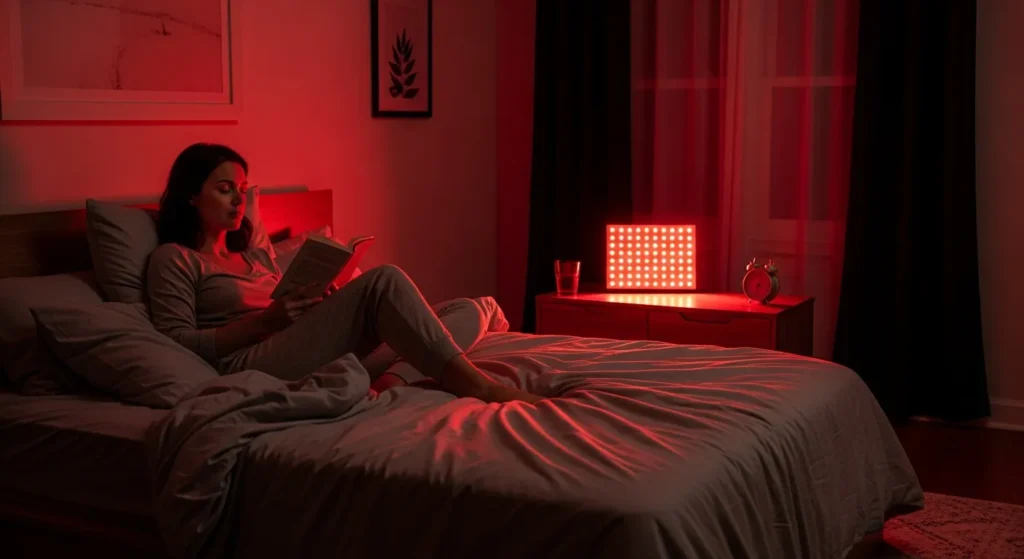
- Small lamp or panel: good for targeted use (face, upper body) while you relax or read.
- Larger panel: good for more full-body exposure and recovery benefits.
For sleep, you don’t need head-to-toe coverage. A modest panel you can place a few feet away is usually enough.
4. Eye safety features
Look for:
- Clear safety guidelines from the manufacturer
- Recommendations on distance and session length
- Option to use protective eyewear (or at least guidance about not staring directly into the light)
If you have any history of eye disease or are very light-sensitive, talk with your eye doctor before buying anything.
How To Use Red Light Therapy In Your Nighttime Routine
Once you have a device, the magic is in how you use it.
Here’s a simple, research-aligned way to work red light therapy for sleep into your evenings:
Timing
- Use it 1–2 hours before bed.
- A common protocol is 30 minutes of exposure, done once per day.
This gives your body a gentle cue that it’s transitioning into nighttime without blasting it with stimulating white or blue light.
Setup
- Dim or turn off overhead lights.
- Use only the red light (or pair it with other very dim, warm lamps).
- Sit or lie a comfortable distance away, usually 1–3 feet, depending on brightness.
You can use this time to:
- Read a physical book
- Stretch or do light mobility work
- Journal or plan your next day
- Practice a short breathing or mindfulness exercise
Consistency over perfection
Red light therapy works best as a routine, not a one-time experiment.
Try this for 2–4 weeks and pay attention to:
- How long it takes you to fall asleep
- How often you wake up at night
- How rested you feel in the morning
If you notice more agitation, weird dreams, or feeling wired at night, shorten your sessions, move them earlier in the evening, or take a break.
Who Should Be Cautious, Risks, And Safety Tips
Overall, red light therapy is considered low-risk when used correctly. But it’s not automatically safe for everyone in every situation.
When to be cautious
You should talk to your doctor first, or skip red light, if you:
- Have severe insomnia or complex sleep disorders
- Have bipolar disorder or mood conditions that can be affected by light
- Have a history of eye conditions, retinal issues, or recent eye surgery
- Take photosensitizing medications (some antibiotics, acne meds, or herbal supplements)
- Are pregnant and haven’t discussed it with your provider
Some insomnia patients in research settings experienced:
- More fragmented REM sleep
- Increased awakenings
- Mood or alertness changes
That doesn’t mean this will happen to you, but it’s a reason to go slow.
Practical safety tips
- Don’t stare directly into the light, especially at close range.
- Start with shorter sessions (10–15 minutes) and build up if you feel good.
- Keep the light at a comfortable distance, no need to be right on top of it.
- Stop or adjust if you notice headaches, eye strain, irritability, or feeling oddly “amped up” at night.
“More” isn’t always better. You’re aiming for the minimum effective dose that helps your sleep, not the brightest or longest session possible.
Building A Sleep-Friendly Light Environment Beyond Red Light
Even the best red light device can’t fix a totally chaotic light environment. The good news: a few changes can stack the odds in your favor.
1. Shift your evening lighting
After sunset, aim for:
- Dimmer lights overall
- Warm, red or amber tones instead of bright white
You can:
- Swap a few bulbs in your main evening spaces for red or amber LEDs
- Use lamps instead of overhead lighting
- Turn off the “big lights” an hour before bed and rely on softer light
2. Tame screens (without quitting your life)
You don’t have to go off the grid, but you can:
- Use blue light filters or night modes on your phone and computer
- Lower screen brightness after dark
- Set a personal “no scrolling in bed“ rule
Even better: give yourself a 30–60 minute screen-free buffer before sleep. That’s a perfect window to combine low lighting + red light therapy.
3. Make your bedroom dark
Research consistently shows that darker sleep environments lead to:
- Longer total sleep time
- Better sleep efficiency
- Fewer awakenings
Simple upgrades:
- Blackout curtains or an eye mask
- Cover or tape over bright LEDs on chargers, clocks, or devices
- Keep your phone face-down or out of the bedroom if possible
Think of red light therapy as one tool in a bigger strategy: you’re designing a light environment that finally matches what your biology expects at night.