Scars tell stories – surgeries we got through, breakouts we survived, babies we brought into the world. But some scars stick around in ways that don’t feel empowering. They’re tight, raised, discolored, or just the first thing we see in the mirror.
In the last few years, “red light therapy for scars“ has become one of the most searched skin-healing topics online. Wellness centers, dermatologist offices, and home devices all promise smoother, softer, less-noticeable scars using gentle red and near-infrared light.
So what actually happens when we shine red light on our skin? Can it really fade scars, or is it just clever marketing with a red glow?
In this guide, we’ll walk through how red light therapy works, what types of scars it may help, what the research says, and how to use it safely and realistically in a busy life.
How Red Light Therapy Works On Skin And Scars
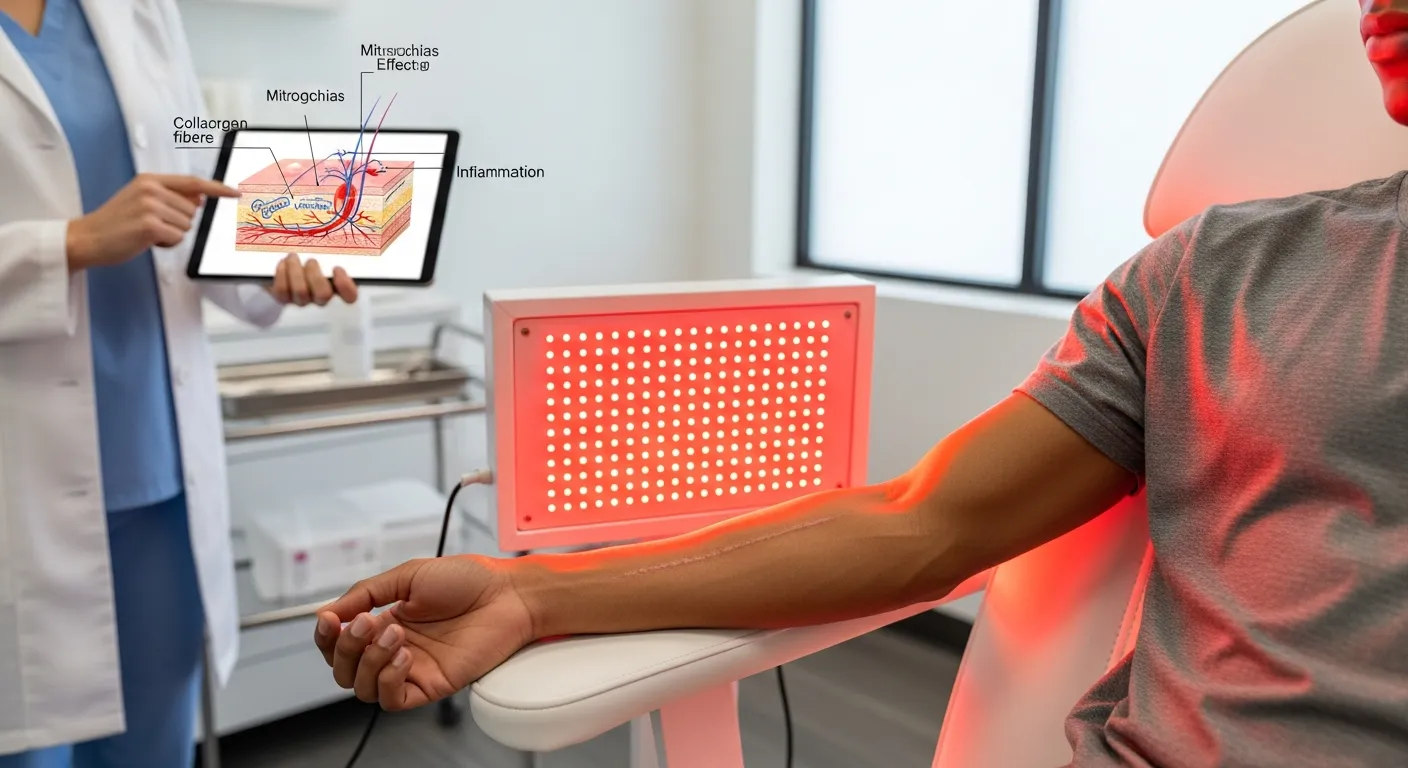
Red light therapy (often called low-level light therapy or photobiomodulation) uses specific wavelengths of red and near-infrared light to nudge our cells into healing mode. It’s non-invasive, doesn’t burn the skin, and works more like a gentle “signal” than a laser.
The Basics: What Counts As Red And Near-Infrared Light?
When we talk about red light therapy for scars, we’re usually talking about two wavelength ranges:
- Red light: roughly 630–660 nanometers (nm)
This is visible red light that mainly affects the surface and mid-layers of the skin. It targets skin cells that make collagen and elastin.
- Near-infrared (NIR) light: around 800–850 nm (often ~830 nm)
This is invisible to our eyes but penetrates deeper into tissue, up to a few centimeters. It can affect deeper layers of skin, blood vessels, and even underlying muscles.
Most clinical devices and well-designed home panels use a blend of red (e.g., 633 nm) and near-infrared (e.g., 830 nm) light. Red supports surface texture and color: NIR supports deeper healing and circulation.
Biological Effects: Collagen, Circulation, And Inflammation
Red and near-infrared light don’t work by “burning off” scars. Instead, they tweak how our cells function. When this light hits the skin:
- Mitochondria get a boost.
Mitochondria are our cells’ power plants. Red light helps them produce more ATP (cellular energy). With more energy, cells can repair damage and build new tissue more efficiently.
- Collagen and elastin production increases.
Fibroblasts, the cells that make collagen, respond strongly to red light. Studies show that red light can stimulate fibroblasts, which may lead to smoother, more flexible scar tissue over time.
- Blood flow improves.
Red light encourages the release of nitric oxide, a molecule that helps widen blood vessels. That means better circulation, more oxygen, and more nutrients delivered to healing skin.
- Inflammation tends to go down.
Chronic, low-grade inflammation is a big reason scars stay red, sore, or raised. Red light therapy has been shown to reduce inflammatory markers and calm irritated tissue in both wound and scar studies.
Taken together, these effects can help scars become less thick, less red, and more flexible, especially when we’re consistent over weeks to months.
Types Of Scars Red Light Therapy May Help
Not all scars behave the same, and they don’t all respond the same way to red light therapy. Understanding your scar type helps us set realistic expectations.
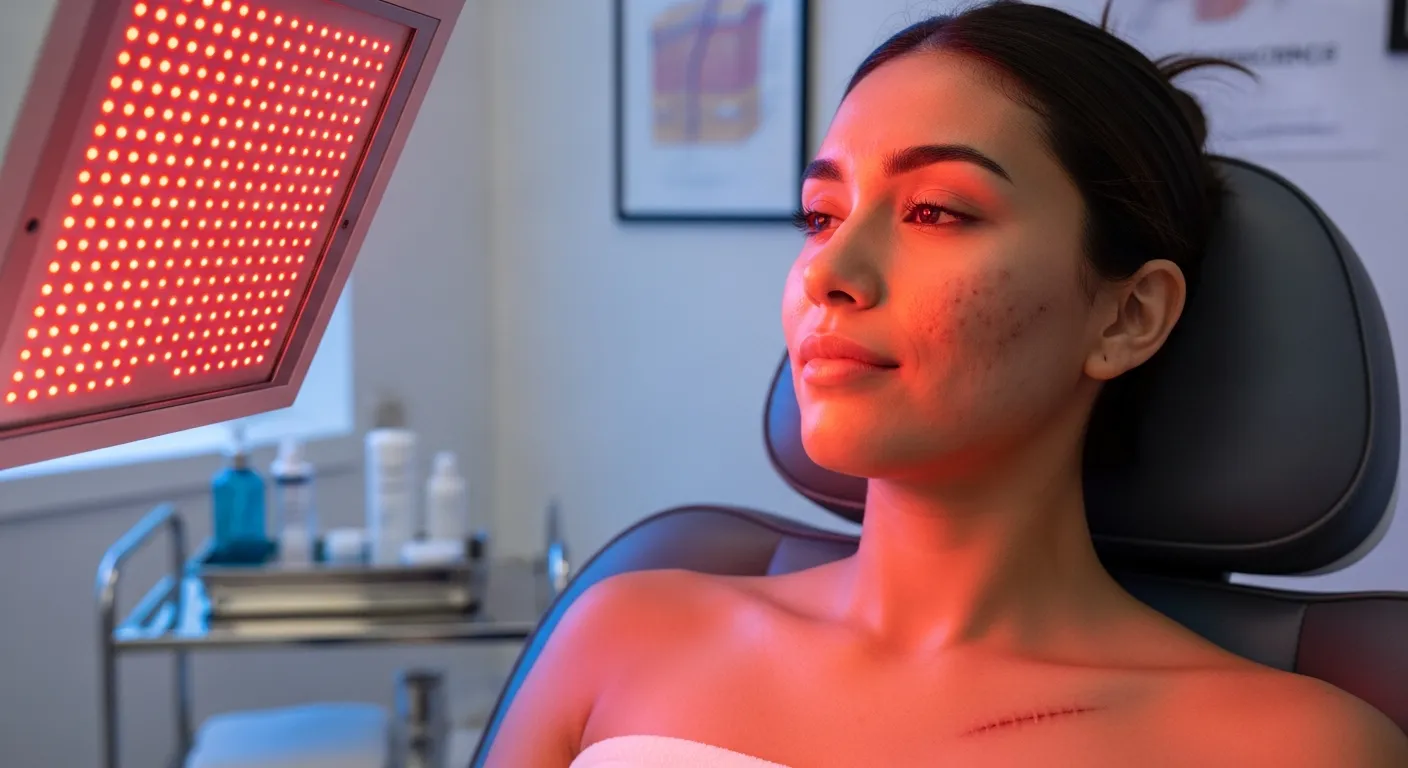
Acne Scars (PIE vs. PIH vs. Textural Scars)
With acne, we usually deal with three main types of marks:
- Post-inflammatory erythema (PIE): pink or red marks after a pimple
- Post-inflammatory hyperpigmentation (PIH): brown or darker spots
- Textural scars: shallow divots (atrophic scars), icepick scars, or uneven skin
Early research suggests red light therapy can:
- Calm redness (PIE) by reducing inflammation and improving blood vessel function
- Support fading of PIH when combined with sun protection and gentle skincare
- Slightly improve texture over time by boosting collagen, especially for mild to moderate textural scarring
For deep acne scars, red light alone is usually not enough. It may work best as a supportive therapy alongside microneedling, chemical peels, or laser treatments.
Surgical And Injury Scars
Surgical scars (like C-section scars, joint surgery scars, or mole removals) and injury scars can respond quite well if we introduce red light early in the healing process, once the wound is closed and our doctor says it’s safe.
Studies on postoperative patients show that low-level red light can help wounds close faster, reduce swelling, and potentially minimize how thick and visible the final scar becomes. For older scars, red light may still improve flexibility, itchiness, and color, but changes in thickness will usually be more modest.
Hypertrophic And Keloid Scars
Hypertrophic and keloid scars are those raised, firm scars that can grow beyond the boundary of the original wound (especially with keloids). They’re stubborn and often have a strong genetic component.
Some low-level light therapy studies show improvement in redness, itch, and overall appearance of hypertrophic scars and keloids. But:
- Results tend to be variable from person to person.
- Red light therapy is usually used alongside other treatments like silicone sheets, steroid injections, or pressure therapy.
In other words, for keloids and hypertrophic scars, we should see red light as a helper, not a stand-alone fix.
Stretch Marks And Other Skin Texture Changes
Stretch marks (striae) and other texture issues, like loose skin or fine lines around scars, can also benefit from improved collagen and circulation.
Red light therapy may help:
- Soften the look of newer, reddish stretch marks
- Improve overall tone and texture of the surrounding skin
- Support skin firmness when combined with strength training, good nutrition, and hydration
Older, silvery stretch marks are harder to change, but some people still notice better smoothness and color blending over time.
What The Research Shows So Far
We’re seeing more and more clinical studies on red light therapy for scars and wound healing, but the science is still evolving.
Clinical Studies On Wound Healing And Scar Formation
Several controlled trials have found that LED-based red light therapy can improve postoperative healing and help prevent excessive scarring when used soon after surgery (with medical guidance). Low-level light therapy has also shown benefits for burn wounds, wrinkle reduction, and hypertrophic scars, mainly by reducing inflammation and stimulating tissue repair.
One ongoing clinical trial (for example, a study registered as NCT03795116) is specifically looking at how red and near-infrared light may optimize healing after surgery and reduce visible scar formation. Early data from similar trials suggest:
- Faster wound closure
- Less redness and swelling
- Better cosmetic outcomes compared to control groups
Evidence For Acne And Post-Inflammatory Marks
For acne-related scars and marks, research shows that red and near-infrared light can reduce inflammation in active acne, which indirectly supports better healing and less severe scarring.
For existing acne scars and post-inflammatory redness:
- Some small studies and clinical experience report improved redness and smoother texture after a series of red light treatments.
- Benefits appear to be modest but meaningful, especially when combined with other evidence-based treatments.
Where The Science Is Promising, And Where It’s Limited
We can be confident about a few things:
- Red and near-infrared light support wound healing and help calm chronic inflammation.
- They stimulate collagen production and improve microcirculation.
- Red light therapy is generally safe and well tolerated when used correctly.
Where we need more research:
- Long-term scar “erasure” claims are ahead of the data. Red light tends to improve scars, not completely remove them.
- Many studies are small, use different devices and protocols, and aren’t always standardized. That means we can’t yet say there’s one ideal protocol for every scar type.
So the bottom line: the science is promising and growing, especially for wound healing and inflammation control. But we should approach any “miracle scar removal“ promises with a healthy dose of skepticism.
How To Use Red Light Therapy Safely For Scars
If we decide to try red light therapy for scars, a few technical details really matter: the device, the settings, and safety basics.
Choosing A Device: Panel, Handheld, Or Mask?
We’ll usually see three main formats:
- Panels:
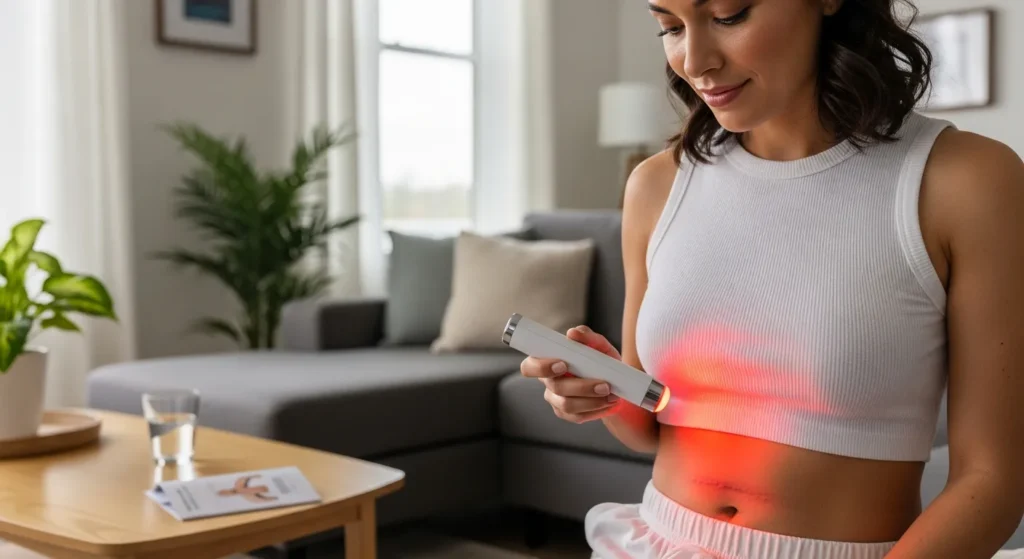
Larger devices that stand on a floor or mount on a wall. Great for larger body areas (stretch marks on thighs, C-section scars, back acne scars). Often more powerful and time-efficient, but also more expensive.
- Handheld devices:
Smaller units we hold directly over a scar. Ideal for targeted areas like a surgical scar or a keloid on the chest. They’re portable but may require more effort and time for multiple spots.
- Masks:
Face masks lined with LEDs designed for facial acne scars and pigmentation. They’re convenient for consistent use if acne scarring is our main concern.
For any device, it’s wise to look for:
- Published wavelengths (around 630–660 nm and/or 800–850 nm)
- FDA-cleared or third-party tested devices when possible
- Clear instructions and safety guidelines
Key Settings: Wavelengths, Intensity, And Distance
Most research-backed protocols use:
- Wavelengths: around 633 nm (red) and 830 nm (near-infrared)
- Session length: about 10–20 minutes per area, sometimes up to 30 minutes
Distance and intensity matter too:
- Panels are typically used at 6–12 inches away, depending on the manufacturer.
- Handhelds may be used directly on or very close to the skin.
Using a device too far away or for too short a time may not deliver enough “dose” of light. But more isn’t always better either, overdoing it can reduce benefits or cause mild irritation.
Timing And Frequency: How Often To Use It
Most protocols for skin and scars suggest:
- 3–5 sessions per week during the first 4–8 weeks
- Then 2–3 sessions per week for maintenance
For fresh scars, we’d usually wait until:
- The wound is fully closed (no open areas, no active bleeding or oozing)
- Our doctor or surgeon clears us to start
Consistency is more important than intensity. Think of it like a skincare routine, small, regular doses, not occasional marathons.
Safety Considerations And Who Should Avoid Or Be Cautious
Red light therapy is considered safe for most people, with few side effects when used as directed. Still, we should:
- Protect our eyes with goggles or eye shields, especially with bright panels or masks.
- Be cautious if we’re on photosensitizing medications (certain antibiotics, acne meds, or herbal supplements) and check with a healthcare provider.
- Talk to a doctor before starting if we’re pregnant, have a history of skin cancer, or have conditions that make us very light-sensitive.
If we notice increased redness, burning, or irritation, we can reduce session time or frequency, or pause and check in with a professional.
Building A Realistic Scar-Healing Routine
To get the most from red light therapy for scars, we need a plan that fits our life and respects what’s realistically possible.
Setting Expectations: What Results Are Realistic And When
What we can usually hope for with consistent use over 8–12 weeks or more:
- Scars that look less red or dark
- Softer, more flexible scar tissue
- Slight smoothing of texture (especially for newer or mild scars)
- Less itching, tightness, or discomfort
What’s unlikely:
- Completely erasing deep or very old scars
- Transforming keloids without any other medical treatment
Changes often happen gradually, which is why tracking progress is important.
Combining Red Light With Other Scar Treatments
Red light therapy may work best as part of a multimodal approach. Depending on the scar type and professional guidance, we might combine it with:
- Silicone gels or sheets for surgical and hypertrophic scars
- Microneedling or fractional laser for deeper acne scars
- Gentle retinoids (if our skin tolerates them) for texture and tone
- Professional treatments like steroid injections for keloids
Red light can help calm inflammation and support healing after more intensive treatments (once the skin is intact again), potentially improving comfort and outcomes.
Lifestyle Habits That Support Better Skin Repair
Scar healing isn’t just about what we put on our skin: it’s also about how we’re living. We can stack the odds in our favor by:
- Protecting scars from the sun with SPF 30+ and clothing (UV exposure can darken scars)
- Eating a protein-rich, colorful diet with vitamin C, zinc, and healthy fats to fuel collagen production
- Staying hydrated, which supports skin elasticity
- Not smoking, since smoking significantly slows wound healing and worsens scarring
- Getting adequate sleep, when much of our cellular repair work happens
When To See A Dermatologist Or Specialist
Self-directed red light therapy is best for mild to moderate scars. We should see a dermatologist or specialist if:
- A scar is painful, very raised, growing, or changing color
- We suspect a keloid or have a history of keloids
- Home care hasn’t helped after 3–6 months of consistent effort
- The scar affects movement (over a joint, causing tightness)
A professional can confirm the diagnosis, suggest additional treatments, and help us tailor red light use safely.
Practical Tips For Busy People
We might understand the science and still think, “This sounds great, but where does it fit in my day?“ Let’s make it practical.
Easy Ways To Fit Sessions Into A Packed Schedule
Instead of treating red light therapy like a big event, we can stack it onto habits we already do:
- Use a face mask while we scroll emails or meditate for 10 minutes.
- Place a panel near our desk and do a session while we listen to a podcast or plan the day.
- Use a handheld device on a surgical scar while we wind down before bed.
Consistency is easier when we pair sessions with routines we’re already committed to, morning coffee, post-workout cool-down, or evening skincare.
Tracking Progress So You Don’t Rely On Memory
Scars change slowly, and our brains aren’t great at noticing small, long-term shifts. To stay motivated:
- Take clear, well-lit photos every 2–4 weeks from the same angle and distance.
- Keep a simple note in a health app or journal with session dates and any changes (less redness, less itch, softer texture).
Over time, these checkpoints give us a more objective view of whether our red light routine is helping.
Troubleshooting Plateaus Or Irritation
If we notice no change after a couple of months, or if we start to see irritation, we can adjust:
- No progress?
- Confirm we’re using the right distance and session length.
- Make sure we’re using it 3–5 times per week, not just occasionally.
- Consider adding or adjusting other treatments (with professional input).
- Mild irritation or warmth?
- Shorten sessions by a few minutes.
- Drop frequency to 2–3 times per week.
- If irritation persists, stop and talk with a dermatologist.
Listening to our skin, and not forcing it, is a big part of getting good results safely.
Conclusion
Red light therapy for scars sits in that sweet spot between high-tech and gentle: no needles, no downtime, but real biological effects on healing, collagen, and inflammation.
The evidence so far suggests it can soften, calm, and gradually improve many types of scars, especially when we:
- Start once wounds are safely healed and cleared by a doctor
- Use the right wavelengths and a consistent routine
- Combine it with other smart strategies, sun protection, healthy nutrition, and, when needed, professional treatments
Is it a magic eraser? No. But as part of a thoughtful scar-care plan, red light therapy can be a powerful, low-risk tool to help our skin repair more gracefully.
If we’re curious, the next step is simple: talk with a dermatologist or a trusted provider, choose a reputable device, and commit to a realistic routine. Then give our body what it needs most, time, consistency, and a bit of patience, while the light does its quiet work underneath the surface.