
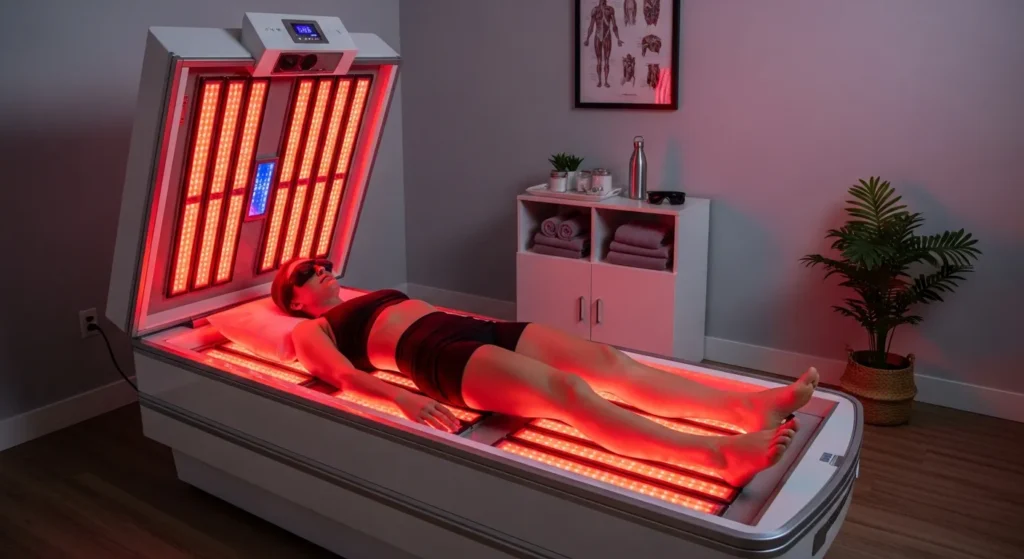
You’ve probably seen those glowing red pods or spa beds on Instagram and wondered: Is a red light therapy bed actually worth it, or just another wellness trend?
If you’re trying to boost your energy, recover faster from workouts, improve your skin, or just feel better in your body, red light therapy can sound almost too good to be true. And sometimes, the marketing is.
This guide walks you through what a red light therapy bed really does, where the science is solid, where it’s still emerging.
We’ll also touch on how to use it in a way that’s smart, safe, and actually fits a busy life like yours.
What Is A Red Light Therapy Bed And How Does It Work?
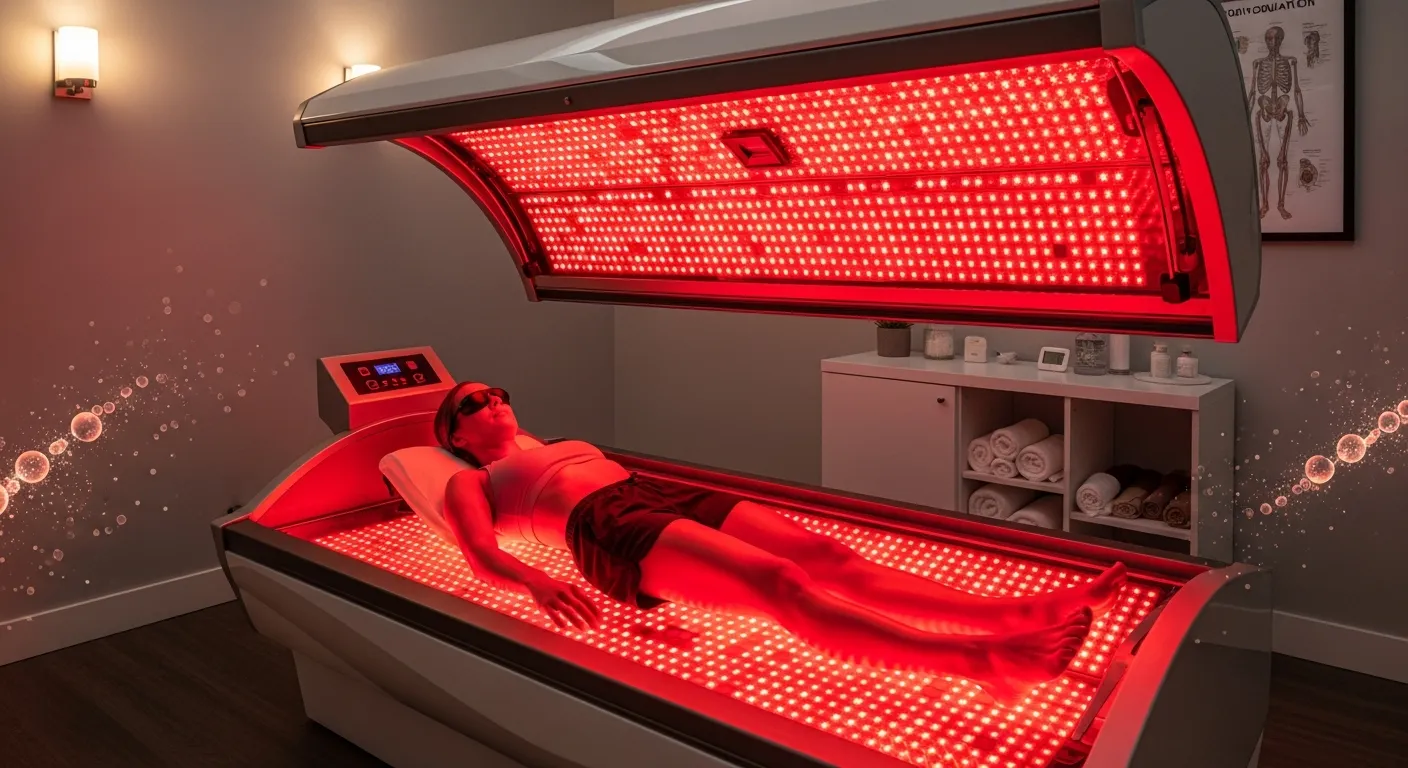
A red light therapy bed is basically a full-body device lined with LEDs (or sometimes low-level lasers) that bathe your whole body in specific wavelengths of red and near‑infrared light while you lie or stand inside.
Most beds use light in the 630–850 nanometer (nm) range. That’s important, because these wavelengths can reach below the surface of your skin and interact with your cells in a very specific way.
The Science Behind Red And Near-Infrared Light
Here’s the short version of what’s going on under the hood:
- Your cells have tiny power plants called mitochondria.
- Red and near‑infrared light can be absorbed by parts of the mitochondria (especially an enzyme called cytochrome c oxidase).
- This helps them produce more ATP, your body’s basic energy currency.
- At the same time, red light can help displace nitric oxide that can clog up this process, which means more efficient energy production.
This whole process is called photobiomodulation. More ATP and better mitochondrial function can lead to:
- Less inflammation
- Better cellular repair
- Increased collagen production in the skin
- Potentially better blood flow and tissue healing
Red light beds are designed to give you a uniform, full‑body dose in a short session, often somewhere in the range of 8–50 J/cm² (a common measurement for light dose in studies), depending on the device and protocol.
Red Light Beds Versus LED Panels And Other Devices
You might be wondering, Why not just use a red light panel at home instead of a whole bed?
Here’s the basic comparison:
- Red light therapy beds
- Full‑body coverage in one session
- Higher total light dose and power output
- Time‑efficient: lie down for 10–20 minutes and you’re done
- Usually found in clinics, spas, and some fitness centers
- Much more expensive to buy personally
- LED panels, masks, or handheld devices
- Great for targeted areas (face, knees, low back, etc.)
- Lower overall dose per session
- More affordable and accessible for home use
- Require more time if you’re trying to cover multiple body parts
In other words: a red light therapy bed is like a full‑body sauna of light, while panels are more like spot treatments. The mechanisms are the same: the difference is the dose, coverage, and convenience.
Potential Health Benefits Of Red Light Therapy Beds
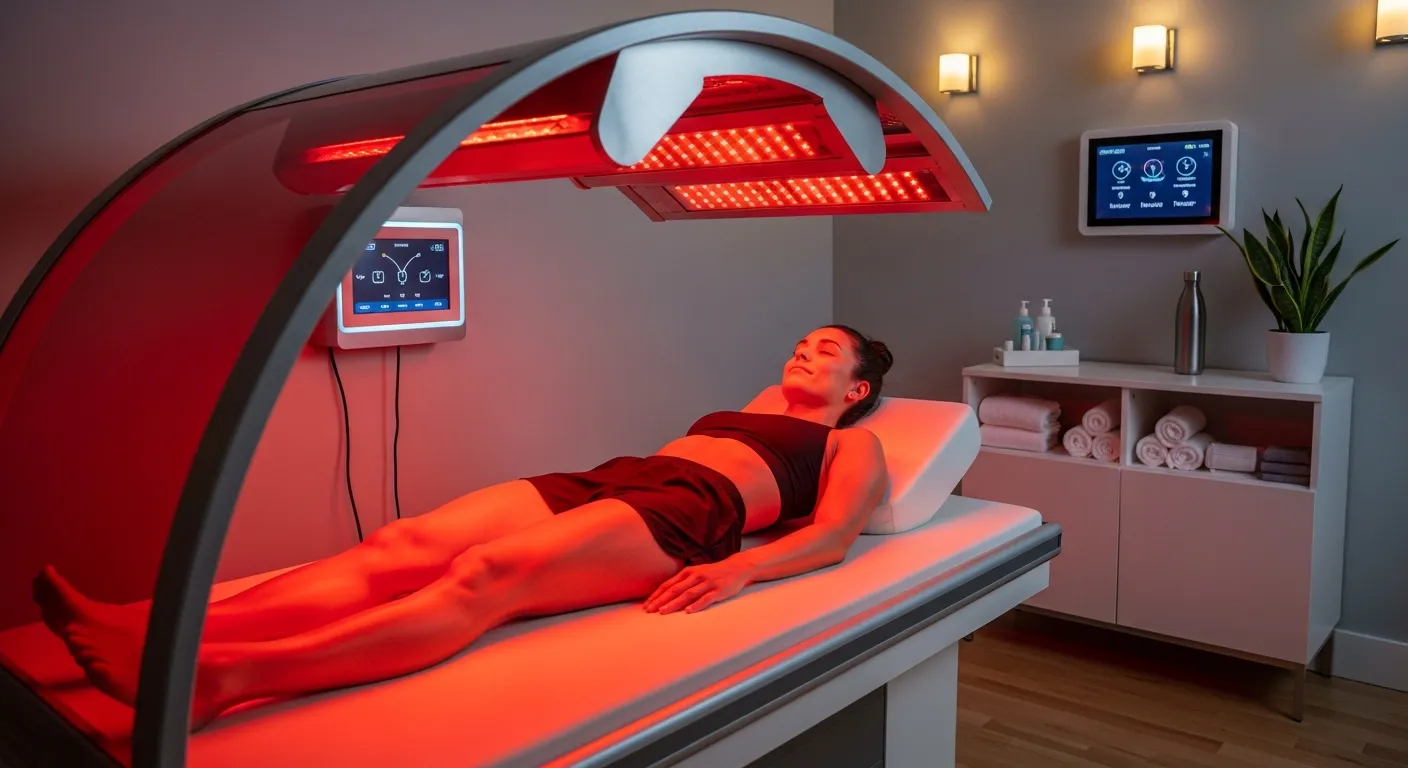
The science on red light therapy has grown a lot over the last 10–15 years. It’s not magic, but it’s also not fluff, there are real, measurable effects.
Let’s break down what a red light therapy bed may actually help with.
Skin Health: Aging, Acne, And Scarring
If your main interest is skin, red light therapy is one of the best‑studied noninvasive options out there.
Research suggests red and near‑infrared light can:
- Stimulate collagen and elastin production
- Reduce fine lines and wrinkles
- Improve skin texture and elasticity
- Help calm inflammation linked to acne
- Support better healing of scars and minor wounds
Several controlled trials have found visible improvements in wrinkles and skin roughness after a series of red light sessions, often over 8–12 weeks. A full‑body bed adds the bonus of treating areas beyond just your face, chest, neck, arms, even stretch marks.
You won’t walk out of your first session looking 10 years younger, but over time, many people notice smoother, calmer, more even‑looking skin.
Muscle Recovery, Joint Pain, And Injury Support
If you train hard, sit a lot for work, or deal with chronic aches, this is where a red light therapy bed can shine.
Studies have shown benefits for:
- Exercise recovery – less delayed-onset muscle soreness and better performance when used around workouts.
- Joint pain – particularly in osteoarthritis and some types of chronic back or neck pain.
- Fibromyalgia and chronic pain – some people report reduced pain and tenderness with regular use.
- Injury healing – supporting tissue repair after strains, sprains, or minor injuries.
The idea is that by boosting cellular energy and circulation and reducing inflammation, red light can help your body clear out waste products and repair faster. For you, that might feel like:
- Less soreness the day after workouts
- Decreased stiffness in your knees, hips, or shoulders
- A little more freedom to move without wincing
Sleep, Mood, And Cognitive Support
This is an emerging but exciting area.
Early research suggests red and near‑infrared light may:
- Help regulate circadian rhythm when used at the right time of day
- Improve sleep quality and total sleep time
- Support mood in people dealing with stress or low mood
- Support cognitive function in older adults, including some with dementia, in small studies
One trial using short daily near‑infrared sessions over 8 weeks reported improvements in cognitive scores in people with dementia. It’s not a cure, but it’s a promising sign that light can influence brain function.
For everyday life, many people simply describe feeling calmer, more relaxed, and mentally clearer after regular sessions.
Metabolism, Thyroid, And Overall Energy
You’ll see a lot of claims online about red light therapy melting fat and “revving your metabolism.” The truth is more nuanced.
- There is some research showing red light can support thyroid function in people with underactive thyroids, potentially by reducing inflammation.
- By helping your mitochondria work better, a red light therapy bed may help you feel more energetic, especially if you’ve been feeling run‑down.
- There are a few early studies exploring fat loss, but results are mixed and often involve specific protocols, not just lying in a bed a few times.
So yes, red light can support energy and metabolic health, but it’s not a substitute for nutrition, movement, and sleep. Think of it as a possible booster, not the engine.
What The Research Actually Says (And Where Evidence Is Still Emerging)
With so much hype around red light therapy beds, it helps to separate what’s well‑supported from what’s still in the “maybe” category.
Conditions With The Strongest Evidence
Right now, the best evidence for red and near‑infrared light is in:
- Skin rejuvenation (wrinkles, texture, elasticity)
- Wound healing (including some post‑surgical applications)
- Pain relief for musculoskeletal issues – things like knee osteoarthritis, chronic neck or low back pain, tendon issues, and some nerve pain
These benefits show up across multiple peer‑reviewed studies and systematic reviews. They’re not guaranteed for every person, but the signal is strong enough that many clinics, physical therapists, and dermatologists now use light therapy as a supportive tool.
Promising But Not Yet Proven Uses
There are several areas where the research is early but interesting:
- Cognitive support and dementia
- Sleep improvement
- Mood and stress
- Thyroid support and metabolic function
- Sports performance enhancement beyond just recovery
Small trials and case reports suggest benefits, but we still need larger, longer, and better‑controlled studies. If you’re using a red light therapy bed for these reasons, it’s totally valid, just hold it lightly and pair it with other proven habits.
Common Myths And Overhyped Claims
Red light therapy beds get oversold in a few key ways:
- “It melts fat and replaces workouts.”
- There’s no solid evidence that red light therapy alone causes meaningful, lasting fat loss.
- “It cures everything.”
- It’s not a cure‑all. It can support healing and function but won’t fix serious diseases on its own.
- “Once you do a few sessions, you’re good forever.”
- Benefits often fade if you stop completely, especially for pain relief.
A healthier mindset: treat a red light therapy bed as one tool in your toolbox, not the whole toolbox.
Safety, Side Effects, And Who Should Be Cautious
Overall, red light therapy is considered very safe when used appropriately. That said, it’s still an active treatment, not just a fancy lamp.
Short-Term Side Effects And How To Avoid Them
Most people tolerate red light therapy beds well, but you might notice:
- Mild warmth in the skin
- Temporary redness or flushing
- Occasional headache if the dose is too high or the session is too long
- Light eye strain if your eyes aren’t protected
You can lower your risk by:
- Wearing proper eye protection (most clinics provide goggles)
- Starting with shorter sessions and building up (for example, 8–10 minutes, then slowly up to 15–20)
- Staying hydrated before and after
- Letting staff know if you’re sensitive to light or heat
If you feel dizzy, overly hot, or just “off,” it’s okay to end the session early and adjust next time.
When To Talk To A Doctor First
You’ll definitely want to check with a healthcare provider before using a red light therapy bed if you:
- Take medications that cause photosensitivity (certain antibiotics, acne meds, or blood pressure drugs)
- Have a history of skin cancer or are being monitored for suspicious lesions
- Are pregnant and unsure if it’s appropriate (we don’t have much long‑term data)
- Have an active cancer diagnosis or are undergoing chemotherapy or radiation
- Have serious eye conditions
Most research suggests red light is safe when used properly, but when in doubt, get a personalized opinion. It’s always okay to bring research or device info to your doctor and have a real conversation about it.
Red Light Therapy Bed Vs. At-Home Devices: Which Is Right For You?
Deciding between a red light therapy bed at a clinic and a device at home comes down to your goals, budget, and schedule.
Comparing Cost, Convenience, And Dose
Red light therapy bed (clinic/spa):
- Pros
- Full‑body coverage
- Higher total dose per session
- Super time‑efficient: 10–20 minutes and everything is treated
- Often combined with other recovery tools at wellness centers
- Cons
- Ongoing membership or session fees
- You have to travel to use it
- Scheduling can be a barrier if you’re already maxed out
At‑home panels or devices:
- Pros
- One‑time purchase, then unlimited use
- Easy to fit into daily routines at home
- Great for consistent, long‑term use
- Cons
- Usually lower power and smaller coverage area
- Takes longer to treat multiple body parts
- Quality varies a lot between brands
If you’re dealing with full‑body concerns, widespread pain, recovery from intense training, or you just want whole‑body exposure, a red light therapy bed can make sense, at least for an initial intensive phase.
When A Full-Body Bed Makes Sense
A red light therapy bed is often worth exploring if:
- You’re already visiting a gym, spa, or clinic that offers it
- You want to see if red light helps you before committing to buying a home unit
- You’re recovering from a period of high stress, surgery (with medical approval), or very heavy training
- You value “show up and it’s handled” convenience
You don’t have to choose one forever. Many people start with a few weeks of bed sessions to see how they respond, then maintain benefits with a smaller at‑home panel for targeted areas.
How To Use A Red Light Therapy Bed Effectively
If you decide to try a red light therapy bed, a bit of strategy helps you get more out of your time and money.
Session Length, Frequency, And Ideal Timing
Protocols vary by device, but general guidelines look like this:
- Session length:
- Start with 10–15 minutes
- You might work up to 15–20 minutes, depending on the bed and your tolerance
- Frequency:
- For the first 4–6 weeks: 3–5 times per week is common
- After that: you can usually shift to 1–3 times per week for maintenance
- Timing:
- Morning or early afternoon often works best for energy and circadian rhythm
- Very late‑night sessions can be relaxing for some people, but if you’re sensitive, they might feel a bit energizing
Most benefits build gradually. Many people notice small changes (like less soreness or subtle skin improvements) after 5–10 sessions, with more obvious results over 6–8 weeks.
Practical Tips To Integrate It Into A Busy Life
To actually stick with it, treat your sessions like appointments with your future self:
- Link it to an existing habit – for example, use the bed right after your gym session, sauna, or weekly massage.
- Schedule in advance – book your slots for the week like you would important meetings.
- Keep it simple – wear something easy to change out of (or use a towel/robe if the facility allows).
- Track one or two key outcomes – like sleep quality, joint pain, or skin changes, instead of trying to measure everything.
A short note on your phone after each session (“knee pain 6/10 → 4/10 today,“ “slept 7.5 hours, fewer wake‑ups”) can help you see patterns you’d otherwise miss.
Red Light Therapy As Part Of A Holistic Wellness Routine
Red light therapy works best when it’s not trying to carry your entire health journey on its back.
Stacking With Sleep, Nutrition, And Movement
You’ll get far more from a red light therapy bed if you pair it with the basics:
- Sleep: Aim for a consistent sleep window and a calming wind‑down routine. Red light may help, but nothing replaces enough hours in bed.
- Nutrition: Support your mitochondria with whole foods, enough protein, colorful plants, and healthy fats. Light gives the signal: nutrients give the building blocks.
- Movement: Combine red light with strength training, walking, and mobility work to support joints, hormones, and mood.
- Stress management: Breathwork, meditation, nature time, or journaling help your nervous system shift into “repair mode,” which pairs beautifully with red light.
Think of the red light therapy bed as a multiplier on habits you’re already building, not a pass to skip them.
Setting Realistic Expectations And Tracking Progress
To keep your relationship with any wellness tool healthy, it helps to be honest about what you’re expecting.
Realistic expectations for a red light therapy bed:
- Gradual, not overnight, changes
- Some trial and error to find your ideal dose and frequency
- Benefits that may plateau if you stop completely
A simple way to track progress:
- Choose 1–3 goals: for example, “knee pain,“ “post‑workout soreness,” or “sleep quality.”
- Rate them weekly on a 1–10 scale.
- Take before and after photos for skin (same lighting, same time of day).
- Reevaluate after 6–8 weeks and adjust from there.
This keeps you grounded in real data from your own body, not just marketing claims.
Conclusion
A red light therapy bed isn’t a miracle cure, but it can be a powerful ally if you’re looking to support your skin, ease pain, recover better, and gently boost your energy.
When you understand what it does, and what it doesn’t, you can use it wisely: at the right dose, with realistic expectations, and as part of a broader lifestyle that includes sleep, movement, and mindful nutrition.
If you’re curious, you don’t have to overhaul your life. Start with a short trial, pay close attention to how your body responds, and let your own experience guide whether red light earns a regular place in your wellness routine.