

You know the kind of morning I mean: you eat “breakfast,” feel decent for about 45 minutes, and then, bam, energy crash, brain fog, snack cravings, and that slightly puffy, sluggish feeling that makes you wonder if your body is low-key mad at you.
A low inflammation breakfast isn’t a trendy cleanse or a sad bowl of plain oatmeal. It’s a simple way to start your day with foods that help keep blood sugar steady, support your gut, and dial down the kind of chronic, background inflammation that can mess with your energy, recovery, and mood over time.
Let’s break down what “low inflammation” really means in breakfast terms, what to build your plate around, what to swap out, and a list of options you can rotate all week without getting bored.
What “Low Inflammation” Actually Means At Breakfast
“Inflammation” gets talked about like it’s always bad. But your body actually needs inflammation, just not the kind that sticks around.
A low inflammation breakfast is basically a meal that leans on:
- Fiber-rich plants (they feed your gut microbes and support healthy digestion)
- Antioxidants + polyphenols (from berries, spices, coffee/tea, herbs, and colorful foods)
- Healthy fats, especially those that replace heavy saturated-fat breakfasts
- Enough protein to keep you full and prevent the blood sugar rollercoaster
Instead of spiking glucose and leaving you hungry again an hour later, this kind of breakfast supports steadier energy and tends to be easier on your joints, skin, and gut over time.
Inflammation Vs. Chronic Inflammation: The Practical Difference
Acute inflammation is your body’s short-term repair mode. You sprain an ankle, get a cut, lift weights, fight a virus, your immune system responds, cleans up damage, and you heal.
Chronic inflammation is different. It’s low-grade, persistent, and associated with higher levels of inflammatory markers like CRP, IL-6, and TNF-α in research contexts. Over time, that chronic “always-on” immune signal is linked with higher risk for cardiometabolic issues, more pain sensitivity, and gut dysfunction. Diet isn’t the only driver, but it’s one of the few levers you can pull every single day.
And yes, the usual suspects show up here: lots of ultra-processed foods, added sugar, refined grains, and frequent high-saturated-fat meals tend to correlate with worse inflammation profiles, while more whole plants and unsaturated fats tend to correlate with better ones.
Why Breakfast Can Be A High-Impact Lever
Breakfast matters because it’s often where people accidentally set themselves up for a day of:
- Blood sugar spikes (and crashes)
- Under-eating protein until dinner
- Low fiber intake overall
- “Healthy-looking” processed foods (granola bars, flavored yogurt, sugary cereals)
As your first meal, breakfast can either be a glucose rollercoaster starter… or the thing that makes your whole day feel calmer and more stable. It also matters for practical reasons: some supplements/medications absorb better with food, and many people make their worst food decisions when they’re rushed and hungry.
If you can make breakfast a little more anti-inflammatory, you’re not just “eating clean.” You’re building a day that’s easier to manage.
The Breakfast Trifecta: Fiber, Protein, And Healthy Fats
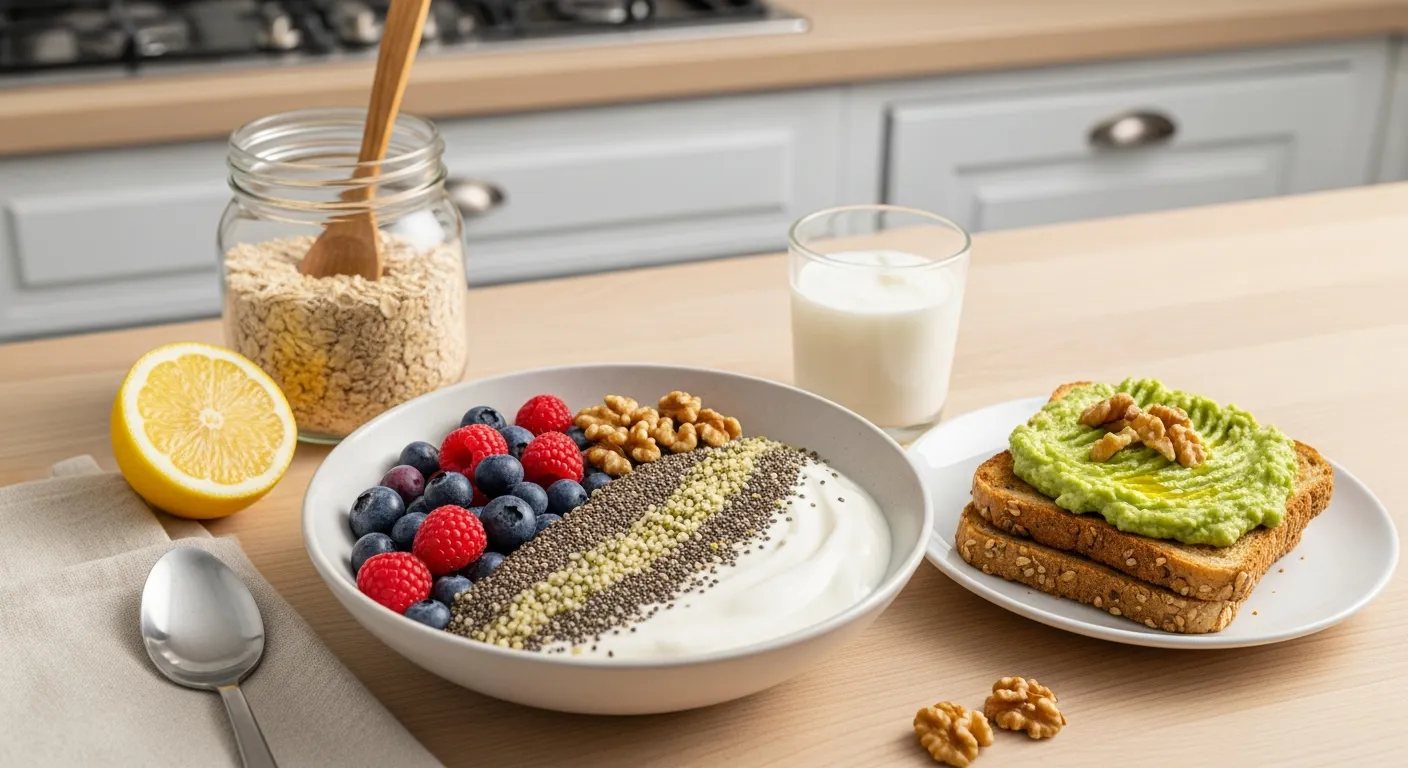
If you remember one thing, make it this: a low inflammation breakfast usually works best when it includes fiber + protein + healthy fats.
Not because macros are magic. But because this combo tends to stabilize appetite, smooth out blood sugar, and support the gut, three big inflammation levers.
Protein Targets That Support Satiety And Blood Sugar
Most people do better with 20–30 grams of protein at breakfast (it’s a commonly recommended per-meal range for satiety and muscle support). When you hit that neighborhood, you’ll often notice:
- fewer cravings mid-morning
- easier time staying focused
- less “snacky” decision-making
Simple ways to reach it:
- 2–3 eggs + Greek yogurt on the side
- Greek yogurt/kefir + chia/hemp seeds
- cottage cheese + berries + nuts
- tofu scramble + beans
- protein smoothie with real food (and not 40 ingredients you can’t pronounce)
Fiber Benchmarks And The Gut-Inflammation Connection
Fiber is one of the most underrated anti-inflammatory “supplements” you can eat.
A good daily target is often quoted as 25–30g of fiber per day (many adults fall short). Why does it matter for inflammation?
- Fiber supports a healthier gut microbiome.
- Gut microbes ferment certain fibers into short-chain fatty acids (SCFAs), which are associated with anti-inflammatory effects in the body.
- Fiber slows digestion and helps smooth glucose response.
Breakfast is an easy place to rack up fiber fast:
- oats, chia, flax, berries
- legumes (yes, even at breakfast)
- whole grain toast + avocado + seeds
- leftover roasted sweet potato
Healthy Fats: When They Help And When They Backfire
Fats can absolutely support a low inflammation breakfast, but the type and context matter.
Helpful fats tend to be:
- extra virgin olive oil
- nuts and seeds (walnuts, chia, flax, hemp)
- avocado
- fatty fish (less common at breakfast, but it works)
These are associated with better cardiometabolic markers and lower inflammation signals in many dietary patterns (think Mediterranean-style eating).
When fats backfire:
- If your breakfast is mostly fat and very low in fiber/protein, you might feel sluggish or get reflux.
- If it’s heavy on saturated fat (like a daily rotation of bacon/sausage + buttery pastries), it can be harder on inflammation markers for some people, especially when paired with refined carbs.
So the move isn’t “fear fat.” It’s choose unsaturated fats, and pair them with fiber + protein so the meal actually lands well.
Foods To Prioritize (And Why They Work)
You don’t need a perfect diet, you need a short list of foods you actually like and will keep in your kitchen.
Here are the staples that tend to show up in strong anti-inflammatory breakfast patterns.
Anti-Inflammatory Staples: Berries, Oats, Yogurt/Kefir, Eggs, Legumes
Berries (fresh or frozen)
- Packed with polyphenols and antioxidants
- Easy win for sweetness without added sugar
Oats (rolled or steel-cut)
- Solid source of soluble fiber (great for satiety)
- Plays well with cinnamon, chia, berries, and yogurt
Yogurt or kefir (plain, ideally unsweetened)
- Fermented foods can support gut health
- Great protein base if you choose Greek yogurt or skyr
Eggs
- Convenient, high-quality protein
- Easy to pair with veggies and whole grains
Legumes (beans, lentils, chickpeas)
- High fiber + plant protein
- Surprisingly good in savory breakfasts (think breakfast bowls)
If you’re thinking, “Beans… at 8 a.m.?” Try it once in a warm bowl with olive oil, herbs, and a soft egg. It’s oddly satisfying.
Flavor Boosters With Benefits: Olive Oil, Nuts, Seeds, Spices, Herbs
This is where breakfast goes from “healthy” to “I’d eat this even if it wasn’t healthy.”
- Extra virgin olive oil: drizzle on avocado toast, veggies, or savory oats
- Nuts/seeds: walnuts, almonds, chia, flax, pumpkin seeds, hemp hearts
- Spices: cinnamon (great in oats), turmeric + black pepper, ginger
- Herbs: basil, cilantro, parsley, dill, especially in savory bowls
Research often highlights compounds like curcumin (turmeric) and ginger’s bioactives for their potential to reduce inflammatory signaling (including associations with markers like CRP and IL-6 in certain contexts). You don’t need mega-doses: you just need consistency.
Smart Carbs: Whole Grains And Resistant Starch Options
Carbs aren’t automatically inflammatory. The issue is usually refined carbs without fiber.
Better breakfast carbs include:
- whole grains: oats, buckwheat, quinoa, whole grain bread
- resistant starch options: cooled roasted potatoes or sweet potatoes (the cooling process increases resistant starch), cooked-and-cooled rice (for some people)
Resistant starch can act a bit like fiber, feeding beneficial gut bacteria and supporting a steadier blood sugar response.
Bottom line: choose carbs that come with fiber and micronutrients, not just “fast energy.”
Common Breakfast Triggers To Limit Or Swap
You don’t have to ban foods forever. But if you’re trying to eat a low inflammation breakfast most days, these are the repeat offenders that quietly derail people.
Added Sugar And Ultra-Processed “Healthy” Breakfasts
This is the classic trap: the breakfast looks virtuous, but it’s basically dessert.
Common examples:
- sweetened yogurt
- fancy granola (often sugar + oil + more sugar)
- breakfast bars and “protein” pastries
- coffee drinks that are mostly syrup
Easy swaps:
- choose plain Greek yogurt and add berries + cinnamon yourself
- pick granola with minimal added sugar, or use nuts/seeds + oats instead
- if you need a bar, treat it like an emergency option, not your daily breakfast
Refined Grains, Juice, And Blood Sugar Spikes
Refined carbs digest fast. When they’re not paired with fiber/protein/fat, you get that quick spike… then the crash.
Big ones:
- white toast + jam (by itself)
- muffins, bagels, pastries
- fruit juice (even “100% juice”)
Better options:
- whole grain bread + eggs/avocado + fruit
- oatmeal or overnight oats with chia
- whole fruit instead of juice (fiber makes a huge difference)
Processed Meats And High-Sodium Convenience Foods
If your breakfast is often:
- bacon, sausage, deli meats
- frozen breakfast sandwiches
- salty grab-and-go items
…it’s worth dialing that back. Processed meats are consistently linked in nutrition research with worse long-term health outcomes, and they tend to bring a combo of saturated fat + sodium + preservatives.
Try:
- eggs + smoked salmon (occasionally) or sardines on toast (if you’re adventurous)
- turkey or chicken occasionally instead of processed pork
- bean-based breakfasts for a break from meat entirely
You don’t need perfection. You just want your “default breakfast” to work for your body, not against it.
10 Low Inflammation Breakfast Ideas You Can Rotate All Week
Here’s the fun part. These are designed to be realistic, stuff you can actually repeat without turning breakfast into a second job.
Feature image suggestion (stock): A bright overhead shot of oatmeal topped with berries, chia seeds, and a spoonful of yogurt on a wooden table.
No-Cook Options For Busy Mornings
- Chia pudding + berries + walnuts
Mix chia + milk of choice + cinnamon the night before. Top with frozen berries in the morning.
- Greek yogurt (or skyr) parfait
Plain yogurt + berries + ground flax/chia + a handful of nuts.
- Overnight oats with cinnamon + chia
Add unsweetened milk, oats, chia, cinnamon, pinch of salt. Optional: a spoon of nut butter.
- Kefir smoothie (simple, not chaotic)
Kefir + frozen berries + spinach + chia or hemp. Blend.
5-Minute Hot Breakfasts
- Oatmeal with berries + pumpkin seeds
Cook oats, stir in cinnamon/ginger, top with berries and seeds.
- Sweet potato + egg bowl
Use leftover roasted sweet potato, warm it up, top with a fried/poached egg and olive oil.
- Savory oats with olive oil + herbs
Cook oats in broth or water, add olive oil, black pepper, and chopped herbs. Top with a soft-boiled egg if you want more protein.
Savory Breakfasts That Aren’t Just Eggs
- Avocado toast with tomato + hemp seeds
Whole grain toast, smashed avocado, sliced tomato, sprinkle hemp seeds. Add smoked salmon or tofu on the side if you need more protein.
- Breakfast bean bowl
Warm black beans or lentils, add olive oil + salsa + greens. Optional: a little Greek yogurt on top.
- Berry-spinach scramble (egg or tofu)
Scramble eggs or tofu with spinach: eat berries on the side. It sounds basic, but it hits the fiber + protein combo fast.
AI image suggestions (optional, max 2 in-body):
- A clean “meal-prep” photo-style image of three mason jars of overnight oats lined up (berries, chia, nuts).
- A warm savory bowl: sweet potato chunks, black beans, greens, olive oil drizzle.
Keep it simple: pick 2–3 favorites and rotate. Consistency beats novelty.
How To Customize For Your Goals And Constraints
A low inflammation breakfast isn’t one-size-fits-all. You’re allowed to eat like a real person with a schedule, preferences, and a body that has opinions.
Weight Loss Or Body Recomp: Higher Protein, Higher Fiber
If your goal is leaning out or recomposition, the boring advice works because it’s true:
- prioritize protein (20–30g)
- get fiber early (berries, oats, seeds, legumes, veggies)
- keep added sugar low
Easy templates:
- Greek yogurt + berries + flax + nuts
- veggie omelet + whole grain toast
- tofu scramble + beans + greens
Also: don’t underestimate volume. A bigger bowl of high-fiber food can make your day easier.
Endurance Or Strength Training: Timing, Carbs, And Recovery Add-Ons
Training changes breakfast.
If you train in the morning and need something quick:
- smoothie with kefir/Greek yogurt + berries + oats
- toast + nut butter + banana (add a side of yogurt if you can)
If you train after breakfast, you may do well with slightly more carbs:
- oats + berries + chia + a scoop of protein (if needed)
- sweet potato bowl + eggs + fruit
Recovery add-ons that keep it low inflammation:
- tart berries or cherries (polyphenols)
- extra hydration + a pinch of salt if you sweat a lot
- quality carbs + protein within a couple hours post-workout (doesn’t need to be immediate unless you’re doing multiple sessions)
Gut-Sensitive Or Low-FODMAP Adjustments
If your gut is sensitive, “healthy” breakfasts can backfire (hello, bloating). You can still do low inflammation, just adjust.
Common easier options (varies by person):
- oats (often tolerated: watch portions)
- berries
- lactose-free Greek yogurt or kefir
- eggs
- rice or quinoa porridge
Potential triggers to trial carefully:
- large servings of beans
- certain sweeteners (even “natural” ones)
- lots of raw greens in a smoothie
If symptoms are frequent, consider working with a registered dietitian, especially before you cut out a long list of foods permanently.
Coffee, Supplements, And Add-Ins: What Helps (And What’s Hype)
If you’re building a low inflammation breakfast, drinks and add-ins can either support it… or quietly wreck it.
Coffee And Tea: Best Practices For Minimizing Jitters And Reflux
Coffee and tea come with antioxidants (like polyphenols: green tea is known for EGCG). For many people, they fit just fine in a low inflammation routine.
To make them work better for you:
- Don’t drink coffee on an empty stomach if you get jitters or reflux.
- Keep an eye on what you add: flavored creamers and syrups can turn coffee into dessert.
- Try half-caf or switch to green tea if anxiety runs high.
A simple rule: if your “coffee” has 30g sugar, it’s not coffee, it’s a milkshake with ambition.
Omega-3s, Vitamin D, Magnesium, And Probiotics: When To Consider Them
Supplements can help, but they’re not a substitute for eating like an adult most days.
- Omega-3s (EPA/DHA): worth considering if you rarely eat fatty fish: associated with inflammation modulation in research.
- Vitamin D: common deficiency: best guided by blood work and clinician advice.
- Magnesium: may support sleep, muscle function, and stress resilience: many people fall short through diet.
- Probiotics: can be useful in specific situations, but strains matter. Food first (yogurt/kefir, fermented foods) is a good starting point.
If you take medications or have conditions, check with a clinician, especially for higher-dose omega-3s or if you’re pregnant.
Greens Powders, Collagen, And “Superfood” Blends: How To Vet Claims
Greens powders can be convenient. They’re not automatically bad. They’re just often oversold.
How to vet them like a sane person:
- Look for third-party testing (NSF, Informed Choice, USP, any reputable quality program).
- Be skeptical of “detox” language.
- Check the label: if it’s mostly proprietary blends, you can’t tell what you’re getting.
Collagen: can support protein intake and may help some people with joint/tendon support, but it’s not a complete protein. Think of it as an add-on, not your main.
Superfood blends: if they help you eat more plants consistently, cool. If they replace actual meals, not so cool.
Conclusion
A low inflammation breakfast isn’t about being perfect, it’s about setting a steady baseline for your day. When you build breakfast around fiber, protein, and healthy fats, you usually get better energy, fewer cravings, and an easier time recovering from workouts (and honestly, from life).
If you want the simplest next step, do this tomorrow:
- Pick one protein (Greek yogurt, eggs, tofu, kefir)
- Add one fiber anchor (oats, chia, berries, beans, whole grain toast)
- Finish with one healthy fat or spice (olive oil, nuts/seeds, cinnamon/ginger)
Make that your default 4–5 days a week, and you’ll likely feel the difference, without turning breakfast into a research project.