
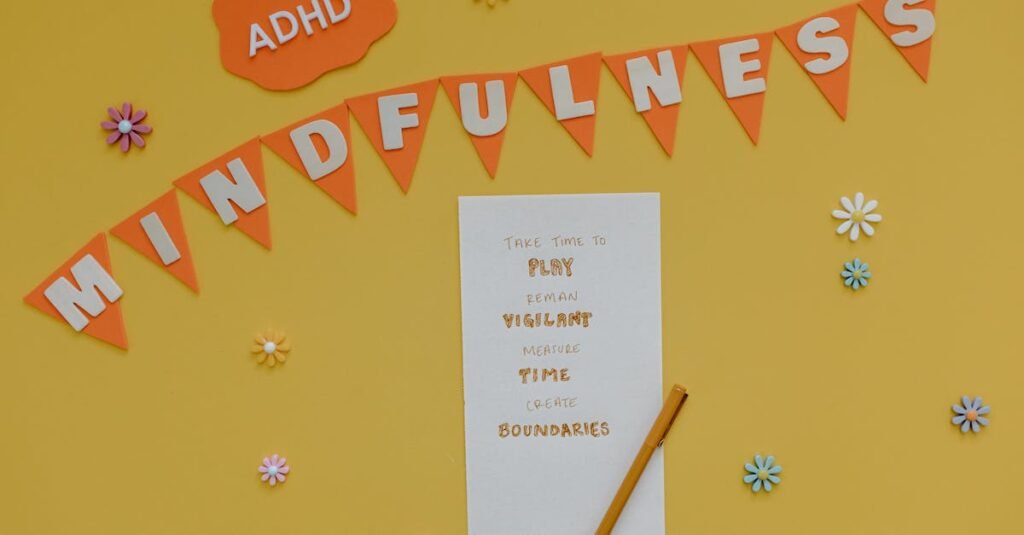
If you’re keeping up with work, family, and a calendar that looks like a game of Tetris… you might be “fine” on paper while still feeling fried inside.
That’s the sneaky thing about good mental health: it isn’t just whether you can function. It’s whether you have enough inner bandwidth to think clearly, handle stress without snapping, enjoy your life, and feel like yourself.
The good news? You don’t need a perfect routine, a two-hour morning ritual, or a silent retreat. You need a few foundations (that actually move the needle) and a simple way to maintain them, especially when life gets busy.
What “Good Mental Health” Really Means (And What It Doesn’t)
Good mental health isn’t a personality type. It’s not “always calm,” “always positive,” or “never anxious.” It’s more like a dynamic state, something you maintain over time.
The World Health Organization (WHO) describes mental health as a state of well-being that helps you cope with normal stresses, work productively, and contribute to your community. In other words: it’s not just about feeling good, it’s about living well.
Functioning Vs. Flourishing
Most people know what it feels like to function: you get through the day, you answer messages, you meet deadlines, you feed yourself (maybe), and you don’t fully fall apart.
Flourishing is different. It often looks like:
- You bounce back faster after stressful moments
- You can focus without forcing it all the time
- You feel connected, to people, purpose, or values
- You can experience hard emotions without being taken out for days
A helpful way to think about it: functioning is “I’m getting by.” Flourishing is “I have room to live.”
And yes, good mental health includes sadness, frustration, grief, and worry. The goal isn’t to eliminate those. The goal is to build capacity so they don’t run your whole system.
Common Myths That Keep People Stuck
A few myths make people delay support or chase the wrong solutions:
- Myth: “If I’m struggling, something is wrong with me.”
Reality: Struggle is a normal signal. It usually means you’re overloaded, underslept, isolated, under-supported, or all of the above.
- Myth: “Good mental health means being happy most of the time.”
Reality: It means you can handle the full range of emotions and still keep your footing.
- Myth: “I should be able to think my way out of this.”
Reality: Your brain is attached to a body. Sleep debt, chronic stress, blood sugar swings, and loneliness can hijack your mood no matter how “logical” you are.
- Myth: “If I’m productive, I must be okay.”
Reality: High-functioning burnout is still burnout. Output isn’t the same as well-being.
If you take one idea from this section, let it be this: good mental health is built, not discovered. And it’s built through basics done consistently, not perfection done occasionally.
The Foundations: Sleep, Movement, Nutrition, And Connection
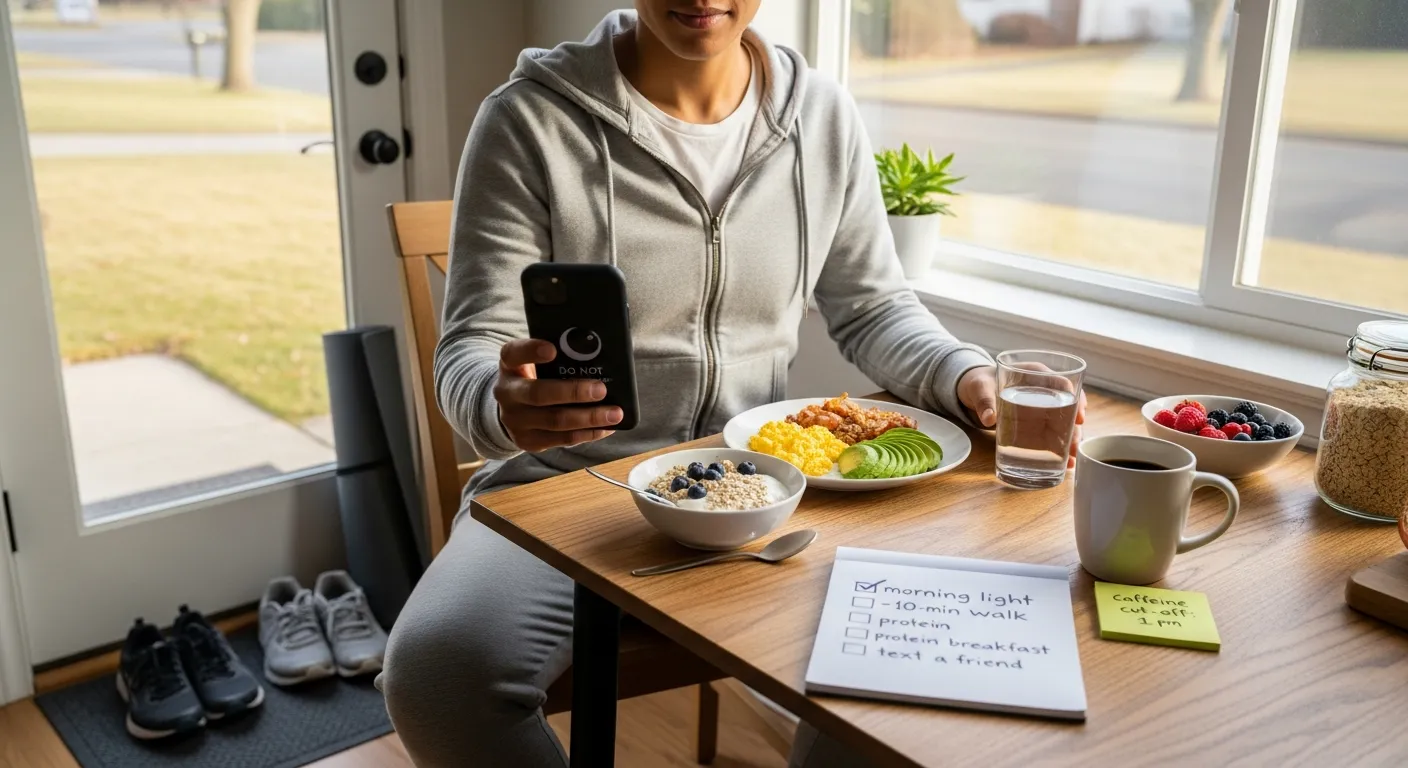
If you want good mental health, start here. Not because these solve everything, but because they raise your baseline.
Think of it like trying to run a business (or your life) with glitchy software and a dying battery. You can keep clicking harder… or you can charge the device.
Sleep As The Baseline For Mood And Focus
Sleep is the closest thing you have to a mental health “multiplier.” Poor sleep makes stress feel louder, emotions feel sharper, and decisions feel harder.
Research and clinical consensus consistently link sleep quality and duration with mood regulation, anxiety levels, and depression risk. Sleep also supports the brain processes that help you learn, regulate emotions, and recover from stress.
Try this “good enough” sleep plan (no perfection required):
- Set a realistic sleep window you can hit most nights (example: 11:00–7:00)
- Get morning light for 5–10 minutes soon after waking (yes, even on cloudy days)
- Cut caffeine earlier than you think (many people do best with none after 12–2 p.m.)
- Create a 15-minute wind-down: dim lights, phone down, simple hygiene, maybe a page of fiction
If you’re only going to fix one thing this week, fix your sleep timing consistency. A steady schedule often helps more than chasing a “perfect” routine.
Movement That Regulates Stress (Even In 10 Minutes)
You don’t need a hardcore workout to help your nervous system. You need regular movement that signals safety to your body.
Even short bouts of exercise can reduce stress and improve mood, partly through effects on neurotransmitters and inflammation, and also because moving your body is a direct way to discharge stress.
Two simple options for busy days:
- The 10-minute brisk walk (outside if possible)
Walk like you’re slightly late. Breathe through your nose if you can.
- The “tight body reset” (5–8 minutes)
- 10 bodyweight squats
- 10 wall push-ups
- 30-second forward fold (slow breathing)
- 30–60 seconds of child’s pose or legs-up-the-wall
Consistency beats intensity here. You’re not “earning” rest, you’re training regulation.
Food, Blood Sugar, And The Gut-Brain Link
Your brain runs on energy. When your blood sugar is on a roller coaster, your mood often follows.
A practical mental-health-friendly plate usually includes:
- Protein (helps with steadier energy and satiety)
- Fiber (supports gut health and slower glucose rise)
- Healthy fats (support hormones and brain function)
- Color (micronutrients from fruits/veg)
A dead-simple upgrade: add protein at breakfast.
If your morning is coffee-only or pastry-only, you may feel fine for an hour… and then you’re suddenly irritable, anxious, or craving sugar while trying to sound professional in a meeting.
Also worth knowing: the gut and brain communicate through the gut-brain axis (including neural pathways like the vagus nerve, immune signaling, and microbial metabolites). Translation: chronic digestive issues, low fiber intake, and highly processed diets can affect how you feel, mentally, not just physically.
You don’t need a perfect diet. Try a “least effort” approach:
- Build 2–3 reliable meals you can repeat
- Keep high-protein convenience foods around (Greek yogurt, canned fish, tofu, rotisserie chicken, lentils)
- Add one gut-friendly habit: 1–2 servings/day of fiber-rich foods (beans, oats, berries, veggies)
Relationships And Belonging As Protective Factors
Connection isn’t a “nice to have.” It’s protective.
Multiple lines of research link social support and belonging with better mental health outcomes and resilience under stress. And you already know this from lived experience: a hard week feels lighter when you can talk to someone who gets you.
If your schedule is packed, connection has to be designed, not hoped for.
Try one of these:
- The 2-text rule: send two honest check-in texts a day (not memes, real words)
- Standing plans: a weekly walk, call, gym session, or dinner (same day/time)
- Micro-connection: chat with the barista, say hi to a neighbor, join a local class
Belonging doesn’t require a huge friend group. It requires repeated, safe interactions over time.
And if you’re a busy professional who spends a lot of time online: your “inputs” matter. Curate them like you’d curate a tool stack at work, because, in a way, your relationships and media are part of your mental health infrastructure.
Everyday Skills For Emotional Resilience
Foundations raise the floor. Skills help you navigate the messy middle, those moments when you’re tired, triggered, under pressure, or just not yourself.
Stress Literacy: Naming What’s Happening In Your Body
A lot of “mental” stress is your nervous system doing its job.
When your body senses threat (deadlines, conflict, money worries, doomscrolling), it shifts into survival mode. You might notice:
- Tight chest, shallow breathing
- Racing thoughts
- Irritability or numbness
- Trouble focusing
- Reaching for sugar, alcohol, or constant stimulation
Stress literacy means you can say: “This is stress physiology. My body thinks I’m in danger.”
That tiny reframe gives you options.
Try this 60-second reset:
- Exhale slowly (longer than your inhale) for 5 breaths
- Relax your jaw and shoulders (seriously, check them)
- Name 3 things you can see, 2 you can feel, 1 you can hear
It’s not magic. It’s a signal to your brain: we’re here, we’re safe enough, we can downshift.
Cognitive Reframing Without Toxic Positivity
Reframing isn’t pretending everything is great. It’s choosing a more accurate, helpful thought.
Toxic positivity says: “Just be grateful.”
Healthy reframing says:
- “This is hard and I can take one step.”
- “I’m overwhelmed because I care, and I need support.”
- “I don’t have to solve my whole life today.”
One of the most useful questions you can ask yourself is:
“What else could be true?”
Example:
- Thought: “I’m failing because I can’t keep up.”
- What else could be true: “I’m overloaded. My system needs fewer commitments or more recovery.”
That’s not sugarcoating. That’s strategy.
Self-Compassion And Boundaries That Actually Hold
Self-compassion isn’t self-indulgence. It’s how you stop turning stress into shame.
A simple self-compassion script (yes, it can feel cheesy at first):
- Name it: “This is a tough moment.”
- Normalize it: “It makes sense I feel this way.”
- Support it: “What would help me right now?”
Then come boundaries, because compassion without boundaries turns into burnout.
Boundaries that actually hold tend to be:
- Specific (not “I’ll rest more,” but “I’m offline after 8:30 p.m.”)
- Visible (on your calendar, communicated to others)
- Backed by friction (Do Not Disturb, app limits, leaving the room)
If you’re the kind of person who loves tools and systems (hi, busy professional), think of boundaries as guardrails. They reduce decision fatigue and keep you from negotiating with yourself all day.
And yes, your work life may not be fully flexible. But even in demanding roles, you usually have some control over:
- how you start your day
- how you transition out of work
- how often you take micro-breaks
- what you do in the last hour before bed
That’s enough to begin.
Your Environment And Inputs: Digital Hygiene, Workload, And Recovery
If your mental health habits are the “software,” your environment is the “hardware.”
You can meditate every morning, but if you’re living inside constant interruptions, chaotic workload expectations, and zero recovery time… your nervous system will still feel like it’s on call.
Attention Management In A Notification-Heavy World
Your attention is a finite resource. Every ping pulls you out of focus and quietly increases stress.
Try a simple digital hygiene setup:
- Turn off non-essential notifications (most apps don’t need your nervous system)
- Batch-check messages 2–4 times/day when possible
- Use Focus modes (Work / Personal / Sleep) with allowed contacts
- Keep your phone out of the bedroom or at least off the nightstand
A helpful rule: if an app makes you feel rushed, inadequate, or on edge, it needs boundaries, even if you “like” it.
If you want to be extra practical, treat this like you’d treat choosing marketing software: you wouldn’t add a tool that spams you, distracts your team, and tanks productivity. Your phone deserves the same scrutiny.
Sustainable Work Rhythms: Deep Work, Breaks, And Shutdown Rituals
You don’t need to work less to feel better (though sometimes you do). You need a rhythm your brain can tolerate.
Try this structure:
- 1–2 deep work blocks (60–90 minutes) for the most important task
- Short breaks (3–7 minutes) between blocks: stand up, water, daylight, quick stretch
- A shutdown ritual (5 minutes): write tomorrow’s top 3, close tabs, clear your desk, end the workday
That shutdown ritual is underrated. It tells your brain: “We’re done for now.” Without it, your mind keeps running background processes all night.
If you’re managing teams or clients, consider a “communication promise,” like:
- “I respond to emails by 11 a.m. and 4 p.m.”
- “If it’s urgent, call/text.”
Clear expectations lower anxiety for everyone.
Recovery Signals: Rest Without Guilt
Rest isn’t laziness. It’s a biological requirement.
Recovery signals are activities that genuinely bring your system down a notch. Some “rest” is secretly stimulation (looking at you, late-night scrolling).
Try recovery that sends a clear message:
- A slow walk with no podcast
- Stretching while breathing slowly
- A shower + dim lights
- Light reading
- A hobby that uses your hands (cooking, gardening, sketching)
If guilt pops up, it helps to reframe recovery as part of performance. Professional athletes don’t apologize for rest days. Knowledge workers shouldn’t either.
Your goal isn’t to optimize every second. It’s to create enough recovery that your brain stops feeling like it’s sprinting on a treadmill.
A Simple Weekly System To Maintain Good Mental Health
Motivation comes and goes. Systems stick.
This is a low-drama weekly structure you can use to maintain good mental health even when work gets intense.
Daily Non-Negotiables
Pick 3–4 basics that you can do on most days. Keep them embarrassingly doable.
Here’s a strong starter set:
- Sleep anchor: same wake time (or within 60 minutes)
- Move: 10 minutes of walking or a short strength circuit
- Protein + fiber: at least one balanced meal early in the day
- Connect: one meaningful message or conversation
- Downshift: 10–15 minutes without screens before bed
If you’re thinking, “That’s still a lot,” start with just two:
- consistent wake time
- 10-minute walk
Build from there.
Weekly Check-In And Course Correction
Once a week (Sunday or Monday), do a 10-minute check-in.
Ask yourself:
- What drained me most this week?
- What restored me most this week?
- What am I avoiding? (this one’s spicy, but useful)
- What’s one small change I can make next week?
Then choose one “course correction,” like:
- schedule two workouts on your calendar
- plan 2 simple dinners so you’re not living on snacks
- set a hard stop time for work twice this week
- book a friend date or family walk
This is also where your work systems matter. If your workload is consistently chaotic, you might need to adjust processes, not just mindset. (This is the part where a lot of people realize they don’t need more willpower: they need fewer tabs open, literally and metaphorically.)
Optional AI image idea (2 of 2): A simple weekly tracker layout: “Sleep, Move, Eat, Connect, Downshift” with checkboxes, clean and minimal.
The win is consistency, not intensity. If you keep returning to the basics, your mental health becomes more stable, even when life isn’t.
When To Get Extra Support (And How To Choose It)
Lifestyle habits are powerful. And sometimes they’re not enough on their own.
Getting support isn’t a failure, it’s a smart decision, like bringing in an expert when something matters.
Signs It’s Time To Talk To A Professional
Consider reaching out if you notice:
- Symptoms (low mood, anxiety, panic, irritability) lasting more than 2 weeks and affecting daily life
- Sleep is consistently poor even with good habits
- You’re using alcohol, food, or substances to cope most days
- You feel numb, hopeless, or disconnected from life
- You’re having thoughts of self-harm or suicide
If you’re in immediate danger or think you might hurt yourself, call your local emergency number right away. In the U.S., you can also call or text 988 (Suicide & Crisis Lifeline).
You deserve real support, not just another podcast episode.
Therapy, Coaching, And Medical Care: What Each Is For
These options overlap, but they’re not the same:
- Therapy (licensed mental health professional):
Best for anxiety, depression, trauma, relationship issues, grief, and patterns that keep repeating. Therapy helps you understand what’s going on and build skills to change it.
- Coaching:
Best for goals, accountability, habits, performance, and values-based direction, especially when you’re generally stable but want structure and momentum.
- Medical care (primary care, psychiatry):
Important when symptoms may involve biology, thyroid issues, anemia, nutrient deficiencies, hormonal shifts, medication needs, or severe anxiety/depression. Medication can be appropriate and life-changing for some people.
If you’re not sure where to start, a primary care visit can be a solid first step, especially if fatigue, sleep disruption, or mood changes feel “off” in a physical way.
A quick choosing tip: look for someone who makes you feel safe, respected, and understood, and who can explain their approach clearly. The relationship matters.
And remember: asking for help is a mental health skill, too.
Conclusion
Good mental health isn’t something you either “have” or “don’t.” It’s more like a garden you tend, some weeks it’s thriving, other weeks you’re just watering the basics and calling it a win.
If you’re busy (and you are), the fastest path forward is surprisingly unglamorous:
- protect your sleep as best you can
- move your body regularly, even briefly
- eat in a way that keeps your energy steady
- stay connected to people who help you feel like you
- manage your inputs so your attention isn’t constantly under attack
Pick one small habit from this post and try it for seven days. Not forever. Just a week.
Because when you build a life that supports your nervous system, your mind starts to feel like a place you can live in again, calm-ish, capable, and yours.