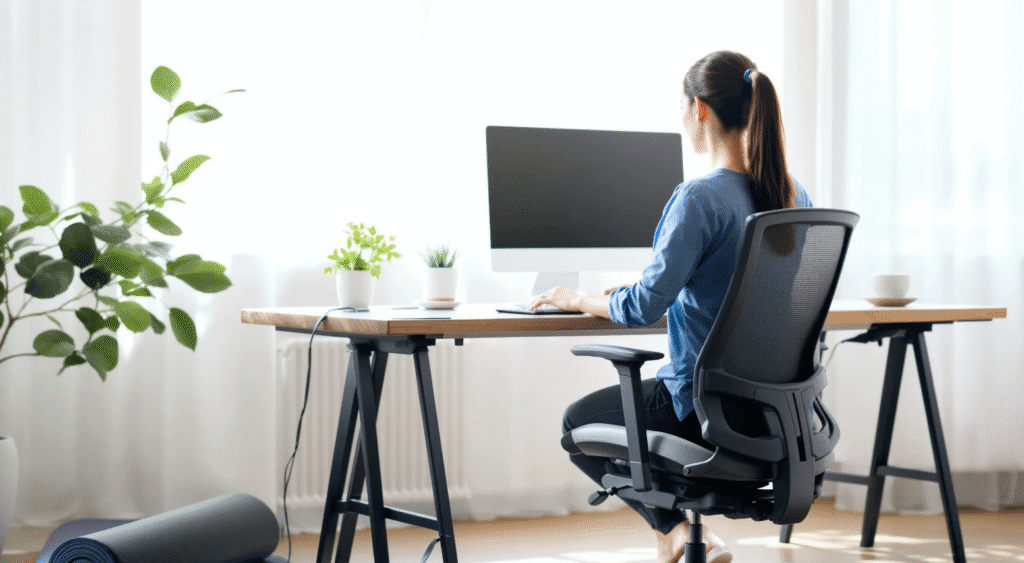
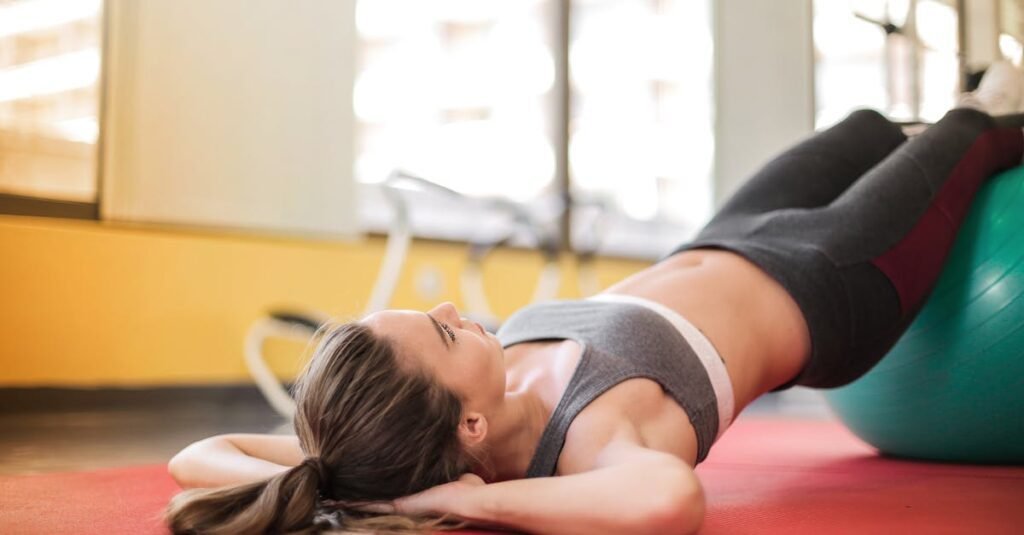
If you sit a lot (and let’s be real, most of us do), your body quietly starts “negotiating” with your range of motion. Hips feel tighter getting out of the car. Your upper back rounds over your laptop. Squatting to pick something up turns into a mini event.
The good news: you don’t need an hour-long yoga class or fancy gear to feel looser. A smart flexibility exercises workout can fit into a packed schedule, and it can support more than just touching your toes. Better movement, fewer nagging aches, improved lifting form, and yes… even a calmer nervous system.
Below is a simple, science-backed approach you can actually stick with: how flexibility works, what kind of stretching to do (and when), a 20-minute no-equipment routine, plus 5-minute “micro” options for real life.
What Flexibility Really Is (And Why It Matters For Stress, Mobility, And Longevity)
Flexibility is your ability to move muscles and joints through their available range of motion. It’s not just “muscle length.” It’s a mix of:
- Muscle and tendon properties (how elastic tissue is)
- Joint structure (your anatomy sets some limits)
- Your nervous system (your brain’s safety settings)
That last one matters more than most people think. Sometimes you’re not “tight” because your muscles are short, you’re tight because your nervous system doesn’t feel safe letting you go there.
Research-backed benefits of regular flexibility training include improved mobility, posture, reduced back pain, and lower injury risk. Some studies also link consistent stretching with improvements in cardiovascular markers like blood pressure and heart rate variability, likely because it can shift your body toward a more relaxed, parasympathetic state over time. (Not a miracle cure, but a meaningful nudge.)
Flexibility Vs. Mobility Vs. Stability
These terms get tossed around like they’re the same. They’re not.
- Flexibility: how far a muscle/joint can move.
- Mobility: how well you can control movement through that range (think: a deep squat you can actually own).
- Stability: your ability to resist unwanted movement (especially at joints like the spine, knees, shoulders).
Here’s the easy way to remember it: flexibility is the raw range, mobility is usable range, stability is protection. A solid routine touches all three.
The Real-World Benefits: Pain Resilience, Better Lifting Form, And Easier Daily Movement
A practical flexibility exercises workout pays off in the moments you don’t post online:
- Pain resilience: You’re less likely to tweak your back reaching into the back seat or wake up feeling “stuck.” Stretching can reduce soreness and stiffness, and many people feel a clear relaxation effect.
- Better lifting form: Tight ankles can force your heels up in squats. Stiff hips can steal depth. A locked-up thoracic spine can turn overhead pressing into a shoulder fight.
- Easier daily movement: Getting off the floor, climbing stairs, carrying groceries, walking with a normal stride, this is the longevity stuff.
If you want a simple goal that’s actually motivating: move through your day with less friction. Flexibility is one of the cheapest ways to get there.
How To Choose The Right Type Of Stretching
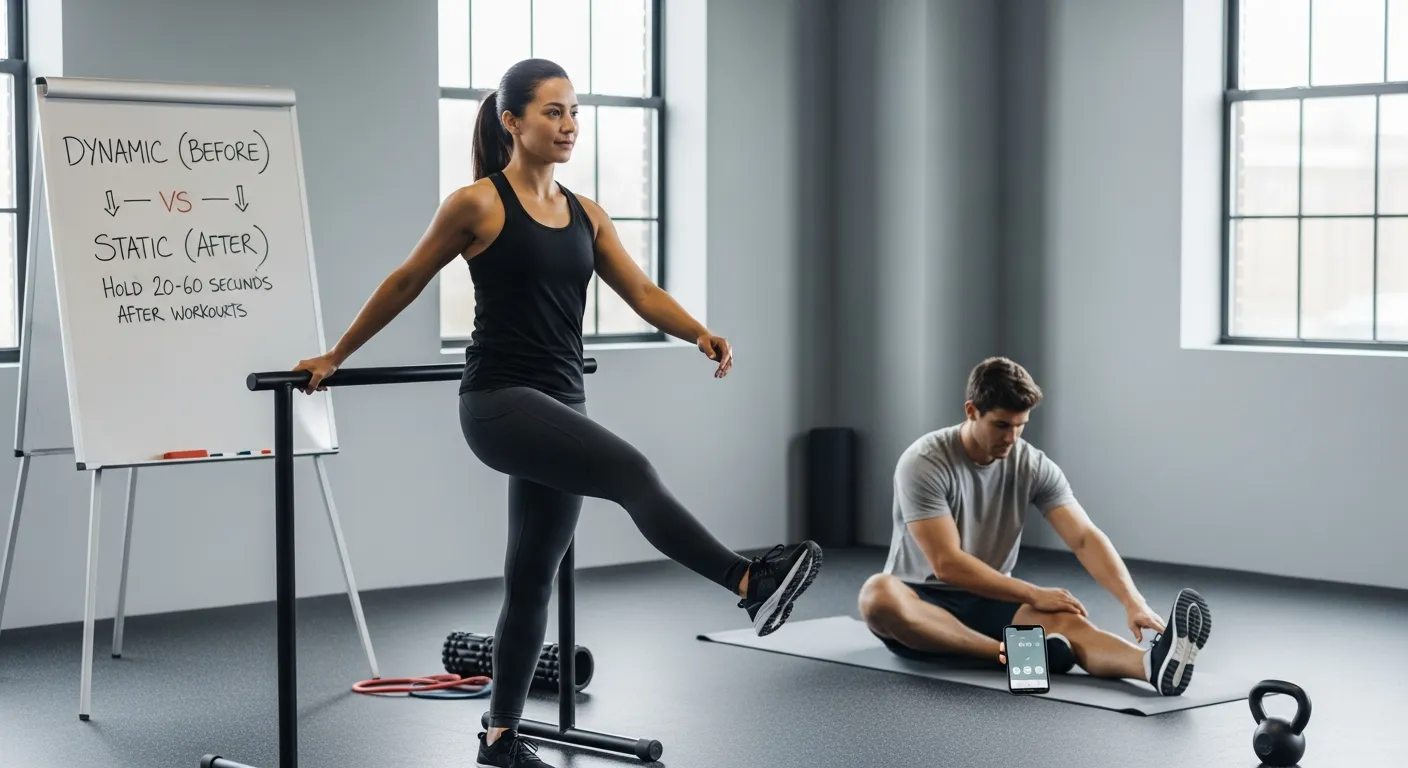
Different stretching styles do different jobs. If stretching has “never worked” for you, it’s often because the method didn’t match the moment.
Here’s the simple decision rule:
- Before movement / workouts: prioritize dynamic stretching
- After workouts / evenings / rest days: use static stretching
- To break plateaus: sprinkle in PNF or loaded stretching (carefully)
Static Stretching: Best Timing And Common Mistakes
Static stretching is when you ease into a position and hold it (usually 20–60 seconds). It’s one of the most reliable ways to improve flexibility over time.
Best timing:
- After you’re warm (post-walk, post-workout, after a hot shower)
- In the evening to downshift stress
Common mistakes (the ones that make it feel useless):
- Stretching cold: you’ll feel tighter and you’ll compensate.
- Going too hard: sharp pain, tingling, or a “nerve-y” zing isn’t a good sign.
- Holding your breath: your nervous system reads that as danger.
- Random stretching with no plan: you hit the same two stretches and ignore what’s actually limiting you (often ankles, hips, and thoracic spine).
A helpful intensity cue: aim for mild-to-moderate discomfort (like a 4–6 out of 10), not a grimace-and-sweat situation.
Dynamic Stretching: The Ideal Warm-Up For Desk-Bound Bodies
Dynamic stretching is controlled movement through range, leg swings, hip circles, arm circles, inchworms.
It’s gold if you’re desk-bound because sitting tends to:
- Shut down glutes
- Shorten hip flexors
- Stiffen the upper back
- Pull shoulders forward
Dynamic work is basically your body’s “wake-up call.” It tells your brain: we’re moving now, it’s safe to access these ranges.
Use it:
- Before strength training
- Before a run or long walk
- Midday when you feel stiff and foggy
PNF And Loaded Stretching: When To Use Them And When To Skip
PNF stretching (proprioceptive neuromuscular facilitation) usually looks like: stretch → gentle contraction → relax deeper. It can create fast improvements because it works with your nervous system.
Loaded stretching is strength training in long ranges (like slow deep split squats, Jefferson curls, long-lunge isometrics). Research suggests resistance training can increase or maintain flexibility, and higher-intensity work (appropriately programmed) can improve range of motion significantly.
Use them when:
- You’ve built a basic habit and want to progress
- You can control the position and breathe
- You’re not dealing with acute pain
Skip (or be conservative) when:
- You have nerve symptoms (tingling, numbness, radiating pain)
- A joint feels unstable
- You’re coming back from an injury and haven’t been cleared
If static stretching is “opening the door,” loaded stretching is “walking through the door with strength.” Powerful, but you earn it.
The 20-Minute Full-Body Flexibility Workout (No Equipment)
This is your main flexibility exercises workout: 20 minutes, no equipment, and designed for busy schedules.
Do it after a workout, after a brisk walk, or in the evening. If you’re doing it cold, take 2 minutes to march in place and do gentle arm swings first.
Setup: Breathing, Temperature, And Intensity Cues
Breathing: Use slow nasal breathing when possible. Try this rhythm:
- Inhale 4 seconds
- Exhale 6 seconds
Longer exhales help your nervous system let go of “guarding.”
Temperature: Warm tissue generally tolerates stretching better. If you can’t warm up, just reduce intensity and increase time.
Intensity cues:
- You should feel stretch in muscle tissue, not sharp joint pain.
- Avoid numbness/tingling or electric sensations.
- You should be able to breathe smoothly and relax your face/jaw.
Sequence: Ankles, Hips, Hamstrings, Thoracic Spine, Shoulders, Neck
Move in this order. It’s not random, ankles and hips affect everything above them.
- Ankle Rock Backs (knee-to-wall style, no wall needed), 1 minute per side
- Half-kneel, front foot flat. Gently drive knee forward over toes while keeping heel down.
- You’ll feel calf/ankle restriction.
- 90/90 Hip Switches (controlled), 2 minutes total
- Sit with knees bent, legs rotated to one side. Switch slowly side-to-side.
- Go small at first: control matters more than range.
- Hip Flexor Stretch (couch-stretch vibe, but on the floor), 1 minute per side
- Half-kneeling lunge. Tuck pelvis slightly (think “zipper up your jeans”).
- Reach same-side arm overhead and breathe.
- Hamstring Stretch (supine strap-less hold), 1 minute per side
- Lie on your back, one leg up, hands behind thigh or calf.
- Keep the other leg bent if needed.
- Thoracic Spine Open Book, 1 minute per side
- Side-lying, knees bent. Reach top arm across and open toward the floor behind you.
- Let your breath guide the rotation.
- Shoulder Flexion Wall Slide (no wall option: floor angels), 2 minutes total
- If no wall: lie on your back, ribs down, slide arms overhead slowly.
- Doorway Chest Stretch (or corner stretch), 1 minute per side
- Forearm on door frame, gentle lean.
- Keep shoulder down and back, don’t jam forward.
- Upper Trap + Levator Scap Stretch (neck), 45 seconds per side
- Sit tall. Gently tilt ear to shoulder: for levator, turn nose toward armpit.
- Light pressure only, your neck doesn’t need aggressive force.
Time check: That’s roughly 18–20 minutes depending on transitions.
Progressions And Regressions For Tight Hips Or Sensitive Knees
If your hips are tight:
- Regression: Do 90/90 switches with hands behind you for support.
- Progression: Add a 90/90 forward fold (30 seconds per side) once you can sit tall without rounding.
If your knees are sensitive:
- Regression: Fold a towel under your kneeling knee or do hip flexor stretch standing (split stance, glute squeeze).
- Progression: Swap hip flexor stretch for a low lunge hold with glute engaged and torso tall.
If hamstrings feel “nerve-y” (tingling behind knee):
- Back off the height of the leg.
- Slightly bend the knee.
- Focus on slow exhales instead of forcing range.
The goal is not to win a stretching contest. It’s to teach your body that these positions are safe.
Micro-Routines: 5 Minutes In The Morning, At Your Desk, Or Post-Workout
If 20 minutes feels unrealistic most days, you’re not failing, you’re normal.
Micro-routines are how flexibility becomes a lifestyle instead of a project you keep restarting.
Morning Reset For Stiff Backs And Hips
Do this right after you get up (or after coffee, no judgment).
5-minute flow:
- Cat-cow, 60 seconds
- World’s greatest stretch (slow lunge + rotation), 60 seconds per side
- Standing forward fold with bent knees, 60 seconds
- Glute squeeze hip flexor stretch (standing split stance), 30 seconds per side
This is less about “lengthening” and more about turning your joints back on for the day.
Desk Break Flow For Neck, Shoulders, And Thoracic Spine
Set a timer for mid-morning or mid-afternoon. Your brain will like it too.
5-minute desk break:
- Chin tucks, 8 slow reps
- Shoulder rolls, 10 backward circles
- Thread-the-needle on desk, 45 seconds per side (forearms on desk, rotate gently)
- Doorway chest stretch, 45 seconds per side
- Seated spinal twist, 30 seconds per side
Tiny note: if you’re working on a laptop, raising the screen even a few inches can reduce the “turtle neck” effect you’re stretching against all day.
Post-Workout Downshift To Improve Recovery And Sleep
After training, your nervous system is upregulated. This routine helps you come down.
5 minutes:
- Legs-up-the-wall (or calves on a couch), 2 minutes, slow breathing
- Hip flexor stretch, 45 seconds per side
- Open book, 45 seconds per side
This isn’t magic, but a calmer downshift can support better sleep quality, especially if your workouts are later in the day.
How To Progress Safely Over 4 Weeks
The secret to getting more flexible isn’t finding the perfect stretch. It’s applying consistent, tolerable stress over time.
Research commonly suggests flexibility work can be done most days of the week, especially when intensity is reasonable and you’re warmed up. But you don’t need 7 days/week to see results.
Weekly Schedule Options (2–5 Days/Week)
Pick your lane based on your life.
Option A (2 days/week):
- 20-minute full-body workout x2 (example: Tue + Sat)
Option B (3 days/week):
- 20-minute workout x2
- 5-minute micro-routine x1–2 (desk or morning)
Option C (5 days/week, busy-proof):
- 20-minute workout x2
- 5-minute micro-routine x3
Week-by-week progression idea:
- Week 1: Learn positions, keep intensity at 4/10.
- Week 2: Add 10–15 seconds per hold.
- Week 3: Add one “loaded” element 1–2x/week (like slow deep lunges) if pain-free.
- Week 4: Retest your metrics (below) and keep what works.
Simple Metrics To Track: Range Of Motion, Tension, And Symmetry
You don’t need fancy testing. Use these quick checks every week or two:
- Ankle dorsiflexion check: In a half-kneel, how far can your knee travel over toes with heel down?
- Hamstring reach: Can you straighten your knee more in the supine hamstring stretch?
- Shoulder overhead reach: Lying on the floor, can your arms reach closer to overhead without rib flare?
- Symmetry: Is one side consistently tighter or more “pinchy“?
- Tension rating: Rate the tight area from 1–10 before and after.
Small improvements count. If your tension drops from an 8 to a 6 after the routine, that’s a win.
Red Flags And When To Modify Or Get Help
Stretching should feel challenging, not threatening.
Modify or stop if you notice:
- Sharp joint pain
- Numbness/tingling
- Pain that lingers or worsens over 24–48 hours
- A feeling of instability (like a joint might “give”)
If you’ve got a history of significant injury, surgery, or chronic nerve symptoms, it’s worth checking in with a physical therapist or qualified clinician.
And one more practical note: if you’re already overwhelmed, don’t make flexibility another “perfect habit.” Two days a week done consistently beats five days you never start.
Common Flexibility Plateaus (And How To Fix Them)
Plateaus are common, and honestly, they’re usually fixable.
Why Stretching “Doesn’t Work” For Some People
A few common reasons:
- Not enough total weekly volume (doing random stretches once a week)
- Too intense, too soon (your nervous system tightens up in response)
- You’re only stretching, not strengthening the new range
- You’re targeting the symptom, not the driver (example: stretching hamstrings when the real issue is hip position or core control)
Also: if you sit 8–10 hours a day, your body is adapting to that. Stretching helps, but it’s competing with a strong signal.
The Role Of Strength Training, Hydration, And Sleep
Flexibility isn’t just a stretching problem, it’s a recovery and resilience problem.
- Strength training: Resistance training can improve or maintain flexibility, especially when you train through full ranges with control. Think split squats, deep goblet squats, Romanian deadlifts done well.
- Hydration: Dehydration can make tissues feel “grippy,” and it can worsen cramping. You don’t need to obsess, just don’t run chronically under-fueled and under-hydrated.
- Sleep: Poor sleep increases pain sensitivity and stress hormones, which can raise baseline muscle tension. If you’re plateaued and exhausted, the answer may be earlier bedtime, not a harder stretch.
A small, surprisingly effective combo: 2–3 strength sessions/week + 2 flexibility sessions/week + a 5-minute downshift most nights.
Avoiding Overstretching, Nerve Irritation, And Aggressive Holds
More isn’t always better.
Be cautious with:
- Long, aggressive holds when you’re cold or stressed
- Bouncing into end range
- Forcing positions that cause sharp pain
If a stretch creates that “electric line” feeling down an arm or leg, you may be irritating a nerve. Back off, bend the knee or elbow slightly, and reduce range.
Think of flexibility like negotiating with your body. If you bully it, it pushes back.
A quick aside that might surprise you: sometimes the fastest way to get more flexible is to stop chasing max range for a week and focus on easy breathing + gentle reps. Your nervous system often unlocks more than brute force ever did.
Conclusion
A flexibility exercises workout doesn’t have to be fancy to be effective. If you give your body 20 minutes a couple times a week, or even 5 minutes a day in the right places, you’ll usually notice the payoff fast: smoother movement, less stiffness, better posture, and a calmer “baseline” in your body.
If you want the simplest next step: do the 20-minute routine twice this week, and pick one micro-routine you can attach to something you already do (morning coffee, a lunch break, or your post-workout cooldown). Consistency is the real biohack.