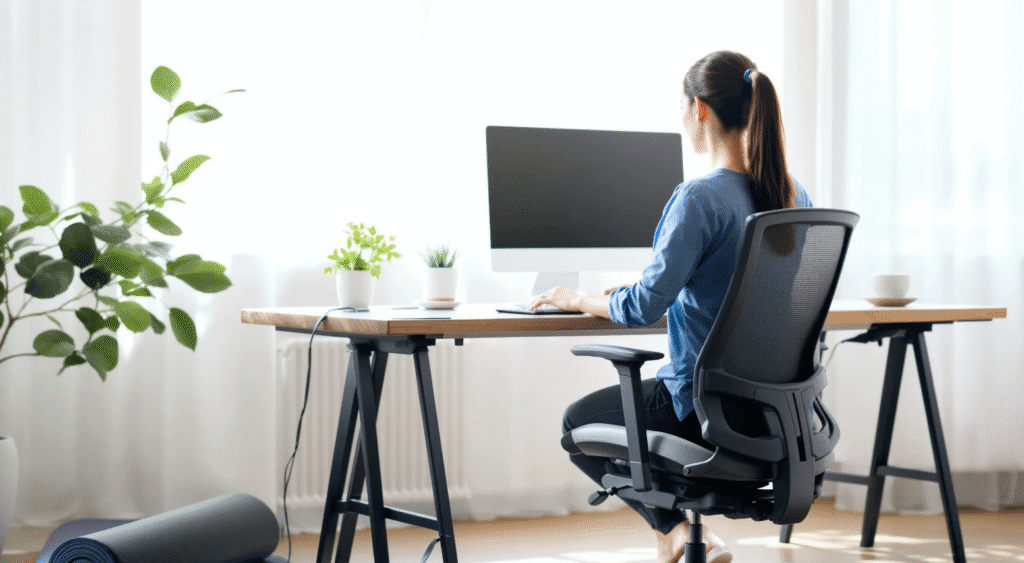
You know that “creaky” feeling when you stand up after a long meeting, or the way your shoulders inch toward your ears by 3 p.m.? That’s not you “getting old” overnight, it’s usually a mix of stiff tissues, repetitive positions, and not enough time spent moving your joints through their full range.
Flexibility exercises are the simple, often underrated tools that help your body bend, reach, and rotate with less effort. They can make everyday life feel easier (think: getting out of the car, picking up a kid, walking up stairs) and they pair really well with strength training, walking, and basically any fitness plan you’re trying to stick to.
In this guide, you’ll learn what flexibility exercises are, how they’re different from mobility and stability work, which styles actually work, and a no-equipment 10-minute routine you can do today.
Flexibility Vs Mobility Vs Stability: What Each One Means
These three get lumped together all the time, but they’re not the same. If you’ve ever said, “I’m not flexible,” when you really meant “I can’t control that position,” this section is for you.
Flexibility: Muscle Length And Joint Range Of Motion
Flexibility exercises stretch your muscles and (over time) improve the range of motion (ROM) available at a joint. In plain English: they help your tissues tolerate being lengthened so you can reach a position more comfortably.
A couple quick notes that make this feel less mysterious:
- Flexibility is partly about muscle/tendon stiffness and elasticity.
- It’s also influenced by your nervous system (your brain’s “that feels safe” vs “nope” response).
- And yes, your joint structure matters too. Two people can train equally hard and still have different end ranges.
So when you’re doing flexibility training, you’re not just “pulling on a muscle.” You’re teaching your body that a longer position is safe and repeatable.
Mobility: Controlled Range You Can Use
Mobility is the range of motion you can actively move through with control. You might be able to pull your knee to your chest (flexibility), but can you lift it there under your own power without shifting your pelvis or holding your breath (mobility)?
Mobility tends to improve when you combine:
- some stretching (flexibility)
- some strength (especially end-range strength)
- some coordination (moving smoothly)
If flexibility is “available range,” mobility is “usable range.”
Stability: The Support That Makes Range Safer
Stability is your body’s ability to resist unwanted movement and stay supported as you move. It’s what keeps your spine from wobbling when you reach overhead, or your knee from caving in when you step down stairs.
This matters because flexibility without stability can feel… weird. Sometimes even painful. If your body doesn’t trust you in a position, it’ll often tighten up as a protective strategy.
A nice way to think about it:
- Flexibility gives you the room.
- Mobility lets you move in that room.
- Stability keeps you safe while you do it.
Why Flexibility Matters For Busy Adults
If your calendar is packed, flexibility work can feel optional, like something you’ll “get to” after you finally catch up on life. But for busy adults, stretching is often less about looking bendy and more about keeping your body comfortable and capable.
Everyday Movement And Posture
Most modern days are built around one thing: not moving much. Long sitting, lots of screen time, commuting, and then maybe a workout where you do the same handful of patterns.
Flexibility exercises can help with:
- Reaching overhead without arching your lower back (hello, tight lats/pecs)
- Standing tall without feeling like your hips are being pulled forward (often tight hip flexors)
- Turning your head/upper back more easily while driving
- Squatting to pick something up without your heels popping up
And posture isn’t about forcing yourself to “sit straight.” It’s about having enough range and strength options so you’re not stuck in one position all day.
Injury Risk, Joint Health, And Pain Management
Regular flexibility training is commonly recommended to support joint mobility, posture, and aches and pains, especially in areas that get stiff from repetitive positions.
A key point: stretching isn’t a magic spell that prevents all injuries. But it can reduce strain by improving how loads are shared across tissues. If your hips don’t move well, your lower back might take the hit. If your ankles are stiff, your knees may compensate.
Also, many people find gentle stretching helpful for low back discomfort and general tightness, especially when paired with strengthening and regular movement breaks.
Performance, Recovery, And Stress Relief
Even if you’re not “an athlete,” your body still performs every day.
Flexibility work can help you:
- move more efficiently during workouts (better positions)
- recover better by reducing that “wired and tight” feeling after training
- feel looser for activities you enjoy (hiking, pickleball, gardening, chasing kids)
And there’s a mental angle too. Slow stretching with calm breathing nudges your nervous system toward “rest and digest.” It’s not the same as meditation, but it can be a surprisingly effective off-ramp from a stressful day.
The Main Types Of Flexibility Exercises
Not all stretching is the same. The best type depends on what you’re doing (warm-up vs cooldown), your goals, and how your body responds.
Static Stretching
Static stretching is the classic: you move into a stretch and hold it.
It’s also one of the best-supported approaches for improving flexibility long-term. Many guidelines and research reviews suggest holding stretches for around 30 seconds or longer per muscle group to meaningfully improve ROM over time.
How it feels:
- steady tension
- mild-to-moderate discomfort
- no bouncing
Great for:
- after workouts
- evenings / before bed (if it helps you unwind)
- dedicated flexibility sessions
Dynamic Stretching
Dynamic stretching uses controlled movement through a range, think leg swings, arm circles, walking lunges.
It’s less about “lengthening and holding” and more about preparing your joints and nervous system for activity.
Great for:
- warm-ups
- days you feel stiff and want to “grease the groove”
- sports and lifting (especially before you train)
Rule of thumb: dynamic stretching should look smooth and controlled, not like you’re trying to launch a limb into orbit.
Active Stretching, PNF, And Loaded Stretching
These are the “level up” options, still approachable, just a little more technical.
Active stretching: you use your own muscles to hold the position (example: lifting a straight leg up and holding it without hands). This builds strength in the range you’re trying to own.
PNF (Proprioceptive Neuromuscular Facilitation): usually involves contracting a muscle, then relaxing into a deeper stretch (often done with a partner, but you can do solo versions with a strap). It can be very effective, but it’s also easier to overdo.
Loaded stretching: you lengthen a muscle under light load (example: a deep goblet squat hold, or a Romanian deadlift pattern with a controlled pause). This blends flexibility with strength, often the sweet spot for long-term, usable range.
If you’ve tried stretching for years and feel like nothing changes, adding some active or loaded work is often the missing link.
How To Do Flexibility Work Safely And Effectively
Flexibility training is simple, but there are a few details that make it work better, and keep it from turning into a “why does that joint feel cranky now?” situation.
How Hard To Stretch: Discomfort Vs Pain
You’re aiming for mild to moderate discomfort, not pain.
Use this quick scale:
- 0–3/10: very mild, fine for frequent, gentle work
- 4–6/10: moderate, often a productive stretching zone
- 7–10/10: too intense, back off
Pain signs to respect:
- sharp, stabbing, or burning sensations
- numbness/tingling
- pain that lingers or worsens after you stop
A stretch should feel like tension and opening, not like your body is bracing for impact.
How Long And How Often: Simple Weekly Targets
Consistency beats heroic sessions.
Common recommendations suggest training flexibility most days of the week (often 5–7 days) for major joints, especially if you’re trying to make noticeable changes.
Simple targets that work for busy schedules:
- Minimum effective routine: 10 minutes, 3–5 days/week
- Solid progress routine: 10–20 minutes, 5–7 days/week
For static stretches, a practical structure is:
- hold 30–60 seconds
- repeat 1–2 rounds
- hit the big areas (hips, calves/ankles, chest/upper back)
Research reviews on stretching volume suggest that more total time generally leads to bigger ROM changes (up to a point). But if you can only do 10 minutes, that’s still a meaningful “vote” for your future body.
Breathing, Temperature, And Timing (Warm-Up Vs Cooldown)
A few underrated tools:
- Breathing: slow nasal breathing (or slow mouth breathing if you’re congested) helps you relax into range. Try a longer exhale.
- Temperature: warm tissues stretch better. A short walk, light cycle, or even a warm shower can make stretching feel dramatically easier.
- Timing:
- Before workouts: prioritize dynamic stretching and mobility drills.
- After workouts / later in the day: static stretching tends to feel best and is less likely to temporarily reduce strength output.
If you’re squeezing this into a workday, do a 1-minute warm-up first: march in place, do a few bodyweight squats, or take the stairs, then stretch.
A Simple 10-Minute Flexibility Routine (No Equipment)
This is a practical “maintenance and momentum” routine. Do it once and you’ll feel better today. Do it regularly and you’ll likely notice better ROM, easier posture, and fewer stiff spots.
How to use it
- Total time: ~10 minutes
- Intensity: 4–6/10 (no pain)
- Breathing: slow, steady
- Optional: do 30–60 seconds per move
Neck, Chest, And Thoracic Spine
These help counter the “laptop hunch” and tight front-body feeling.
- Chin nod + gentle neck stretch (both sides)
- Sit or stand tall.
- Lightly tuck your chin (like making a double chin), then tilt your ear toward your shoulder.
- Hold 30 seconds each side.
- Doorway chest stretch
- Forearm on a doorframe, elbow around shoulder height.
- Step through until you feel a stretch across your chest/front shoulder.
- Hold 30–45 seconds each side.
- Thread-the-needle (thoracic rotation)
- On hands and knees.
- Slide one arm under the other and rotate your upper back.
- Hold 30 seconds each side, or do 5 slow reps.
Hips: Hip Flexors, Glutes, And Adductors
If you sit a lot, your hips deserve a standing ovation… and a stretch.
- Half-kneeling hip flexor stretch
- One knee down, other foot in front.
- Tuck your pelvis slightly (think: zipper up toward ribs).
- Shift forward until you feel the front of the hip open.
- Hold 45–60 seconds each side.
- Figure-4 glute stretch (on your back or seated)
- Cross ankle over opposite knee.
- Pull the leg in gently.
- Hold 45 seconds each side.
- Side lunge adductor stretch
- Wide stance, shift weight to one side, keep the other leg straight.
- You’ll feel inner-thigh lengthening on the straight leg.
- Hold 30–45 seconds each side.
Hamstrings, Calves, And Ankles
Tight calves and ankles are sneaky, they can affect squats, walking comfort, and even how your knees feel.
- Hamstring stretch (supine or standing hinge)
- Keep your spine long.
- If standing, hinge at your hips instead of rounding your back.
- Hold 45–60 seconds.
- Calf stretch (straight-knee)
- Hands on wall, one leg back.
- Keep heel down, knee straight.
- Hold 30–45 seconds each side.
- Ankle rocks (knee-to-wall drill)
- Foot flat, bend knee forward over toes without heel lifting.
- Do 8–12 slow reps per side.
If you want to keep it super simple: pick one move from each group and do it daily. That’s still a win.
Common Mistakes And When To Modify
Stretching has a low barrier to entry… which is exactly why people accidentally do it in ways that don’t help (or that make things feel worse).
Bouncing, Forcing Range, And Skipping Strength
Three classics:
- Bouncing: ballistic stretching can irritate tissues and trigger protective tightening. If it looks like you’re pulsing aggressively, slow it down.
- Forcing range: yanking yourself deeper teaches your nervous system that stretching = threat. You might “win” today and feel cranky tomorrow.
- Skipping strength: if you only stretch, your body may not learn to use the range. Adding basic strength, squats, hinges, rows, carries, often makes flexibility gains stick.
A practical combo that works well: stretch the tight area, then do a light strength move that uses that new range (like a controlled lunge after hip flexor stretching).
Desk-Job Hot Spots: Hips, Shoulders, And Upper Back
If your day involves screens, these areas usually complain first:
- Hip flexors: feel tight when you stand up: can pull the pelvis forward
- Glutes: can feel “asleep” (not weak forever, just underused)
- Chest/pecs: shoulders rounding forward
- Thoracic spine (upper back): stiff rotation and extension
Micro-fixes you can do between calls:
- 30 seconds hip flexor stretch per side
- 10 scap squeezes (pinch shoulder blades gently)
- 5 thoracic rotations per side
It’s not fancy, but it adds up.
When To See A Professional (Injury, Nerve Symptoms, Hypermobility)
Stretching should make you feel better overall. Get professional guidance (physical therapist, sports medicine clinician, qualified trainer) if you notice:
- pain from a recent injury that doesn’t improve
- numbness, tingling, or radiating symptoms (possible nerve involvement)
- joint instability, frequent “giving way,” or a history of dislocations
- signs of hypermobility (you’re very bendy but feel achy/unstable)
In those cases, you may need more stability and strength work (and less aggressive stretching), at least for a while.
How To Build A Sustainable Flexibility Habit
The best flexibility routine is the one you’ll actually do when life gets busy, which is most weeks, let’s be real.
Pair Stretching With Existing Anchors (Morning, Work Breaks, Post-Workout)
Don’t rely on motivation. Use anchors.
Try one:
- Morning (2–5 minutes): hip flexor + chest stretch
- Work break (3 minutes): neck + thoracic rotation
- Post-workout (5–10 minutes): static stretches while your body is warm
- Evening wind-down (5–10 minutes): gentle stretching + slow breathing
If you’re the kind of person who likes systems (same), treat this like habit stacking.
Track Progress With Functional Benchmarks
Forget extreme poses. Track changes that matter in real life.
Pick 2–3 benchmarks and re-check every 2–4 weeks:
- Can you squat with heels down more comfortably?
- Can you reach overhead without your ribs flaring?
- Can you sit tall on the floor with less rounding?
- Does your “tight side” feel closer to your other side?
You can also use simple photos (same lighting, same position) or a notes app: “Hip flexor stretch feels 30% less intense.” That counts.
Progress in flexibility is often subtle week to week, until one day you realize you got out of bed and didn’t do the little robot-walk to the bathroom.
Conclusion
Flexibility exercises aren’t just “extra” or something reserved for yoga people. They’re a practical way to improve joint range of motion, feel better in your body, and make daily movement smoother, especially when your life involves lots of sitting, stress, and doing a million things at once.
If you want the simplest next step: do the 10-minute routine three times this week, keep the intensity moderate, and breathe like you mean it. Then notice what changes, your squat, your posture at your desk, your shoulders during a walk, even how you sleep.
And if stretching has felt frustrating in the past, remember the big idea: flexibility works best when it teams up with mobility and strength. You’re not chasing perfection. You’re building a body that moves well for the long haul.