

On the mornings when your brain feels foggy and your schedule is packed, a feel-good smoothie can be the calm, steady fuel that gets you moving, without the sugar crash.
Here’s how to blend whole-food ingredients into a glass that supports your gut, mind, and energy, while actually tasting great.
What Makes A Smoothie “Feel-Good”
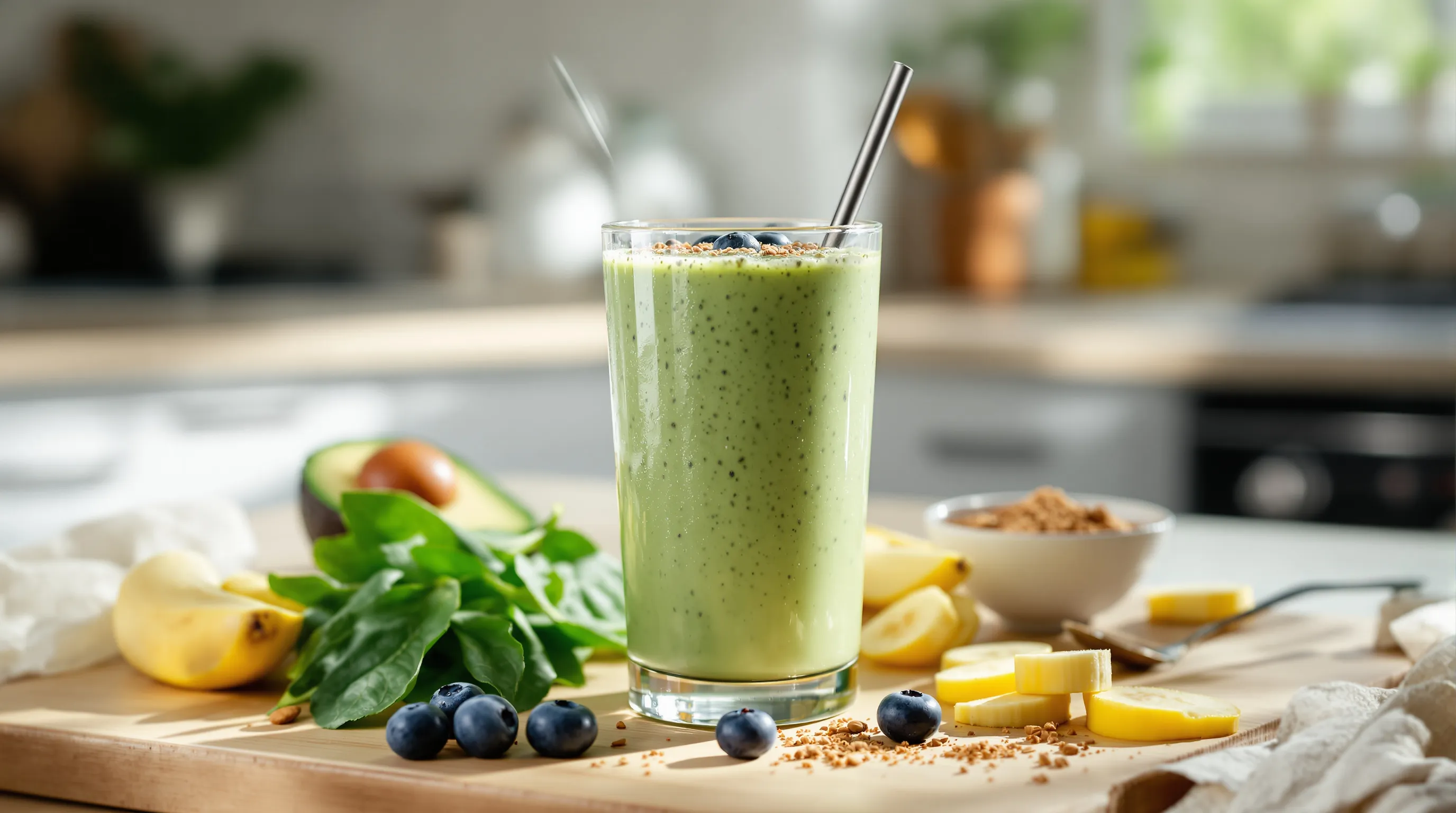
A feel-good smoothie balances protein, healthy fat, and fiber so your blood sugar rises gently and your energy lasts. It’s rich in micronutrients, vitamins, minerals, and antioxidants, from produce. And it skips the usual culprits: juices, syrups, and highly processed add-ins. The goal isn’t just calories: it’s steady focus, lighter digestion, and mood support you can feel.
Think whole foods first. Pair fruit with greens and seeds, add a clean protein, and go easy on sweeteners. Small tweaks here create big shifts in how you feel for hours.
Build-Your-Own Feel-Good Formula
Use this simple mix-and-match template:
- Liquid (8–12 oz): water, unsweetened almond/soy/oat milk, or dairy milk.
- Protein (15–25 g): Greek yogurt, whey or plant-based powder, or silken tofu.
- Produce (1–2 cups): leafy greens, berries, banana, avocado.
- Fiber: 1–2 Tbsp flax or chia, 1/2 cup oats, or a chunk of green banana.
- Fat: 1–2 Tbsp nut/seed butter, seeds, or avocado.
- Flavor: cocoa/cacao, cinnamon, ginger, vanilla, or a squeeze of lemon.
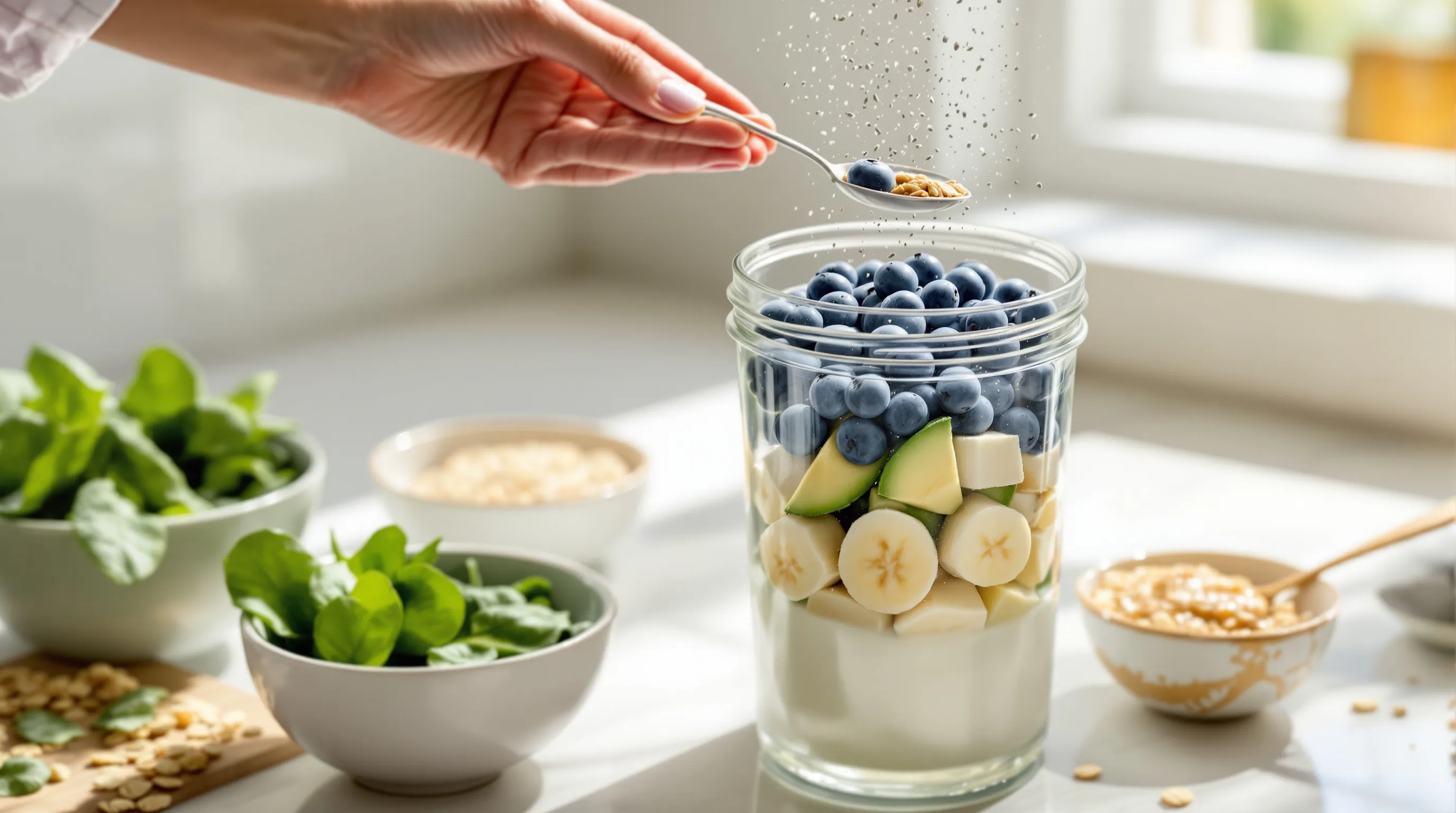
Blend liquid first, then soft items, then frozen fruit, and finish with seeds for ultra-smooth texture.
Evidence-Backed Ingredients To Try
- Leafy greens: vitamins K and C, folate, and fiber for bone and immune health.
- Berries: polyphenols linked to cognitive and heart benefits.
- Oats, chia, flax: soluble fiber that supports gut health and steadier blood sugar.
- Nuts and seeds: healthy fats and minerals for satiety and heart health.
- Polyphenol boosters: cacao/cocoa or matcha for antioxidant and potential mood and vascular support.
These choices stack the deck for stable energy and a happier gut-brain loop.
Three Feel-Good Smoothie Recipes
Short on time? Start with one of these flavor-forward blends and adjust protein or fiber to your needs:
- Morning Energy Berry-Protein Smoothie: creamy, bright, and packed with antioxidants.
- Gut-Soothing Green Ginger Smoothie: gentle on digestion with a refreshing kick.
- Post-Workout Chocolate Cherry Recovery Smoothie: protein-forward with anti-inflammatory cherries.
Each recipe leans on whole foods, balanced macros, and minimal added sugar.
Timing, Habits, And Smart Swaps
- Drink at breakfast for steady morning focus, post-workout for recovery, or mid-afternoon to avoid the slump.
- Balance fruit with fiber, protein, and fat to keep blood sugar in check.
- Swap in dairy-free milks, low-FODMAP fruits, or vegan proteins as needed.
- Skip fruit juices and sweetened yogurts: whole fruit and unsweetened bases taste better and work better for energy.
Sustainable habits beat perfect ones, aim for consistency, not complexity.
Prep, Storage, And Blending Tips
- Batch freezer packs with measured fruit, greens, and seeds: add liquid and protein when blending.
- Refrigerate smoothies in airtight bottles up to 24–48 hours: shake before sipping.
- For silkier texture, add liquids first, then soft items, then frozen items: finish with seeds and ice.
- Use some frozen fruit for thickness without watering things down.
A few minutes of prep saves your future self on busy days.
Conclusion
Here are the essentials, distilled and ready to blend into daily life.
Mood, Energy, And Blood Sugar Basics
Protein, fiber, and healthy fat slow glucose absorption, helping you avoid spikes and crashes. That means smoother mood, better focus, and more stable energy, exactly what you want from a feel-good smoothie.
The Gut–Brain Connection In A Glass
Prebiotic fibers (oats, chia, flax, green banana) and polyphenols (berries, cacao, greens) support a healthy microbiome. A happier gut is linked to better stress resilience and mood regulation.
Portion Guide: Protein, Fiber, Fat, And Micronutrients
- Protein: 15–25 g (1 scoop powder or ~3/4 cup Greek yogurt)
- Fiber: 5–10 g (1–2 Tbsp seeds or 1/2 cup oats)
- Fat: 5–15 g (1–2 Tbsp nut/seed butter or seeds)
- Micronutrients: 1–2 cups produce for color and variety
The Core Components: Liquid, Protein, Produce, Fiber, Fat, Flavor
Start with 8–12 oz liquid, add your protein, then 1–2 cups produce. Layer fiber and fat for satiation, and finish with flavor, cinnamon, vanilla, ginger, or cocoa, to keep sugar low but taste high.
Customize For Goals: Focus, Gut Calm, Recovery, Or Light Meal
- Focus: add matcha, cacao, berries.
- Gut calm: ginger, greens, prebiotic fibers.
- Recovery: protein plus cherries or a pinch of turmeric.
- Light meal: include avocado or nut butter for staying power.
Protein: Whey, Pea, Greek Yogurt, And Collagen (Pros/Cons)
- Whey: complete, fast-absorbing: dairy-based.
- Pea: vegan, allergen-friendly: mix with rice or seeds for a fuller amino profile.
- Greek yogurt: protein plus probiotics: choose unsweetened.
- Collagen: great for joints/skin: pair with another protein for tryptophan.
Fiber And Prebiotics: Oats, Chia, Flax, Psyllium, Green Banana
Oats add beta-glucan for cholesterol and glucose support. Chia and flax deliver gel-forming fiber and omega-3s. Psyllium boosts fullness. Green banana flour adds resistant starch for the microbiome.
Polyphenol Power: Berries, Cacao, Matcha, Greens
These compounds act as antioxidants and may support vascular and cognitive health. They also feed beneficial gut microbes, another reason your smoothie should be colorful.
Omega-3s And Anti-Inflammatory Add-Ins: Flax, Chia, Walnuts
ALA-rich seeds and walnuts support heart health and may help modulate inflammation. Grind flax for absorption, and rotate with chia or a small handful of walnuts.
Adaptogens And Extras: Ashwagandha, Maca, Electrolytes (Use With Care)
Optional add-ins can support stress or stamina, but start small and check for medication interactions. Electrolytes help after sweaty workouts: skip the sugary versions.
Morning Energy Berry-Protein Smoothie
Blend 1 cup unsweetened almond milk, 1 cup frozen mixed berries, 3/4 cup Greek yogurt, 1 cup spinach, 1 Tbsp chia. Add ice if you like it thicker. Bright, creamy, energizing.
Gut-Soothing Green Ginger Smoothie
Blend 1 cup coconut water, 1 cup spinach, 1/2 green apple, 1/4 avocado, 1 tsp fresh ginger, 1 Tbsp chia. Optional: pinch of cinnamon. Gentle on the gut, refreshing.
Post-Workout Chocolate Cherry Recovery Smoothie
Blend 1 cup milk (dairy or soy), 1 cup frozen cherries, 1 Tbsp cocoa/cacao, 1/2 banana, 1 scoop whey or pea protein, 1 Tbsp ground flax. Rich, satisfying, recovery-focused.
When To Drink: Breakfast, Pre-Workout, Or Afternoon Slump
Breakfast for steady mornings, 60–90 minutes pre-workout for fuel, or mid-afternoon to sidestep vending-machine cravings.
Blood Sugar-Friendly Sweetness: Fruit First, Then Smart Add-Ins
Rely on whole fruit for sweetness, then add cinnamon, vanilla, or cocoa. Skip juices and syrups: your energy (and teeth) will thank you.
Allergy-Friendly And Dietary Swaps (Dairy-Free, Low-FODMAP, Vegan)
Go plant milk and pea/rice protein for dairy-free or vegan. Choose low-FODMAP fruits like berries and kiwi if your gut is sensitive. Keep flavors big, sugars low.
Make-Ahead Freezer Packs And Fridge Storage
Assemble produce and seeds in freezer bags. In the morning, add liquid and protein, blend, and go. Refrigerated smoothies keep 24–48 hours in airtight bottles, shake before drinking.
Texture And Taste Upgrades: Ice Ratios, Frozen Vs. Fresh, Blending Order
Use some frozen fruit for body, minimal ice to prevent dilution. Liquid first, then soft items, then frozen: finish with seeds for a silky sip.
Food Safety And Quality: Wash, Rotate Greens, Mind Oxalates
Rinse produce well. Rotate greens (spinach, kale, arugula) to avoid excess oxalates. When in doubt, toss anything wilted or moldy.
Your feel-good smoothie is more than a snack, it’s a small, daily practice that steadies your energy, nourishes your gut, and supports a clearer mind. Blend purposefully, enjoy slowly, and notice how you feel.