
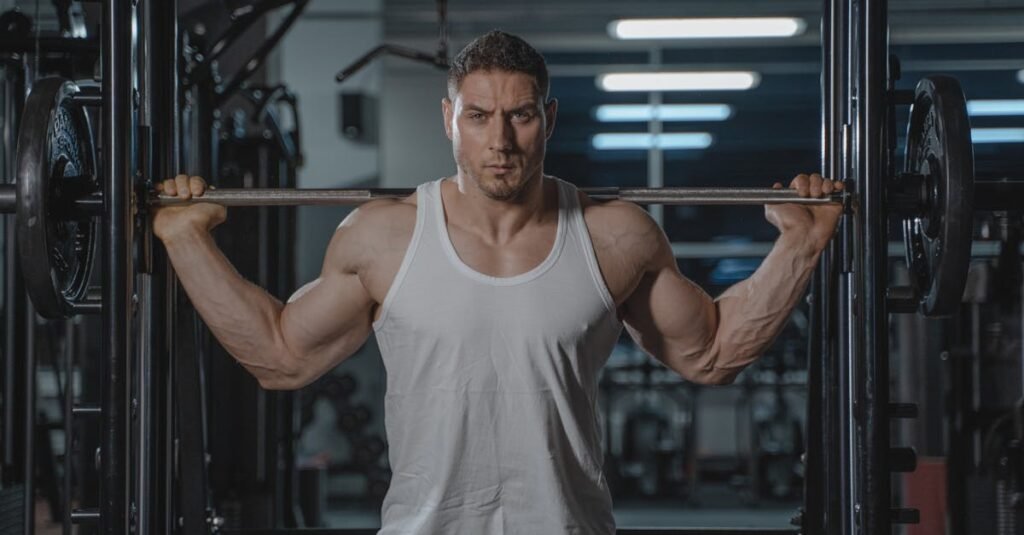
If you’ve ever Googled “best resistance training,” you’ve probably gotten whiplash.
One person swears you must lift heavy barbells. Another says machines are safer and “just as good.” Someone else is doing band workouts in a hotel room and somehow looks fitter than all of us. So… what’s actually best?
Here’s the calm, science-backed answer: there isn’t one single best method, there’s the best resistance training for you. Your goals, schedule, joints, and preferences matter more than internet arguments.
In this guide, you’ll get a practical framework (plus simple weekly plans) so you can build strength, feel more energetic, protect your joints, and support longevity, without turning your life into a full-time gym project.
What “Best” Resistance Training Really Means (And How To Choose Yours)
The word “best” is tricky because it implies there’s one perfect program that works for everyone. In real life, the best resistance training is the plan you can do consistently, progress on, and recover from.
Think of it like choosing a tool for a job. A hammer isn’t “better” than a screwdriver, it depends what you’re building.
Goals That Change The Plan: Strength, Muscle, Fat Loss, Longevity, Performance
Your goal changes what “best” looks like:
- Strength (getting stronger): You’ll lean toward heavier loads, lower reps, and longer rest. You’ll also benefit from practicing big compound lifts (squat pattern, hinge, press, pull).
- Muscle (hypertrophy): You can build muscle with a wide range of reps and tools. What matters most is good weekly volume and pushing sets close enough to effort.
- Fat loss: Resistance training supports fat loss by preserving (or building) muscle while you’re in a calorie deficit. The “best” plan is the one that helps you keep training while managing fatigue.
- Longevity & healthy aging: The best plan is joint-friendly, consistent, and balanced, strong legs, strong back, stable hips and shoulders, plus enough power and grip strength to stay capable.
- Performance (sports, hiking, life): You’ll likely include some strength work and some power/conditioning elements (kettlebells, carries, sled pushes, jumps, if your joints tolerate them).
One reassuring research note: free weights and machines appear similarly effective for muscle growth when volume and effort are matched. A 9-week study in the Journal of Bodywork and Movement Therapies found no significant difference in hypertrophy between free-weight and machine-based programs, and meta-analyses have reported comparable results across multiple studies. That means your plan can be flexible, and still “count.”
Constraints That Matter: Time, Equipment, Injuries, And Training Age
Most people don’t fail because they chose the “wrong” exercise. They fail because their plan doesn’t fit their reality.
Here are the constraints that actually matter:
- Time: If you can train 2 days/week, your “best” program is a smart full-body plan, not a 5-day bodybuilding split you’ll skip.
- Equipment: Home dumbbells + bands can be enough for great results. A full gym can make progression easier, but it’s not magic.
- Injuries and cranky joints: Your plan needs options (machines, cables, reduced range of motion, different grips) so you can keep training around issues.
- Training age (how long you’ve lifted):
- Beginner: You’ll grow fast with simple, repeatable workouts and solid technique.
- Intermediate: You’ll need a little more structure (volume, progression, exercise rotation).
- Advanced: You’ll often do better with more specificity, more careful recovery, and smarter “minimum effective dose” decisions.
If you want a quick litmus test: the best resistance training is the one you’ll still be doing in 6 months.
The Non-Negotiable Principles Of Effective Resistance Training
Methods change. Principles don’t. You can use barbells, machines, bands, kettlebells, if you follow the basics, your body adapts.
Progressive Overload Without Guesswork
Progressive overload simply means you gradually ask your body to do more over time.
But it doesn’t have to mean adding weight every week forever. Your options include:
- Add reps (e.g., 8 reps becomes 10 with the same weight)
- Add load (5 lbs more on the dumbbell)
- Add sets (2 sets becomes 3)
- Improve form/range of motion (same weight, deeper squat with control)
- Reduce rest slightly while keeping performance solid
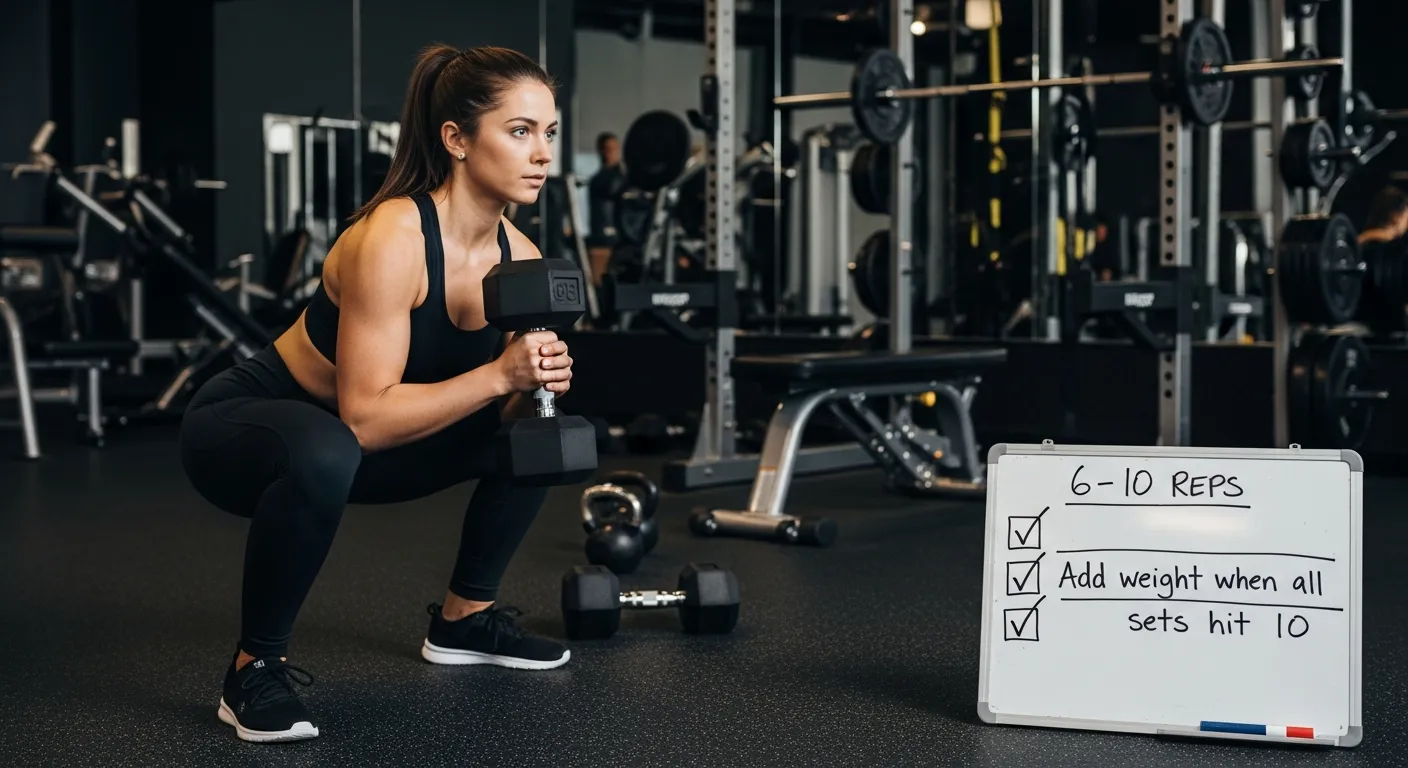
A practical, non-obsessive way to do this is a rep range goal:
- Pick a range (say 6–10 reps).
- Use a weight you can do for 6–8 reps with good form.
- Keep the same weight until you can hit 10 reps on all sets.
- Then increase the weight and repeat.
That’s progressive overload with zero drama.
Volume, Intensity, And Frequency: The Simple Balancing Act
These three are the knobs you turn:
- Volume: total hard sets per muscle per week
- Intensity: how heavy (or how close to failure) you train
- Frequency: how often you train each muscle per week
You don’t need a PhD to use them.
For most busy adults, a strong starting point is:
- Frequency: train each major muscle group 2x/week
- Volume: roughly 8–15 hard sets per muscle per week (start on the lower end)
- Intensity/effort: most sets should feel like you could do 1–3 more reps with good form
If you crank one knob up (like volume), you usually have to turn another down (like intensity or frequency) to recover.
Exercise Selection: Movement Patterns Over “Best” Exercises
Instead of hunting for the single best exercise, build around movement patterns:
- Squat pattern: squat, goblet squat, leg press, split squat
- Hinge pattern: Romanian deadlift, hip thrust, cable pull-through
- Push: push-up, dumbbell bench, machine chest press, overhead press
- Pull: row variations, lat pulldown, pull-ups, cable row
- Carry/core stability: farmer carries, suitcase carries, Pallof press
This keeps your training balanced and joint-friendly.
And it helps you swap exercises without “starting over” when life happens (busy week, shoulder irritation, crowded gym, pick your chaos).
The Best Resistance Training Methods (Pros, Cons, And Who They Fit)
If you’re wondering what equipment is “best,” here’s the real answer: most tools work, they just have different trade-offs.
Also worth repeating: research suggests free weights and machines can be equally effective for building muscle when programmed well. So you’re not “missing out” if you prefer one.
Free Weights And Barbell Training
Pros
- Great for compound lifts (squat/hinge/press/pull)
- Builds coordination and stabilizer strength
- Extremely versatile and easy to progress
Cons
- Higher technique demand (especially barbells)
- Can be intimidating in a busy gym
- Fatigue and form breakdown can creep in faster
Best for you if: you enjoy learning lifts, you want functional strength, and you can practice good form consistently.
Machines And Cables For Consistency And Joint-Friendly Loading
Pros
- Fixed paths reduce technique barriers
- Easy to isolate muscles and keep tension consistent
- Often more joint-friendly (great for training around aches)
- Faster to adjust weights, especially pin-loaded machines
Cons
- Some machines don’t fit every body perfectly
- Less demand on stabilizers (not “bad,” just different)
Best for you if: you want safe, repeatable workouts: you’re coming back from a layoff: or you’re building confidence with resistance training.
Bodyweight Training For Convenience And Skill
Pros
- No equipment needed
- Builds control, coordination, and relative strength
- Easy to do at home (or in your office… if you’re brave)
Cons
- Lower-body progression can be tricky without added load
- Some moves are hard to scale (pull-ups, pistol squats)
Best for you if: you want simple routines, travel often, or like skill-based strength goals.
Resistance Bands For Travel, Rehab, And High-Rep Pump Work
Pros
- Lightweight, cheap, and portable
- Great for rehab and joint-friendly training
- Awesome for high-rep accessory work (glutes, shoulders, arms)
Cons
- Harder to quantify load precisely
- Can be awkward for heavy leg training
Best for you if: you travel, want a “minimum equipment” plan, or need a gentle way to load joints.
Kettlebells And Sandbags For Power, Conditioning, And Core Control
Pros
- Builds athleticism: power, endurance, grip strength
- Carries and offset loading challenge your core in a practical way
- Efficient workouts when you’re short on time
Cons
- Technique matters (swings especially)
- Progression can be limited if you don’t have multiple weights
Best for you if: you want strength + conditioning, enjoy variety, and like workouts that feel more “sporty” than machine-based.
If you’re building the best resistance training setup at home, a very workable “starter kit” is: adjustable dumbbells + a bench + a few bands. Not glamorous, very effective.
The Best Weekly Plans For Busy Schedules
You don’t need a perfect plan. You need a plan that survives real life.
Below are three options that work for most busy adults, pick the one that honestly fits your week.
Two-Day Full-Body Plan (Minimum Effective Dose)
This is your “I’m slammed, but I’m not quitting” plan.
Day 1
- Squat pattern (goblet squat or leg press): 3 sets
- Push (dumbbell bench or machine press): 3 sets
- Pull (row or pulldown): 3 sets
- Hinge accessory (RDL or hip thrust): 2 sets
- Optional: carry or plank: 2 sets
Day 2
- Hinge (RDL, trap bar deadlift, or hip thrust): 3 sets
- Overhead press (dumbbells or machine): 3 sets
- Pull (pulldown/pull-up or cable row): 3 sets
- Single-leg (split squat/step-up): 2 sets
- Optional: curls + triceps: 2 sets
Pro tip: Leave 1–2 reps in the tank on most sets. Two days/week works best when you don’t bury yourself.
Three-Day Full-Body Plan (Most Popular Sweet Spot)
This is the “most results for the least scheduling pain” option.
Day A
- Squat pattern: 3 sets
- Push: 3 sets
- Pull: 3 sets
- Accessory (glutes/hamstrings): 2 sets
Day B
- Hinge pattern: 3 sets
- Overhead press: 3 sets
- Pull (row): 3 sets
- Accessory (core/carry): 2 sets
Day C
- Single-leg squat pattern: 3 sets
- Push (incline or dips/push-ups): 3 sets
- Pull (pulldown): 3 sets
- Accessory (arms/shoulders): 2 sets
Scheduling idea: Mon/Wed/Fri or Tue/Thu/Sat.
Four-Day Upper/Lower Plan (More Volume, Still Manageable)
If you like shorter sessions with more focus, upper/lower is a classic.
Day 1: Lower
- Squat pattern: 3–4 sets
- Hinge accessory: 3 sets
- Calves or glutes: 2–3 sets
- Core: 2 sets
Day 2: Upper
- Horizontal push: 3–4 sets
- Horizontal pull: 3–4 sets
- Shoulders: 2–3 sets
- Arms: 2–3 sets
Day 3: Lower
- Hinge pattern: 3–4 sets
- Single-leg: 3 sets
- Hamstrings: 2–3 sets
- Core/carry: 2 sets
Day 4: Upper
- Vertical push: 3 sets
- Vertical pull: 3 sets
- Upper back/rear delts: 2–3 sets
- Arms: 2–3 sets
If you’re thinking, “Cool, but how do I actually structure a single workout?” That’s next.
How To Build Your Workout: A Simple Template That Works
When you walk into the gym (or your garage), it helps to have a template so you’re not wandering around like you forgot why you came.
Warm-Up That Improves Performance (Not Just Sweating)
A good warm-up isn’t cardio punishment. It’s rehearsal.
Try this 5–8 minute flow:
- Raise: 2–3 minutes easy movement (bike, brisk walk, rower)
- Mobilize: 2–3 moves for the joints you’ll use (hips, t-spine, shoulders)
- Potentiate: 2–4 ramp-up sets of your first lift (lighter weights, crisp reps)
Example for a squat day: bodyweight squats + hip openers + 2–3 lighter squat sets.
Core Lift, Secondary Lift, Accessories, And A Short Finisher
Here’s the simple structure that works for almost everyone:
- Core lift (big move): squat/hinge/press/pull for strength and skill
- Secondary lift: another compound lift, usually at a slightly higher rep range
- Accessories: 2–4 smaller moves for balance, posture, joint health, and weak points
- Short finisher (optional): 5 minutes for conditioning or a “carry” to feel athletic
A real example (full-body day):
- Core: Goblet squat 3×6–10
- Secondary: Dumbbell bench 3×8–12
- Secondary pull: Cable row 3×8–12
- Accessory: Hamstring curl 2×10–15
- Accessory: Lateral raise 2×12–20
- Finisher: Farmer carries 4 rounds of 30–45 seconds
Sets, Reps, Rest, And RPE: Practical Starting Targets
You don’t need perfect numbers. You need a starting point you can adjust.
- Strength focus (core lift): 3–5 sets of 3–6 reps, rest 2–3 minutes
- Muscle-building focus (most lifts): 2–4 sets of 6–12 reps, rest 60–120 seconds
- Accessories: 2–3 sets of 10–20 reps, rest 45–90 seconds
RPE (rate of perceived exertion) is a simple effort scale.
- RPE 7: could do ~3 more reps
- RPE 8: could do ~2 more reps
- RPE 9: could do ~1 more rep
For most adults (especially 25–70), most sets living around RPE 7–9 is the sweet spot: hard enough to change your body, not so hard you dread the next session.
If you like systems, treat your training like you’d treat choosing a tool for work: you’re looking for “effective and repeatable,” not “maximal and chaotic.” (And yes, your body is the ultimate feedback dashboard.)
Form, Safety, And Joint-Friendly Training For 25–70
If you want strength and longevity, your goal isn’t to lift like you’re 22 forever. It’s to lift in a way that keeps you training at 35, 50, 65… you get the idea.
Technique Priorities: Range Of Motion, Tempo, And Control
Form advice online can get weirdly intense. Here are the priorities that matter most:
- Control the reps. If you can’t control it, it’s too heavy for today.
- Use the range of motion you can own. “Full range” is great, but only if you can keep good positions.
- Slow down the lowering phase (eccentric). Think 2–3 seconds down on many lifts. It builds control and keeps you honest.
- Breathe and brace. A gentle brace (tight midsection) protects your spine on squats, hinges, presses, and rows.
And remember: the best-looking rep is usually the safest rep.
Modifications For Knees, Back, Shoulders, And Hips
Aches don’t mean you’re “too old.” They usually mean something needs adjusting.
Knees
- Try box squats, split squats with a shorter stride, or leg press with controlled depth.
- Strengthen quads and glutes without aggravation: step-ups, terminal knee extensions, hamstring work.
Back
- Swap heavy conventional deadlifts for trap bar deadlifts, RDLs, hip thrusts, or cable hinges.
- Add anti-rotation core (Pallof press) and carries.
Shoulders
- Use neutral grips (palms facing) on dumbbell pressing.
- Prioritize upper back: rows, rear delts, face pulls.
- If overhead pressing bugs you, try landmine presses or incline pressing.
Hips
- Try glute bridges/hip thrusts, controlled split squats, and hinge work that doesn’t pinch.
- If deep squats pinch the front of the hip, reduce depth temporarily and build mobility/strength gradually.
If pain is persistent, sharp, or worsening, it’s worth checking in with a qualified clinician (PT, sports medicine). Training should build your life, not shrink it.
When To Push, When To Back Off: Pain Vs. Training Discomfort
This is the line most people struggle with.
- Normal training discomfort: muscle burn, general effort, mild next-day soreness.
- Red-flag pain: sharp, stabbing, electrical, numbness/tingling, or pain that changes your movement pattern.
A simple rule: if it changes your form, it doesn’t count as “good hard.”
Try a quick adjustment ladder:
- Reduce range of motion
- Reduce load
- Slow down and control tempo
- Swap the exercise (same movement pattern)
- Stop and reassess if it still feels wrong
Consistency beats hero workouts every time.
Recovery And Nutrition That Make Resistance Training Work Better
Resistance training is the stimulus. Recovery is where the adaptation happens.
If you’re training hard but not sleeping, under-eating protein, and living on caffeine… your body will eventually vote “no.”
Protein, Calories, And Creatine Basics For Most Adults
You don’t need a perfect diet. You need a few basics nailed down.
Protein
A well-supported target for active adults is roughly 1.6–2.2 g/kg/day of protein (that’s about 0.7–1.0 g per pound of body weight) depending on goals and leanness. If that feels high, aim for consistency first:
- Get 25–40g protein per meal
- Include a protein source at breakfast (this alone changes a lot)
Calories
- For fat loss: small deficit, keep protein high, keep lifting.
- For muscle gain: small surplus (or at least maintenance) plus progressive training.
Creatine
Creatine monohydrate is one of the most researched supplements for strength and muscle.
- Typical dose: 3–5g daily
- You don’t need to “load” it
- It’s generally considered safe for healthy adults, but if you have kidney disease or medical concerns, check with your clinician first
Hydration and fiber matter too, but if you handle protein + calories + creatine, you’ve covered a lot of ground.
Sleep, Stress, And Deloads For Sustainable Progress
Sleep is the closest thing to a legal performance enhancer.
If you’re consistently under 7 hours, your training can start to feel harder than it should, recovery lags, cravings go up, and motivation gets weird.
A few realistic upgrades:
- Keep a consistent wake time most days
- Get morning light in your eyes for 5–10 minutes
- Cut caffeine 8 hours before bed (yes, it’s annoying)
- Make your bedroom cooler and darker
Stress counts as training load.
If work is intense, parenting is intense, or life is just… life-ing, you may need to reduce gym volume slightly. That’s not weakness. That’s smart programming.
Deloads (easy weeks) help you stay in the game.
Every 6–10 weeks (or whenever you feel run down), try 1 week where you:
- Cut sets in half or
- Keep sets but reduce load by ~10–20% and stop further from failure
You’ll often come back stronger.
If you like tracking: treat recovery like a simple “health tool stack.” (Kind of like how you’d compare software, features are nice, but if it’s not usable day-to-day, it fails.) Your sleep, steps, protein, and stress management are the core features here.
Conclusion
The “best resistance training” isn’t a single program or piece of equipment. It’s the plan that matches your goals, respects your joints, fits your schedule, and gives you a clear way to progress.
If you want a simple next step, do this:
- Pick a schedule you can keep (2, 3, or 4 days/week).
- Build workouts around movement patterns (squat, hinge, push, pull, carry).
- Use a rep range and aim for steady, boring progress.
- Prioritize recovery like it’s part of the workout, because it is.
You don’t need to train perfectly. You just need to train consistently enough that your future self feels stronger, steadier, and a little more unbreakable.