
At some point, you’ve probably searched “best mental health apps” the same way you’d search for a new calendar app: I just need something that helps me stay on track. And honestly, that’s a fair ask.
The good news? In 2026, mental health apps have gotten genuinely better, more personalized, more evidence-based, and (in some cases) better integrated with real clinicians. The tricky part is that the app store is still full of big promises, vague claims, and “wellness” features that may or may not fit your life.
This guide will help you pick an app that actually supports you, whether you’re looking for calmer mornings, fewer anxiety spirals, better sleep, or structured therapy. You’ll get practical criteria, realistic expectations, and a shortlist of standout options like Wysa, Youper, Headspace (with Ebb), Flourish, Sanvello, and BetterHelp, all commonly praised for AI support, therapy integration, and evidence-based tools.
What Mental Health Apps Can (And Can’t) Do
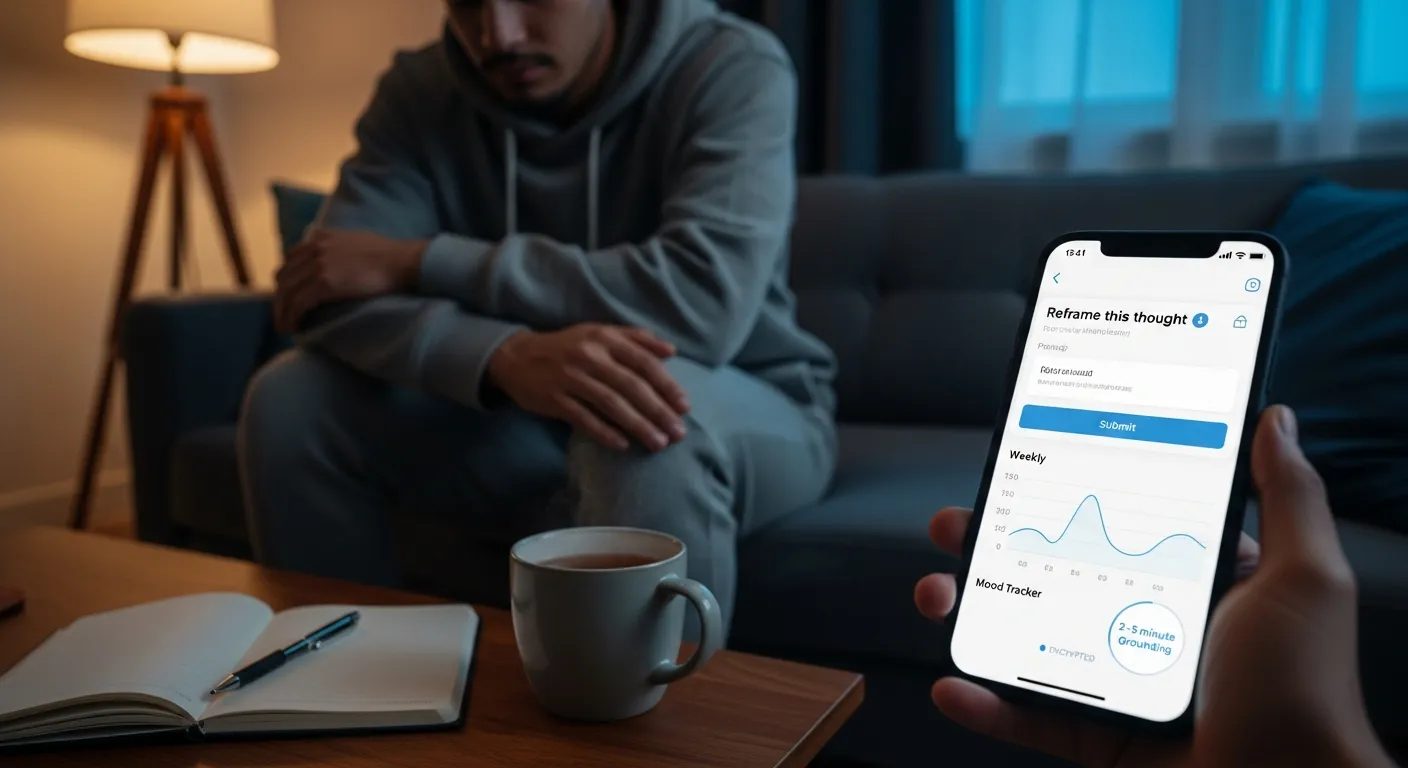
Mental health apps can be surprisingly helpful, especially when your biggest barrier is time, consistency, or not knowing where to start. The best ones now offer things like:
- 24/7 support tools, including AI chatbots that guide you through anxiety spikes
- CBT-based exercises (CBT = cognitive behavioral therapy) to reframe thoughts and build coping skills
- Mood tracking that helps you notice patterns (sleep, caffeine, social stress, work deadlines)
- Breathing, grounding, and mindfulness practices you can actually do in 2–10 minutes
But here’s the honest limitation: an app is a tool, not a full substitute for care. Some apps are built as support (helping you practice skills), not treatment (diagnosing, managing severe illness, or safely handling crises). For example, Wysa has been highlighted for clinical validation and even FDA-related recognition in certain contexts, but it’s still positioned as supportive technology, not a replacement for therapy or emergency services.
When An App Is Enough Vs. When To Seek Professional Help
A mental health app may be “enough” (or at least a solid starting point) if you’re dealing with:
- Everyday stress and feeling overwhelmed
- Mild anxiety that comes and goes
- Trouble winding down at night
- Motivation dips, irritability, or burnout signals
- Wanting to build a consistent mindfulness or journaling habit
You should strongly consider professional support if you’re experiencing:
- Thoughts of self-harm or suicide
- Panic attacks that feel frequent or out of control
- Severe depression symptoms (persistent hopelessness, inability to function)
- Trauma symptoms (flashbacks, hypervigilance) that are intensifying
- Substance use that’s escalating or being used to cope daily
If you’re in immediate danger or feel at risk of harming yourself, call your local emergency number (911 in the U.S.) or use crisis resources like 988 in the U.S. (Suicide & Crisis Lifeline). Apps can’t reliably manage emergencies, no matter how good their marketing is.
How Mental Health Apps Handle Privacy, Data, And Safety
This is the part most people skip… and it matters.
Mental health apps often collect sensitive info: mood notes, thought logs, sleep habits, even voice data in some cases. Many claim to use encryption and secure storage (for example, some newer tools offer encrypted voice sessions), but privacy standards vary a lot.
Before you commit, check:
- What data they collect (mood entries, location, contacts, usage patterns)
- Whether they share data with advertisers or “partners”
- How they store and protect content (encryption at rest/in transit)
- Whether you can delete your data easily, and what “delete” actually means
- Whether the app is HIPAA-covered (many wellness apps are not)
A quick reality check: “HIPAA-compliant” isn’t automatically better if the app isn’t actually operating as a healthcare provider. Instead, look for clear, plain-English policies and a company that doesn’t dodge questions.
If your mental health is your data, treat it like your bank account: you don’t need paranoia, just standards.
How To Choose The Right App For Your Goals
Choosing the best mental health app is less about what’s “top rated” and more about what you’ll actually use on a normal Tuesday.
Think of it like buying running shoes: the “best” pair is the one that fits your feet, your routine, and your budget, not the one a stranger swears by.
Match The App Type To Your Primary Need
Start with your primary goal, then pick the app category that matches it:
- Mindfulness & meditation: if you want calmer focus, less reactivity, a better wind-down routine
- Anxiety & panic tools: if you want in-the-moment support, guided breathing, structured programs
- CBT & thought reframing: if you want to change patterns (rumination, self-criticism, catastrophizing)
- Mood tracking: if you want insight into triggers and progress over time
- Sleep & recovery: if your mental health dips when sleep dips (which is… most of us)
- Therapy platforms: if you want a licensed professional and ongoing care
A simple question that helps: Do I need skills, structure, or a person?
- Skills → mindfulness, breathing, CBT exercises
- Structure → programs, check-ins, guided plans
- A person → therapy/coaching
Evaluate Evidence, Clinical Oversight, And Claims
Not every app needs a clinical study to be useful. But if an app claims it can “treat anxiety” or “cure depression,” you should expect:
- Clear methodology (CBT-based tools, validated assessments)
- Clinical oversight (psychologists, psychiatrists, licensed clinicians involved)
- Published research or transparent evaluation (even if early-stage)
Apps like Flourish are often praised for being psychologist-built, and Wysa is frequently cited for its clinical validation approach. That doesn’t mean they’re perfect, it means they’ve taken the “show your work” route.
Also watch for red flags:
- Overpromising results in days
- No explanation of how the tools work
- “One weird trick” vibes
- Hard upsells after you log something emotional (ugh)
Check Usability, Habit Fit, And Cost Structure
Even the most evidence-based app fails if it’s annoying.
Look for:
- Fast start: can you do something helpful in 60 seconds?
- Low-friction UI: simple screens, not 12 taps to start breathing
- Personalization: the app remembers your goals and adjusts suggestions
- Gentle reminders: nudges, not guilt
Cost-wise, mental health apps typically land here:
- Free tiers: basic meditations, limited mood tracking, a few CBT tools
- Premium subscriptions: commonly around $10–$40/month depending on features
- Therapy platforms: higher monthly cost, but includes sessions/messages
Best Apps For Meditation And Mindfulness
If you want a calmer baseline (not just emergency stress relief), mindfulness apps are often the best place to start. They’re also a great “gateway habit” because you can do them in tiny doses.
Top picks for 2026:
- Headspace (with Ebb): Headspace remains a go-to for guided meditation, and its newer Ebb feature adds a more personalized, supportive feel. This is a strong option if you want structure without overthinking it.
- Calm: Still one of the most popular choices for guided meditations and relaxing audio. Great if you like sleep stories and soothing soundscapes.
What to use these for:
- Morning “mental warm-up” (2–5 minutes)
- A midday reset between meetings
- Transition rituals: work → home, gym → bed, scrolling → sleep
A small mindset shift that helps: meditation isn’t about “clearing your mind.” It’s about noticing what’s there, without instantly spiraling.
If you’re the type who says, “I can’t meditate,” try this: choose a 3-minute guided session and treat it like brushing your brain’s teeth. No spiritual pressure. Just maintenance.
Best Apps For Stress, Anxiety, And Panic Support
For anxiety, what you usually need is speed and direction.
When your nervous system is lit up, you’re not looking for a 20-minute lecture. You want an app that can guide you through the next 90 seconds.
Top picks for 2026:
- Wysa: Often praised for its AI-guided support, CBT-style tools, and practical coping exercises. It’s especially useful when you want a private, always-available place to “talk it out” and get guided steps.
- Youper: Strong for anxiety check-ins and guided conversations that help you name what you’re feeling and choose a next step.
- Sonia: Known for structured programming, like a 6-week GAD (generalized anxiety) program, which can be helpful if your anxiety feels constant and you want a plan.
What these apps tend to do well:
- Guided breathing (box breathing, paced breathing)
- Grounding exercises (5-4-3-2-1 sensory scan)
- Panic support scripts (“This is uncomfortable, not dangerous” style reframes)
- Short CBT tools that interrupt spirals
One practical note: if your anxiety is tied to work, set your “panic plan” before you need it.
Create a saved routine inside the app (or a shortcut on your phone) that says:
- 60 seconds of paced breathing
- A quick check-in prompt: “What am I afraid will happen?”
- One action: water, walk, message a friend, or step outside
When you’re anxious, decision-making gets harder. Your app should reduce choices, not add them.
Best Apps For Mood Tracking, CBT, And Thought Reframing
Mood tracking sounds simple, but it’s sneaky-powerful. When you log consistently, you start seeing patterns like:
- You’re more anxious after poor sleep (classic)
- Your mood dips after too much caffeine or too little protein
- Certain people, tasks, or news habits reliably spike stress
And once you see patterns, you can change them.
Top picks for 2026:
- Youper: A strong blend of mood check-ins and CBT-style reflection. Good if you like guided prompts instead of a blank journal.
- Sanvello: Popular for evidence-based tools, including CBT skills and mood tracking that feels practical, not clinical.
- MindLift: Often mentioned for accessible CBT exercises and a usable free tier, helpful if you want to try the habit before paying.
A CBT reframe you can try right now (and most of these apps will walk you through it):
- Thought: “I’m failing at everything.”
- Evidence for: “I missed two deadlines.”
- Evidence against: “I also completed three projects and showed up for my family.”
- Balanced thought: “I’m overwhelmed and dropped some balls, but I’m not a failure. I need a plan and support.”
This isn’t positive thinking. It’s accurate thinking.
One more tip: if you’re tracking mood, track sleep alongside it. Sleep is often the “hidden variable” behind irritability, rumination, cravings, and low motivation.
Best Apps For Sleep And Mental Recovery
Sleep apps matter for mental health because sleep is emotional regulation in disguise. When you’re short on sleep, your brain is more reactive, more threat-focused, and (frankly) more dramatic.
Top pick for 2026:
- Headspace: Beyond meditation, it’s often recommended for wind-down routines that support recovery, especially if you want guided relaxation without turning bedtime into another performance metric.
What to look for in a sleep-focused mental health app experience:
- Guided wind-downs (10 minutes)
- Body scans (great for anxious bodies)
- Sleepcasts or calming audio that doesn’t jolt you awake
- A “back-to-sleep” option for 2 a.m. wake-ups
If you want a simple behavior upgrade that makes apps work better: keep your phone physically out of reach at night.
Use the app to start your wind-down, then set the phone down across the room (or at least off the bed). The goal is recovery, not one more scroll disguised as self-care.
Best Apps For Therapy, Coaching, And Crisis Support
If you want real progress on deeper stuff, relationships, trauma patterns, ongoing anxiety, depression, therapy platforms can be worth it. They’re also useful if you’re tired of “DIY-ing” your mental health.
Top picks for 2026:
- BetterHelp: Known for matching you with a therapist (often within 24–48 hours) and offering flexible communication options depending on plan.
- Talkspace: Another major option with licensed providers and structured therapy offerings.
A note on crisis support: some apps include crisis resources, but they’re not a replacement for local emergency services. If you need immediate help, use your country’s emergency number or trusted crisis lines.
What To Look For In Provider Quality, Licensing, And Availability
This is where you want to be picky.
Check for:
- Licensing: Are therapists licensed in your state/country and clearly credentialed?
- Scope: Do they treat your specific concerns (panic, OCD, grief, trauma, perinatal mental health, etc.)?
- Availability: Can you get session times that match your actual schedule?
- Continuity: Will you see the same person consistently?
- Communication style: Video-only, messaging, or a mix, what works for you?
Also: therapy is a relationship. If you don’t click after a few sessions, switching providers isn’t “failing.” It’s normal.
If you like the idea of app-based support but want it grounded in clinical thinking, look for apps with clinical oversight and transparent methods (Wysa and Flourish often come up in this context). The best setups tend to blend self-guided tools with human care when needed.
How To Use Mental Health Apps For Lasting Results
Most mental health apps don’t fail because they’re bad. They fail because life gets busy, and your brain defaults to whatever’s easiest.
So the real strategy is: make the app ridiculously easy to use, and connect it to habits you already have.
Build A 10-Minute Daily Protocol That Actually Sticks
Here’s a simple 10-minute routine you can steal (and adjust).
Minute 0–5: Mood check-in (Youper or similar)
- Log mood + energy + sleep quality
- Write one sentence: “Today feels hard because ____.”
- Choose one coping tool the app suggests
Minute 5–10: Nervous system downshift (Sonia/Wysa or breathing tool)
- 3–5 minutes paced breathing
- 1 minute grounding (name 5 things you see)
- Optional: quick reframe prompt (“What’s a more balanced thought?”)
Make it automatic:
- Tie it to something you already do (coffee brewing, brushing teeth, shutting laptop)
- Put the app on your home screen
- Turn on reminders only for the time you actually have (not the “ideal you” schedule)
Combine Apps With Offline Habits For Better Outcomes
Apps work best when they’re not your whole plan.
Pair your app with one offline habit that boosts mental health fast:
- A 10-minute walk, ideally outside (movement + light exposure helps mood and sleep)
- Protein-forward breakfast (stable blood sugar can mean steadier mood)
- Phone-free wind-down (even 15 minutes helps your nervous system shift)
- One real conversation per day (texting is fine, but voice or in-person hits different)
If you want a simple “stack”:
- Use a mindfulness app for 3 minutes
- Then go outside for 7 minutes
It sounds almost too basic. But basic is often what your nervous system responds to.
Conclusion
The “best mental health apps” in 2026 aren’t the ones with the loudest ads, they’re the ones that meet you where you are.
If you want a simple starting point:
- For mindfulness: Headspace (with Ebb) or Calm
- For anxiety support: Wysa, Youper, or a structured program like Sonia
- For CBT + mood tracking: Sanvello, Youper, MindLift
- For therapy access: BetterHelp or Talkspace
Then keep it real: use the app for what it’s great at, daily skills, structure, and support, and bring in professional help when things feel heavier than an app should carry.
If you do one thing after reading this, do this: pick one app, run a 7-day trial with a 10-minute daily protocol, and see how you actually feel. Not perfect. Just a little more steady, a little more supported. That’s the win.