
If you’ve ever had a week where your body feels a little… puffy, achy, sluggish, or just “off,” you’ve probably wondered: Is this inflammation? And more importantly, can food actually help?
The helpful (and slightly annoying) truth is that inflammation isn’t automatically bad. You need it to heal from a tough workout, fight off a virus, or recover from a minor injury. The problem is when inflammation quietly sticks around in the background for months or years. That kind, often called chronic low-grade inflammation, is linked with long-term issues like heart disease, type 2 diabetes, arthritis, and more.
This is where anti inflammatory foods vegan eaters tend to shine, when the diet is built around whole plants, not just vegan “junk food.” Let’s break down what inflammation really is, why a vegan approach can help, and exactly what to put on your plate if you want more energy, better recovery, and stronger long-term health.
What Inflammation Is (And When It Becomes A Problem)
Inflammation is your immune system’s built-in alarm system. When you get injured or sick, your body sends immune cells and chemical messengers to protect you and start repairs.
That’s why your ankle swells after you roll it, or why you feel achy when you’re fighting something off. Your body isn’t being dramatic. It’s doing its job.
But inflammation can become a problem when the “alarm” never fully turns off. Researchers often track this using biomarkers like hsCRP, IL-6, and TNF-α, signals associated with chronic low-grade inflammation and increased risk for non-communicable diseases (NCDs). In other words: the fire is small, but it keeps burning.
Acute Vs. Chronic Inflammation
Acute inflammation is short-term and generally helpful. It shows up fast, does what it needs to do, then resolves.
Chronic inflammation, on the other hand, is slow, persistent, and often sneaky. You might not “feel” it directly, yet it can show up as:
- Stubborn fatigue
- More frequent soreness or slower recovery
- Digestive issues
- Joint pain that keeps coming back
- Metabolic changes (blood sugar, cholesterol, blood pressure)
This chronic state is associated with ongoing elevations in markers like hsCRP and IL-6, and it’s consistently linked to higher risk of conditions like cardiovascular disease and arthritis.
Common Lifestyle Drivers That Make Inflammation Worse
You don’t need to be doing anything extreme for inflammation to creep up. A lot of it comes down to modern “normal.”
Common drivers include:
- Highly processed diets (especially lots of refined carbs, added sugars, and industrial oils)
- Low fiber intake (your gut microbes notice… and they complain)
- Excess calories over time (even with “healthy” foods)
- Poor sleep (one of the fastest ways to feel inflamed)
- Chronic stress (cortisol and immune signaling get tangled)
- Low activity or long sitting hours
There’s also evidence that certain dietary patterns, especially those high in ultra-processed foods, added fats, and sugars, can raise inflammatory signals and oxidative stress, including the formation of advanced glycation end products (AGEs).
The good news: food is one of the most consistent “levers” you can pull daily. And you don’t have to be perfect for it to work.
How A Vegan Diet Can Support Lower Inflammation
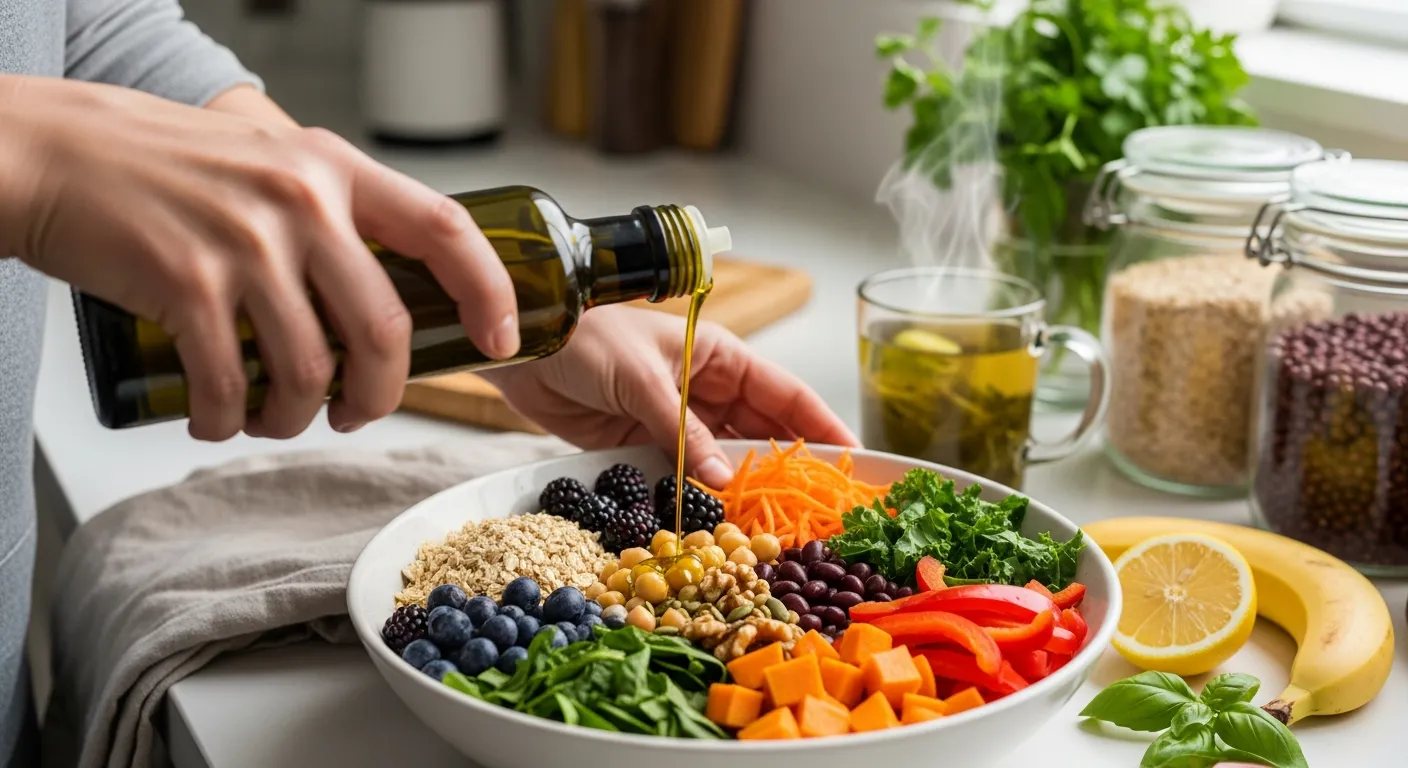
A well-built vegan diet can reduce inflammation for a pretty simple reason: it tends to be naturally high in fiber, antioxidants, and plant compounds that calm inflammatory pathways.
But let’s be real, vegan doesn’t automatically mean anti-inflammatory. A diet of fries, vegan cookies, and plant-based burgers every night is still a highly processed diet.
When people talk about a vegan pattern lowering inflammation, they’re usually talking about a whole-food, plant-forward approach.
Research highlights are encouraging:
- Vegan diets have been associated with reductions in markers like hsCRP in intervention settings (including a large short-term trial showing significant drops over a few weeks).
- Plant-focused diets can reduce AGEs substantially compared with omnivorous patterns in some studies.
- Improvements in insulin sensitivity are commonly observed, which matters because metabolic dysfunction and inflammation often travel together.
Key Nutrients And Compounds Linked To Anti-Inflammatory Effects
Plants come with a built-in “toolkit” of compounds that support healthier inflammatory balance, including:
- Polyphenols and flavonoids (berries, tea, cocoa, herbs, olive oil)
- Carotenoids (carrots, sweet potatoes, leafy greens)
- Vitamin C and E (citrus, peppers, nuts/seeds)
- Magnesium and potassium (leafy greens, beans, bananas, potatoes)
One fun detail: extra virgin olive oil contains polyphenols that have been described in research as having ibuprofen-like activity in terms of anti-inflammatory mechanisms. It’s not literally a painkiller, but it’s a good example of how food can act like “information” in the body.
The Gut Microbiome, Fiber, And Short-Chain Fatty Acids
If you want the “why” behind anti inflammatory foods vegan plans, start with fiber.
When you eat fiber-rich plants (beans, oats, berries, vegetables), your gut microbes ferment some of that fiber and produce short-chain fatty acids (SCFAs) like butyrate. SCFAs are widely seen as supportive of:
- Gut barrier health (less “leaky gut” risk)
- Immune regulation
- Lower inflammatory signaling
When fiber intake drops, microbiome diversity often suffers, and inflammation can rise. The direct cause-and-effect details are still being studied, but the overall pattern is strong: more whole plants → more beneficial microbial activity → calmer immune tone.
So yes, your plate affects your gut. And your gut affects way more than digestion, energy, mood, skin, and recovery included.
The Best Vegan Anti-Inflammatory Foods To Prioritize
If you only take one thing from this article, let it be this: an anti-inflammatory vegan diet isn’t about one “superfood.” It’s about repeatable basics, done most days.
Below are the biggest categories of vegan anti-inflammatory foods, plus how to actually use them.
Berries, Citrus, And Colorful Fruits
Colorful fruits are basically nature’s antioxidant aisle. They’re rich in polyphenols and flavonoids, which are linked to healthier inflammatory balance.
Prioritize:
- Blueberries, strawberries, raspberries
- Oranges, grapefruit, lemon/lime
- Cherries, pomegranates, grapes
Easy wins:
- Add frozen berries to oatmeal
- Blend citrus into dressings (lemon + olive oil + mustard)
- Keep apples or oranges as your “default snack”
Leafy Greens And Cruciferous Vegetables
If your energy is low and your recovery feels slower than it should, greens are often the missing boring hero.
Go for:
- Spinach, arugula, kale, romaine
- Broccoli, cauliflower, Brussels sprouts, cabbage
These foods provide antioxidants and compounds (like sulforaphane precursors in cruciferous veggies) associated with protective, anti-inflammatory effects.
Practical tip: if you hate kale salads, don’t force it. Sauté greens with garlic, toss into soups, or blend spinach into smoothies. Your body doesn’t care if it’s “Instagram pretty.”
Legumes And Soy Foods
Beans and lentils are doing a lot of heavy lifting in a vegan diet:
- Fiber for gut and inflammation support
- Protein for recovery and stable energy
- Minerals like iron, potassium, magnesium
Best picks:
- Lentils, chickpeas, black beans
- Edamame, tofu, tempeh
If beans bloat you: start with smaller portions, rinse canned beans well, try lentils (often easier), and build up gradually.
Whole Grains And Resistant Starch
Whole grains aren’t just “carbs.” They’re packages of fiber and micronutrients, plus fuel for your gut microbes.
Choose:
- Oats, quinoa, brown rice, barley
- Whole wheat, buckwheat
Also pay attention to resistant starch, which acts a bit like fiber:
- Cooked-and-cooled potatoes or rice
- Slightly green bananas
- Oats (especially soaked/overnight)
If you’re active, whole grains can be a major reason you feel steady energy instead of afternoon crashes.
Nuts, Seeds, And Their Oils
This is where healthy fats come in, especially important on a vegan plan.
Top choices:
- Walnuts, almonds, pistachios
- Chia, flax, hemp seeds
- Tahini (sesame)
- Extra virgin olive oil (for dressings, low/medium heat cooking)
Seeds like chia and flax provide ALA omega-3s. You still need a strategy (more on that later), but these are solid building blocks.
Spices, Herbs, Tea, Coffee, And Cocoa
This category is underrated because it feels “optional.” But it’s one of the easiest ways to add polyphenols without extra effort.
Use:
- Turmeric + black pepper
- Ginger, cinnamon
- Garlic, rosemary, oregano
- Green tea or black tea
- Coffee (moderate, if you tolerate it)
- Unsweetened cocoa / cacao
Simple upgrade: mix cinnamon + cocoa into oatmeal, or add grated ginger to stir-fries and soups.
Quick note on supplements: You don’t need a cabinet full of powders to eat anti-inflammatory. Start with food first. Then consider targeted add-ons if you have specific goals (we’ll get there).
Foods And Patterns That Can Undercut An Anti-Inflammatory Vegan Diet
Here’s the part that trips people up: you can eat vegan and still feel inflamed.
Not because vegan diets are “bad,” but because diet quality matters, a lot.
Ultra-Processed Vegan Foods And Added Sugars
Packaged vegan foods can be convenient, and some are genuinely helpful for transition phases.
But if most of your calories come from:
- Vegan pastries, candy, sweetened cereals
- Refined snacks (chips, crackers)
- Fake meats at every meal
- Sugary coffee drinks or “healthy” smoothies with tons of added sweeteners
…you’re not really getting the fiber, micronutrients, and phytochemicals that make anti inflammatory foods vegan eating work.
Ultra-processed patterns are associated with higher inflammation markers in general, even when the diet is technically plant-based.
Imbalanced Fats And Too Little Omega-3 Intake
Many vegan diets accidentally go heavy on omega-6-rich oils (common in fried and packaged foods) while being light on omega-3 sources.
You don’t need to fear omega-6, but you do want balance.
Watch-outs:
- Lots of fried foods
- Frequent meals built around processed oils
- Rare intake of chia/flax/walnuts
For some people, an algae-based DHA/EPA supplement can be a smart option (especially for brain health and aging), but it’s worth discussing with a clinician if you have medical conditions.
Low-Fiber Days And Protein Gaps (Common In Busy Schedules)
This is the most “real life” issue.
You start the day strong… then meetings happen, errands happen, kids happen. Suddenly your meals look like:
- A bagel
- A granola bar
- A rushed plant-based sandwich with barely any veggies
Low fiber days can leave your gut under-fed, and protein gaps can make you feel tired, snacky, and sore after workouts.
A simple fix is to build meals around anchors:
- A legume or soy food (protein + fiber)
- A veggie (volume + micronutrients)
- A whole grain or starchy veg (energy)
- A fat source (nuts/seeds/olive oil)
Not glamorous. But it works.
Build Your Anti-Inflammatory Vegan Plate (Simple Rules That Scale)
You don’t need complicated tracking to eat in an anti-inflammatory way. A few repeatable rules will get you 80% of the benefits.
A good baseline template:
- ½ your plate: vegetables + fruit (go for color)
- ¼ your plate: legumes and/or whole grains
- ¼ your plate: protein focus (beans, tofu/tempeh, edamame)
- Add fats intentionally: nuts, seeds, avocado, extra virgin olive oil
A Practical Plate Template For Breakfast, Lunch, And Dinner
Breakfast (fast + steady energy):
- Oats (or overnight oats) + berries + chia/flax + walnuts
- Or tofu scramble with spinach + tomatoes + whole grain toast
Lunch (workday-friendly):
- Lentil salad over greens with olive oil + lemon
- Or chickpea “tuna” wrap with crunchy veggies + side fruit
Dinner (recovery-focused):
- Tofu or tempeh stir-fry with broccoli, cabbage, carrots + quinoa
- Or bean chili with extra veggies + avocado + pumpkin seeds
Shopping List Staples For Fast, Repeatable Meals
If your kitchen is stocked, your diet gets easier, period.
Staples that support anti-inflammatory vegan eating:
- Frozen berries and cherries
- Leafy greens (fresh or frozen)
- Broccoli/cauliflower (fresh or frozen)
- Lentils, chickpeas, black beans (canned + dry)
- Tofu/tempeh/edamame
- Oats, quinoa, brown rice
- Extra virgin olive oil, tahini
- Chia/flax/hemp, walnuts
- Garlic, ginger, turmeric, cinnamon
- Green tea or black tea
This is the kind of list that makes “I have nothing to eat” way less likely.
One-Day Anti-Inflammatory Vegan Meal Example
Here’s a realistic day you can copy-paste and adjust.
- Breakfast: Smoothie with berries, spinach, chia seeds, unsweetened soy milk + side of oats if you need more fuel
- Lunch: Chickpea salad with mixed greens, cucumber, tomatoes, citrus dressing (olive oil + lemon) + a whole grain pita
- Snack: Apple + walnuts (or carrots + hummus)
- Dinner: Quinoa bowl with roasted broccoli, tofu, and cabbage slaw + tahini-ginger sauce
- Optional: Green tea or a square of dark chocolate (higher cocoa content, lower sugar)
If you want a simple “check”: you should see color, fiber, and a clear protein source at most meals.
Targeted Add-Ons For Specific Goals
Once your basics are solid, targeted add-ons can help you personalize your anti-inflammatory vegan plan, especially if you’re dealing with bloat, training goals, or mood dips.
For Gut Health And Bloat: Prebiotics, Fermented Foods, And Timing
If your digestion feels unpredictable, focus on consistency over intensity.
Try:
- Prebiotic fibers: beans/lentils, oats, slightly green bananas, onions/garlic (if tolerated)
- Fermented foods: sauerkraut, kimchi, miso, tempeh, unsweetened plant-based yogurt with live cultures
- Meal timing basics: give yourself a little space between dinner and sleep when you can (late heavy meals don’t help reflux or bloat)
If legumes trigger symptoms, reduce the dose and build up slowly. Your gut often adapts.
For Training And Recovery: Protein Quality, Carbs, And Polyphenols
If you lift, run, cycle, or do classes regularly, inflammation isn’t the enemy, unmanaged inflammation is.
For better recovery on a vegan diet:
- Protein quality: aim for high-quality sources (tofu, tempeh, edamame, lentils) and distribute protein across meals
- Carbs for training: whole grains, potatoes, fruit, especially around workouts
- Polyphenols: berries, tart cherry (juice or concentrate), cocoa, green tea
A practical post-workout combo:
- Soy yogurt or a soy protein smoothie + berries + oats
That covers protein, carbs, and antioxidant compounds in one shot.
For Brain Health And Mood: Omega-3s, Magnesium, And Polyphenol-Rich Foods
Brain health is where vegan diets can be amazing, if you cover the key nutrients.
Focus on:
- Omega-3s: chia, flax, hemp, walnuts (ALA) and consider algae-based DHA/EPA if you don’t regularly get these
- Magnesium: leafy greens, beans, pumpkin seeds, whole grains
- Polyphenols: berries, cocoa, coffee/tea (if tolerated), colorful fruits
If your mood feels “flat” or your focus is shaky, don’t underestimate basics like sleep and steady blood sugar too. Sometimes the most anti-inflammatory move is eating a real lunch instead of powering through on caffeine.
Conclusion
Eating anti inflammatory foods vegan style isn’t about chasing a perfect menu or banning every fun snack forever. It’s about stacking small, repeatable choices that calm chronic inflammation over time, more plants, more fiber, more color, better fats, and fewer ultra-processed defaults.
If you want a simple starting point for this week, do these three things:
- Add one cup of berries or colorful fruit daily.
- Eat one legume-based meal daily (lentils, chickpeas, tofu, tempeh, your pick).
- Build one big leafy/cruciferous veggie serving daily (even if it’s frozen and microwaved).
Do that for two weeks and pay attention to your energy, digestion, and recovery. Your body usually gives pretty clear feedback when you’re moving in the right direction.
And if you’re the kind of person who likes systems (same), treat your meals like a simple workflow: stock the staples, rotate the templates, and keep it easy enough that you’ll actually do it on a busy Wednesday.