
If you’ve ever tried to “eat healthier” and ended up hungry an hour later (or jittery from a too-sweet smoothie), you’re not alone. A lot of smoothies look virtuous on Instagram… and still leave your blood sugar on a roller coaster.
A true anti inflammatory fruit smoothie is different. It’s built to support your body’s natural recovery system with fiber, polyphenols, vitamin C, and healthy fats, the stuff that helps cool down chronic, low-grade inflammation over time. In fact, research links higher fruit-and-veg intake (especially polyphenol-rich choices like berries) with lower inflammation markers such as CRP (C-reactive protein), and some diet interventions have reported noticeable CRP improvements in as little as a week when antioxidant-rich foods are consistently added.
Let’s make this practical: you’ll learn what “anti-inflammatory” actually means in smoothie form, the best fruits to use (and which combos to be careful with), plus three easy recipes and upgrades you can rotate all week, without turning your blender into a sugar cannon.
What “Anti-Inflammatory” Really Means For A Smoothie
When you see “anti-inflammatory” on a recipe, it can sound like a magical claim. In real life, it’s simpler, and more useful.
An anti-inflammatory smoothie is one that reliably helps you:
- Get more antioxidants and polyphenols (plant compounds that help dial down oxidative stress)
- Hit a steady blood sugar curve (less of the spike-crash cycle that can amplify inflammation over time)
- Include supportive extras, like omega-3 fats (chia/flax) and spices such as ginger or turmeric
Inflammation 101: Acute Vs. Chronic (And Why Food Choices Matter)
Inflammation isn’t the enemy. Acute inflammation is what you want when you sprain an ankle or catch a virus, it’s your body’s repair crew showing up.
The problem is chronic, low-grade inflammation. That’s the slow burn linked with issues like cardiovascular disease, insulin resistance, joint discomfort, and accelerated aging. Lifestyle is a major lever here, and diet is one of the most consistent.
Fruits and vegetables are repeatedly associated with lower inflammation markers (including CRP) because they deliver:
- Vitamin C and carotenoids (antioxidant support)
- Polyphenols (cell-protective compounds that can influence inflammatory pathways)
- Fiber (feeds gut microbes that help regulate immune function)
So the smoothie isn’t “curing” anything. It’s simply a convenient way to stack daily inputs in your favor.
How Smoothies Can Help (And When They Can Backfire)
Smoothies help because they’re easy, fast, and consistent, three things busy humans actually stick with.
They may also increase absorption of certain nutrients. Blending breaks down plant cell walls, which can make compounds like beta-carotene more available. Some interventions that increase fruit/veg intake show relatively fast changes in antioxidant status and inflammation-related markers.
But smoothies can backfire in a few common ways:
- They become liquid dessert. Lots of juice, sorbet, and “a little extra honey” can push sugar sky-high.
- They’re missing the anchors. No protein + no fiber = you’re hungry again in 60–90 minutes.
- Certain fruit pairings can reduce some benefits. For example, research on polyphenols suggests high-PPO fruits like banana may significantly reduce certain flavanol levels when blended with berries. That doesn’t mean bananas are “bad”, it just means you don’t need them in every smoothie if your goal is maximizing polyphenols.
The good news: a few simple structure rules fix almost all of this.
The Best Anti-Inflammatory Fruits (And What Makes Them Work)
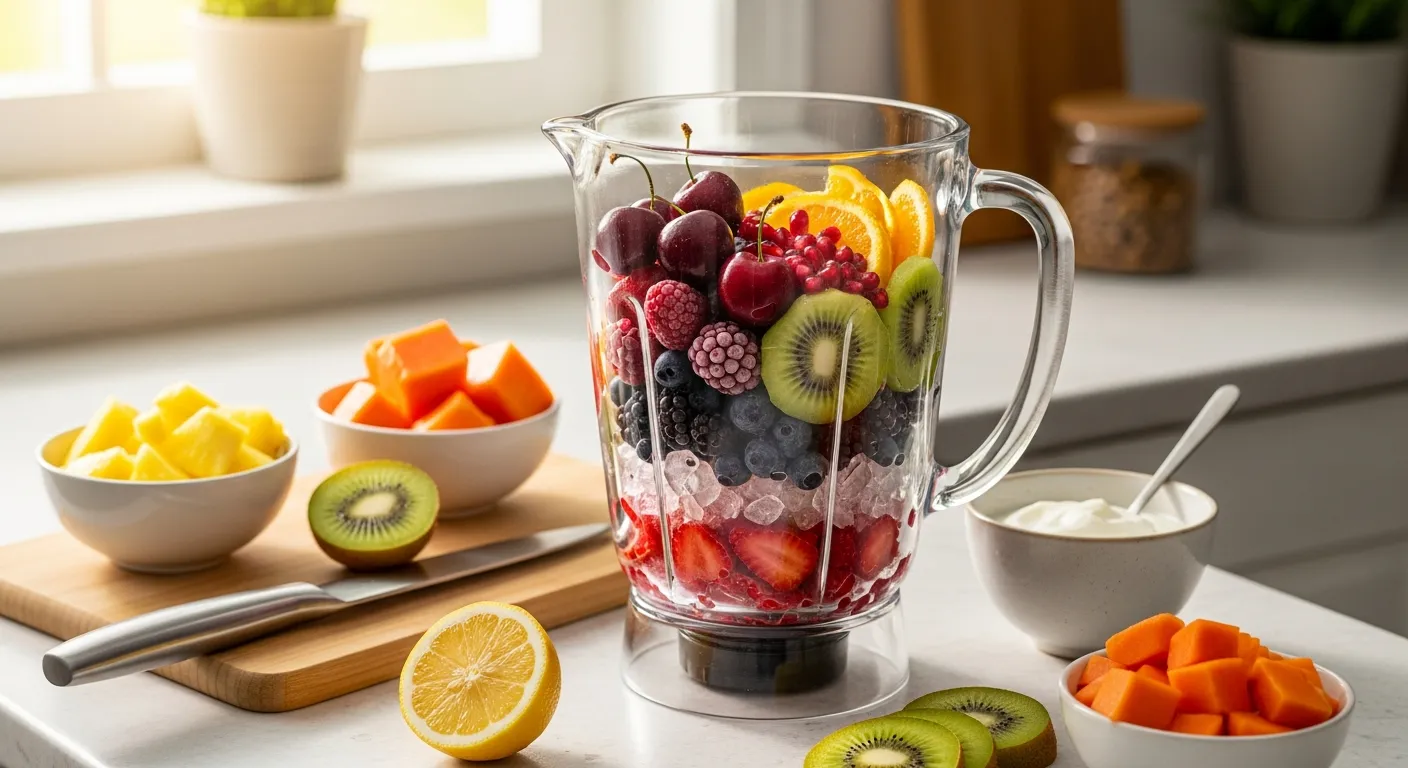
If you want an anti inflammatory fruit smoothie that actually earns the name, start with fruits that are naturally high in polyphenols, vitamin C, carotenoids, and fiber.
Below are the standouts, plus why they work (in plain English).
Berries: Anthocyanins For Oxidative Stress And Recovery
Berries are basically the overachievers of the fruit world.
- Blueberries, strawberries, blackberries, raspberries are rich in anthocyanins, the pigments that give them their deep colors.
- Anthocyanins are linked in research to lower oxidative stress and may help with things like exercise recovery and joint comfort.
Practical tip: Use frozen mixed berries as your default base. They’re affordable, consistent, and usually picked at peak ripeness.
Cherries And Pomegranate: Polyphenols For Exercise Soreness And Heart Health
If you lift weights, run, cycle, or do sweaty classes, this combo is worth knowing.
- Tart cherries are often studied for muscle soreness and recovery (many athletes use tart cherry juice/concentrate strategically).
- Pomegranate brings its own polyphenols (like punicalagins), and pomegranate intake is frequently associated with cardiovascular support.
These are great “training day” fruits because they feel like a treat, but they’re doing something under the hood.
Citrus And Kiwi: Vitamin C, Flavonoids, And Collagen Support
When people think vitamin C, they think oranges. But kiwi is a quiet superstar.
- Kiwi and citrus deliver vitamin C, plus flavonoids that support antioxidant defenses.
- Vitamin C is also essential for collagen synthesis, which matters for tendons, skin, and overall tissue repair.
Smoothie move: Add lemon juice or orange segments to brighten flavor and reduce the need for sweeteners.
Pineapple And Papaya: Enzymes That Support Digestion And Comfort
Pineapple and papaya are popular in “gut-friendly” smoothies for a reason.
- Pineapple contains bromelain.
- Papaya contains papain.
These enzymes are commonly used to support digestion and comfort (especially when you’ve eaten a heavier meal the day before). Also, compared with high-PPO fruits, pineapple and papaya tend to be friendlier if you’re trying to preserve certain polyphenols in berry-heavy blends.
One caveat: if your mouth gets tingly from pineapple, you’re not imagining it, enzymes can be intense. Use smaller portions and balance with yogurt/kefir or a creamy base.
Build The Perfect Anti-Inflammatory Smoothie (A Simple Formula)
Here’s the easiest way to make a smoothie that supports low inflammation and keeps you full.
Think of it like building a plate:
- Fiber base (fruit + veg)
- Protein anchor
- Healthy fat
- Flavor boosters with benefits
- Liquid to blend
Fiber First: Fruit-To-Veg Ratio And Why It Matters For Blood Sugar
A smoothie can be anti-inflammatory… or it can be a fast pass to a mid-morning crash.
A simple rule that works for most people:
- Start with 1 to 2 cups total produce
- Aim for about 1 cup fruit + 1 cup veg most days
Great low-effort greens:
- Baby spinach (mild flavor)
- Kale (stronger, but very nutrient-dense)
- Cauliflower rice (yes, sounds weird, but it makes smoothies creamy without tasting like cauliflower)
And about bananas: they’re fine, but you don’t need a whole one every time. If your goal is blood sugar stability and maximum polyphenols, try ½ banana or swap in berries or kiwi more often.
Add A Protein Anchor: Yogurt, Kefir, Protein Powder, Or Tofu
Protein is what turns “a tasty drink” into “breakfast that holds you.” It also supports muscle maintenance, which becomes more important as you age.
Good options:
- Greek yogurt (higher protein)
- Kefir (protein + probiotics)
- Whey or pea protein powder (convenient, predictable)
- Silken tofu (surprisingly smooth, neutral flavor)
Aim: many people feel best with 20–30g protein in a breakfast smoothie, but even 15g is a big upgrade if you’re currently at zero.
Choose Healthy Fats: Chia, Flax, Walnuts, Or Avocado
Fat slows digestion (hello, steady energy) and helps you absorb fat-soluble nutrients.
Easy anti-inflammatory add-ins:
- Chia seeds (fiber + omega-3 ALA)
- Ground flaxseed (omega-3s: grind matters for absorption)
- Walnuts (polyphenols + healthy fats)
- Avocado (creamy texture + monounsaturated fats)
Typical portion: 1 tablespoon chia or ground flax, a small handful of walnuts, or ¼ avocado.
Flavor Boosters With Benefits: Ginger, Turmeric, Cinnamon, Cacao, Mint
This is where you make it craveable without dumping in sugar.
- Ginger: warming, great with berries or tropical fruit
- Turmeric: popular for inflammation support: pair with a pinch of black pepper for absorption
- Cinnamon: can help the smoothie taste sweeter without adding sugar
- Cacao: polyphenols + “chocolate” vibe (choose unsweetened)
- Mint: fresh, especially with berries or citrus
If you’re new to turmeric, start small (¼ teaspoon). It can taste earthy fast.
3 Anti-Inflammatory Fruit Smoothie Recipes You Can Rotate All Week
These are built for real life: minimal ingredients, balanced macros, and flexible swaps.
Berry-Ginger Green Smoothie For Daily Low-Inflammation Support
Why you’ll like it: It’s the “default setting” smoothie, high polyphenols, steady energy, not too sweet.
Ingredients
- 1 ½ cups mixed berries (frozen)
- 1 cup baby spinach
- ¾–1 cup unsweetened kefir or Greek yogurt (or a dairy-free high-protein yogurt)
- 1 tablespoon ground flax or chia
- 1–2 teaspoons fresh grated ginger (or ½ tsp ground)
- Squeeze of lemon
- ½ teaspoon cinnamon
- Water or ice as needed to blend
Optional: 1 scoop protein powder if your base doesn’t get you to your protein target.
Tart Cherry–Pomegranate Recovery Smoothie For Training Days
Why you’ll like it: This one is tailored for soreness and recovery days, especially if you train in the morning or need an afternoon refuel.
Ingredients
- 1 cup frozen tart cherries
- ½ cup pomegranate arils or ½–¾ cup unsweetened pomegranate juice (use less liquid elsewhere if you do this)
- ¾–1 cup Greek yogurt or skyr (or silken tofu for dairy-free)
- 1 tablespoon chia seeds
- ½ cup spinach (optional, you won’t taste it much)
- ½ teaspoon cacao (optional but good)
- Water/ice to desired thickness
Timing tip: Have it within a couple hours after training, along with a normal meal later. Smoothies are supportive, not a replacement for overall nutrition.
Tropical Pineapple–Turmeric Gut-Friendly Smoothie
Why you’ll like it: Bright, refreshing, and gentle when your digestion feels “off.”
Ingredients
- 1 cup pineapple (frozen works great)
- ½ cup papaya (fresh or frozen)
- ¾ cup plain kefir or an unsweetened coconut yogurt
- ¼–½ avocado (for creaminess)
- ¼ teaspoon turmeric + tiny pinch black pepper
- Handful of spinach or romaine (optional)
- Ice + water as needed
Optional: Fresh mint or lime juice to make it taste like a vacation you actually deserve.
Common Mistakes That Turn “Healthy” Smoothies Into Sugar Bombs
Most smoothie problems aren’t about fruit being “bad.” They’re about structure. A few common choices can turn a good idea into a snack that behaves like dessert.
Juice, Sorbet, And Too Much Dried Fruit: Hidden Sugar Traps
These ingredients remove the natural brakes (fiber and chewing) that normally slow sugar absorption.
Watch out for:
- Fruit juice as the base (even 100% juice)
- Sorbet or frozen yogurt
- Big handfuls of dates, raisins, or dried mango
- Sweetened plant milks (vanilla almond milk can be sneaky)
Better swaps:
- Use water, ice, unsweetened milk, or kefir as your liquid
- If you want sweetness, rely on berries, kiwi, or a small amount of banana
- Use cinnamon/vanilla extract for “sweet” flavor without sugar
Portion Creep: Calories, Add-Ins, And Why “More” Isn’t Better
This is the classic: you start with a smart smoothie… then add half a jar of nut butter, three tablespoons of seeds, oats, honey, and a “superfood blend.”
Those things aren’t evil. They just add up fast.
A simple guardrail:
- Pick one fat add-in (chia or flax or nut butter)
- Pick one extra (oats or cacao or collagen)
If you’re truly hungry (or you’re fueling training), you can scale up, just do it on purpose, not by accident.
Too Little Protein And Fiber: The Hunger Rebound Problem
If your smoothie is basically fruit + liquid, it digests quickly. That can lead to:
- A fast energy spike
- A crash
- “Why am I starving?” an hour later
Fix it by including:
- Protein (Greek yogurt, kefir, tofu, or protein powder)
- Fiber (berries, chia/flax, leafy greens)
This is one of the most reliable ways to make your smoothie feel calming instead of chaotic.
Make It Fit Your Goals And Needs
The best anti inflammatory fruit smoothie is the one you’ll actually make, and that supports your body and schedule.
Here are easy tweaks depending on what you’re optimizing for.
Weight Loss And Appetite Control: Satiety-Focused Tweaks
If your goal is to feel full on fewer calories (without white-knuckling it):
- Use berries as your main fruit (higher fiber, lower sugar than many fruits)
- Add 30g protein if possible (Greek yogurt + protein powder is the easiest combo)
- Add 1 tablespoon chia (gel-forming fiber is very filling)
- Add volume with spinach or cauliflower rice
And keep liquid reasonable. Thicker smoothies tend to be more satisfying.
Energy And Focus: Caffeine Pairings And Timing For Busy Mornings
If you’re trying to avoid the 10:30 a.m. slump:
- Pair your smoothie with coffee or green tea (instead of blending sweetened coffee drinks into it)
- Add cinnamon and ginger for a “bright” flavor that feels energizing
- If caffeine makes you anxious, have a few bites of food first (or make sure your smoothie has enough protein/fat)
Timing tip: If you train early, a smaller smoothie pre-workout and a bigger one after can feel better than one massive blender bomb.
Gut Sensitivities: Low-FODMAP Options And Blender-Friendly Swaps
If your stomach gets bloated easily, you don’t have to give up smoothies, you just need smarter ingredients.
Often-better tolerated options (commonly considered lower-FODMAP in typical portions):
- Strawberries, blueberries, raspberries
- Kiwi
- Pineapple
Common triggers for some people:
- Large amounts of banana (especially very ripe)
- Certain sweeteners (like sugar alcohols)
- Too much inulin/chicory fiber added to protein bars/powders
Simple soothing strategy: keep it basic for a week, fruit + protein + one seed, then add extras back one at a time.
Dairy-Free And Higher-Protein Variations
You can go dairy-free without ending up with a low-protein smoothie.
Options:
- Pea protein or a mixed plant protein powder
- Silken tofu (high-protein, creamy)
- High-protein soy milk (check labels for added sugar)
- Coconut yogurt is tasty, but often low in protein, pair it with protein powder if needed
If dairy works for you, kefir is a nice middle ground: protein plus live cultures, and it blends easily.
Prep, Storage, And Meal-Prep Systems For Busy Schedules
The secret to making smoothies a habit isn’t motivation. It’s friction.
If you can make it easy at 7:12 a.m. on a Tuesday, you win.
Freezer Smoothie Packs: What To Portion Ahead
Freezer packs remove 80% of the work.
In each bag/container, portion:
- 1–1 ½ cups fruit (berries, cherries, pineapple, etc.)
- Optional veg: ½–1 cup spinach (you can freeze it right in the bag)
- Add-ins: 1 tablespoon chia/flax, ginger cubes, turmeric (dry is fine)
Then in the morning, dump into the blender and add:
- Your protein base (yogurt/kefir/tofu/protein powder)
- Liquid (water/unsweetened milk)
Pro tip: If you hate washing blenders, rinse immediately after pouring. Waiting “just 20 minutes” is how smoothies become cement.
Storage, Oxidation, And Food Safety (Fridge Vs. Freezer)
Freshly blended is best for taste and texture, but life happens.
- Fridge: If you store a smoothie, aim to drink it within 24 hours. Keep it in a tightly sealed container to slow oxidation (air exposure reduces quality over time).
- Freezer: Longer-term storage works better as unblended freezer packs rather than freezing the finished smoothie (texture is usually nicer).
Food safety basics:
- If it contains dairy, don’t leave it sitting at room temp.
- When in doubt, smell + taste check. If it’s fizzy and it wasn’t meant to be… nope.
If you want a grab-and-go option, you can also prep the “dry” parts (seeds/spices/protein powder) in small jars so mornings are basically: dump, blend, drink.
Conclusion
A good anti inflammatory fruit smoothie isn’t about cramming in every superfood you’ve ever heard of. It’s about a few repeatable choices: berries or cherries for polyphenols, citrus/kiwi for vitamin C, a real protein anchor, and fiber + healthy fats to keep your blood sugar steady.
If you want the simplest next step, do this tomorrow: pick one of the three recipes above, make it thick, and make sure it has protein + chia or flax. Give it a week. Pay attention to your energy, cravings, and recovery.
Small habit, big ripple effect, that’s the whole point.