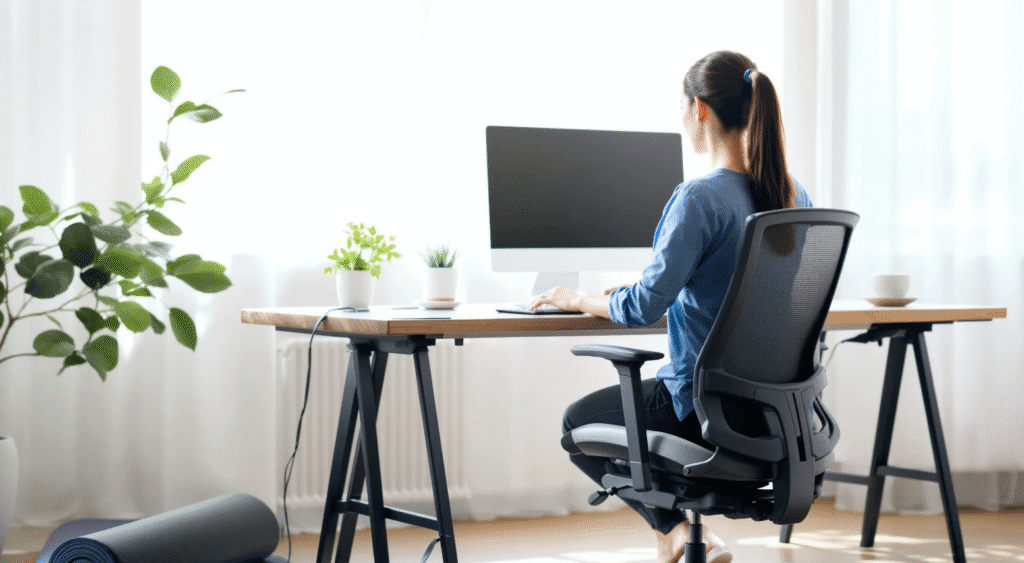
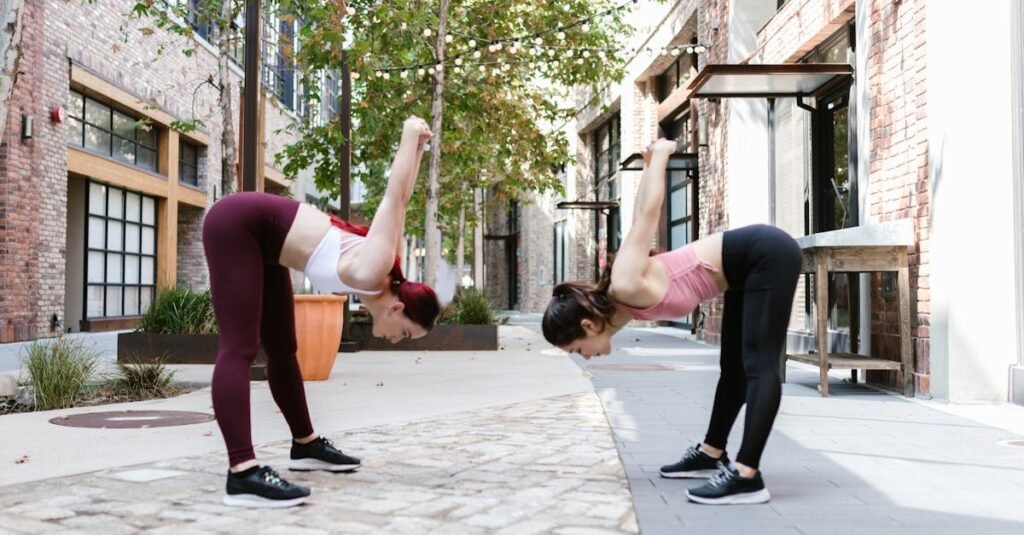
If you’ve ever stood up after a long day at your desk and felt like your hips were made of concrete… you’re not alone. Most “tightness” isn’t because you’re broken, it’s usually a mix of long sitting, stress, and a body that’s basically asking for a little more variety.
The good news: you don’t need an hour-long yoga class to feel looser. A handful of example flexibility exercises, done consistently and safely, can help you move easier, recover faster, and even feel calmer in your own skin.
This guide keeps it practical: what flexibility actually is, a quick safety checklist, desk-friendly stretches by body area, plus two simple routines you can plug into a busy week.
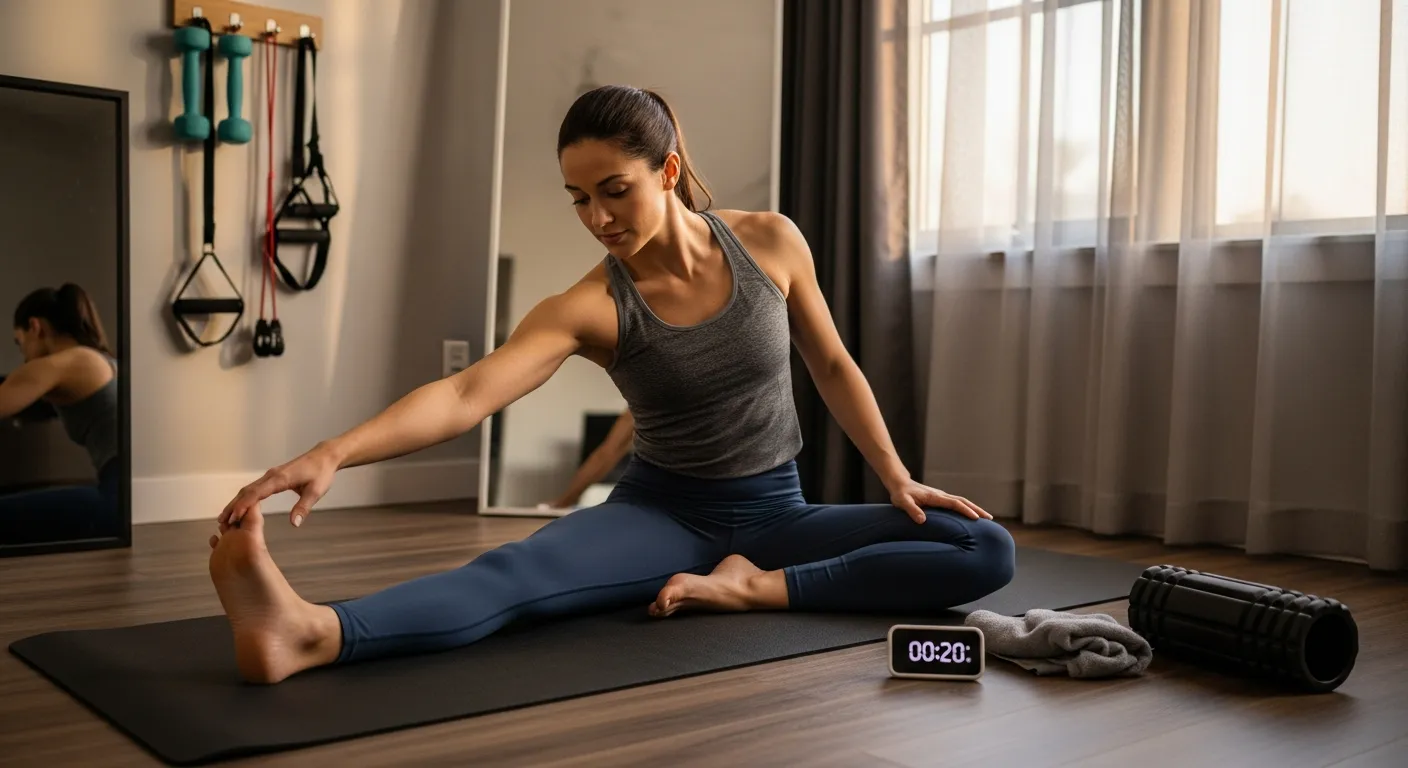
.Person stretching hamstrings in a bright living room, morning light, wellness routine (stock image)
What Flexibility Is (And What It Isn’t)
Flexibility gets talked about like it’s a personality trait (“I’m just not flexible”). But it’s more accurate to think of it as a trainable physical quality, and one that’s shaped by more than just your muscles.
In plain English, flexibility is your available range of motion at a joint and your muscles’ ability to lengthen. Researchers typically describe it as a combination of muscle/tendon properties, joint structure, and your nervous system’s tolerance of stretch. Joint structure is largely genetic, but the other pieces can improve with regular practice.
Flexibility Vs Mobility Vs Stability
These terms get mixed up all the time, so here’s the clean version:
- Flexibility = how far a muscle can lengthen and how much range you can access.
- Mobility = how well you can control that range during movement (strength + coordination + flexibility).
- Stability = how well you can resist unwanted movement (control + strength in key positions).
Example: You might be able to pull your knee to your chest (flexibility), but can you squat deep with a neutral spine (mobility)? And can you keep your knee tracking well when you change direction (stability)?
If your goal is to feel better day-to-day, you usually want a blend: enough flexibility to access range, enough mobility to use it, and enough stability to keep your joints happy.
Why Flexibility Matters For Energy, Recovery, And Stress
Stretching isn’t just about touching your toes. Done well, flexibility work can support how you feel and perform, especially when life is busy.
- You move with less “friction.” Better range of motion can make everyday movement feel smoother and reduce compensations that contribute to cranky joints. (This is one reason flexibility work is often discussed in injury-prevention and posture contexts.)
- Recovery feels easier. After training, or a long day on your feet, gentle stretching may help circulation and reduce that “stuck” feeling. The overall recovery picture is bigger than stretching alone (sleep, nutrition, training load matter more), but flexibility work can be a useful add-on.
- It’s a nervous system downshift. Slow breathing + controlled stretching is basically a built-in reset button. Many people notice they feel less wound up afterward because stretching can encourage relaxation and body awareness.
A good way to think about it: flexibility training is like maintenance for your movement system. It won’t replace strength or cardio, but it can make both feel better.
Evidence note: Major exercise science organizations (like the American College of Sports Medicine) consistently recommend flexibility training as part of a balanced fitness routine, and research shows even 10–30 second holds can improve range of motion when done regularly.
Quick Safety Checklist Before You Stretch
Stretching should feel like a helpful “opening,” not a fight. If you’re forcing it, holding your breath, or chasing pain… you’re doing the opposite of what you want.
Here’s a quick checklist to keep your flexibility work safe and effective.
When To Stretch: Warm Muscles, Breath, And Intensity
1) Warm up first (even briefly).
Stretching works better when your tissues are warm. Do 3–5 minutes of something easy:
- brisk walking
- cycling
- marching in place
- a quick set of bodyweight squats and arm circles
2) Use your breath like a timer.
A simple rule: inhale through your nose, exhale slowly, and let the exhale soften the stretch. Continuous breathing supports oxygen delivery and helps you avoid “bracing” against the stretch.
3) Aim for mild-to-moderate intensity.
Think: 3–6 out of 10 sensation.
- You should feel a stretch, not sharp pain.
- You should be able to relax your face and jaw.
- You should be able to hold the position without shaking.
4) Choose the right type of stretching for the moment.
- Dynamic stretching (controlled movement) is great before workouts.
- Static stretching (holding a position) is often best after workouts or as a separate session.
Common Mistakes That Limit Results Or Cause Irritation
A lot of “stretching doesn’t work for me” comes down to these sneaky habits:
- Stretching cold. Tight + cold tissues tend to feel more uncomfortable, and you’ll usually get less range.
- Holding your breath. It cranks up tension and turns a stretch into a mini stress event.
- Pushing into pain or numbness. Sharp pain, tingling, or numbness is a stop sign.
- Bouncing aggressively. Ballistic stretching can irritate tissues if you’re not trained for it.
- Twisting your way around the tight spot. If your hips are tight and you crank your low back instead, your hips stay tight and your back gets grumpy.
- Doing random stretches with no consistency. Flexibility responds best to steady exposure over time.
Quick health note: if you have recent injuries, nerve symptoms (shooting pain, numbness), or joint instability, it’s worth checking with a qualified clinician or physical therapist before going hard on flexibility work.
Example Flexibility Exercises By Body Area
Below are example flexibility exercises you can mix and match. You’ll notice two themes:
- They’re simple enough to do at home (or at your desk).
- They focus on the spots that get stiff from modern life: chest, hips, hamstrings, calves, and the low back.
Pick 1–2 per area, or follow the routines later in the post.
Neck, Chest, And Upper Back (Desk-Friendly)
1) Chin tuck + neck lengthener (posture reset)
- Sit tall, shoulders relaxed.
- Gently glide your chin straight back (like making a “double chin”).
- Hold 3–5 seconds, then release.
- Do 6–10 reps.
2) Upper trap stretch (easy and effective)
- Sit or stand tall.
- Tip your right ear toward your right shoulder.
- For a deeper stretch, lightly rest your right hand on the left side of your head (no yanking).
- Hold 20–30 seconds per side.
3) Doorway chest stretch (counteracts desk shoulders)
- Forearm on a doorframe, elbow about shoulder height.
- Step through slowly until you feel a stretch across the chest/front shoulder.
- Keep ribs down (don’t flare).
- Hold 20–40 seconds per side.
4) Thread-the-needle (upper back and rear shoulder)
- On hands and knees, slide one arm underneath your body.
- Let your shoulder and head rest lightly.
- Breathe slowly.
- Hold 20–40 seconds per side.
Hips And Hip Flexors (Sitting And Running Support)
1) Half-kneeling hip flexor stretch
- One knee down, other foot in front.
- Tuck your pelvis slightly (think “zip up your ribs to your hips”).
- Shift forward until you feel the front of the hip open.
- Hold 20–45 seconds per side.
2) Couch stretch (stronger hip flexor option)
- Back knee near a wall or couch, shin up against it if tolerated.
- Squeeze your glute on the back leg and keep ribs down.
- Hold 20–45 seconds per side.
3) 90/90 hip stretch (hip rotation)
- Sit with front leg bent 90 degrees, back leg bent 90 degrees.
- Stay tall or hinge forward slightly over the front shin.
- Hold 20–45 seconds, then switch sides.
Hamstrings, Calves, And Ankles (Lower-Body Relief)
1) Hamstring stretch with a strap (joint-friendly)
- Lie on your back, one leg extended.
- Loop a strap/towel around the other foot and raise the leg.
- Keep the knee slightly soft if needed.
- Hold 20–45 seconds per side.
2) Standing calf stretch (straight-knee + bent-knee)
- Hands on a wall, one foot back.
- Straight-knee hold targets the gastrocnemius.
- Bent-knee hold targets the deeper soleus.
- Hold 20–30 seconds each position per side.
3) Knee-to-wall ankle rocks (ankle mobility that feels like stretching)
- Stand facing a wall, toes a few inches away.
- Drive your knee toward the wall without your heel lifting.
- Do 8–12 slow reps per side.
Glutes And Lower Back (Tension Reset)
1) Figure-4 glute stretch
- Lie on your back, cross ankle over opposite knee.
- Pull the supporting leg in until you feel glute/hip stretch.
- Keep your head and shoulders relaxed.
- Hold 20–45 seconds per side.
2) Child’s pose with side reach (lats + low back)
- Kneel, sit back toward heels, arms forward.
- Walk hands slightly to one side to feel the stretch along your side body.
- Hold 20–40 seconds, switch sides.
3) Supine trunk rotation (gentle spinal reset)
- Lie on your back, knees bent.
- Drop knees slowly to one side while shoulders stay heavy.
- Breathe into your ribs.
- Hold 20–40 seconds per side.
- Two Simple Routines You Can Follow
You don’t need a perfect plan, you need one you’ll actually do when your calendar is rude.
Here are two options: a daily micro-routine and a fuller session a few times per week.
5-Minute Daily Flexibility Reset
Do this once a day (or whenever you feel stiff). Set a timer if you want.
- Doorway chest stretch, 30 seconds/side
- Thread-the-needle, 30 seconds/side
- Half-kneeling hip flexor stretch, 40 seconds/side
- Figure-4 glute stretch, 40 seconds/side
- Knee-to-wall ankle rocks, 10 reps/side
If you’re thinking, “That’s too easy,” good. Easy is repeatable. Repeatable is where results come from.
15–20 Minute Full-Body Session (2–4x Per Week)
This is your “I’m taking care of future me” session. You can do it after workouts or in the evening.
Warm-up (3 minutes)
- March in place or brisk walk
- 10 bodyweight squats
- 10 arm circles each direction
Main flexibility work (12–15 minutes)
- Chin tucks, 8 reps
- Upper trap stretch, 30 seconds/side
- Doorway chest stretch, 40 seconds/side
- 90/90 hip stretch, 40 seconds/side
- Couch stretch, 30 seconds/side
- Hamstring strap stretch, 45 seconds/side
- Calf stretch (straight-knee), 30 seconds/side
- Calf stretch (bent-knee), 30 seconds/side
- Supine trunk rotation, 40 seconds/side
Optional finisher (1–2 minutes)
- Lie on your back, one hand on your chest, one on your belly.
- Inhale 4 seconds, exhale 6–8 seconds.
How To Progress Without Overstretching
Progress in flexibility should feel almost boring. (That’s a compliment.) If you’re constantly sore from stretching, you’re probably doing too much intensity and not enough consistency.
Hold Times, Sets, And Weekly Frequency
A simple, research-aligned starting point:
- Hold time: 10–30 seconds per stretch is enough for meaningful range of motion changes when done regularly.
- Sets: 2–4 rounds per muscle group (or split across the week).
- Frequency: most joints respond well to 5–7 days/week of some form of flexibility work, even if it’s brief.
If you’re doing the 5-minute routine daily, you’re already hitting the most important factor: total weekly exposure.
How to progress (without getting weird about it):
- Week 1–2: 20 seconds per stretch
- Week 3–4: 30 seconds per stretch
- Week 5+: add a second set for your tightest 2–3 areas
Also, don’t ignore recovery. If you lifted heavy, ran hills, or slept terribly, keep stretching gentle that day.
Adding Strength In End Ranges For Lasting Gains
Here’s the secret most people miss: flexibility that sticks usually needs strength.
Your nervous system is more willing to “allow” new range when it feels you can control it. That’s where end-range strength (sometimes called loaded stretching or mobility-strength work) comes in.
Try these simple add-ons 2–3x per week:
- Hip flexor end-range: half-kneeling position, gently lift the back knee 1 inch off the floor for 5 seconds (glute engaged). Do 3–5 reps per side.
- Hamstring end-range: during a strap hamstring stretch, lower the leg 2–3 inches and actively pull it back up using your hamstrings (slow). Do 5 reps.
- Ankle control: do slow calf raises and slow lowers (eccentrics), 8–12 reps.
If you want a clean rule: earn the range. If a position feels wobbly or pinchy, back off and build control.
Conclusion
If your schedule is packed, flexibility work has to be small, realistic, and repeatable, or it won’t happen. Start with the 5-minute daily flexibility reset for two weeks. Don’t overthink it. Put it next to something you already do (coffee brewing, post-shower, after your last meeting).
Then, once your body starts trusting the routine, add the 15–20 minute session a couple times per week. That’s usually the sweet spot where you notice the payoffs: easier movement, less “stuck” tension, and a calmer baseline.
And remember: you’re not chasing perfect flexibility. You’re building a body that feels good to live in, one simple set of stretches at a time.