
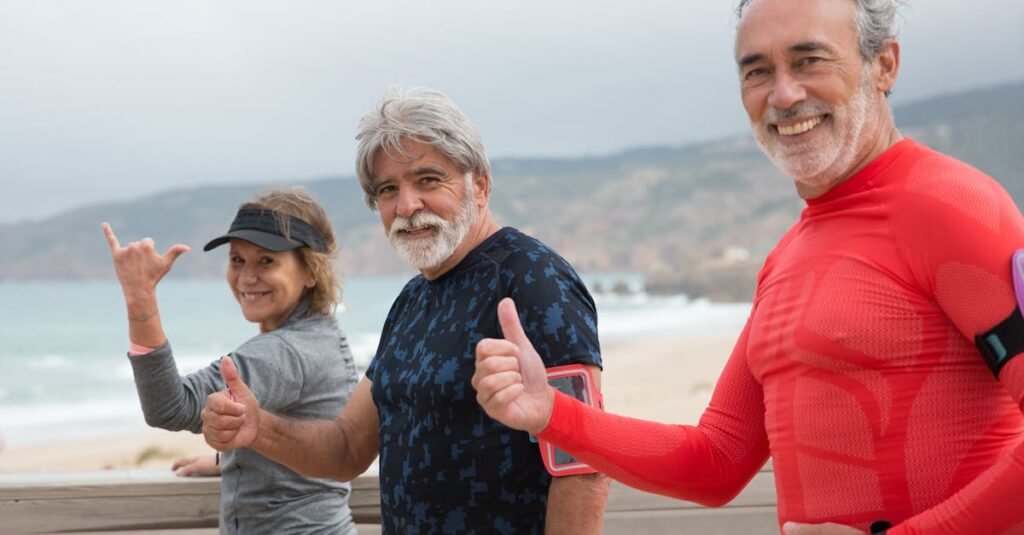
If you (or a parent or client you care about) are getting older and your knees, hips, or back speak up a little louder than they used to, high‑impact workouts can start to feel unrealistic.
The good news: you don’t need bootcamps, burpees, or pounding the pavement to stay fit. Low impact cardio for seniors can strengthen your heart, protect your joints, and keep you independent and confident, without leaving you sore for days.
In this guide, you’ll see what actually counts as low impact cardio, why it matters more with age, and how to build simple, safe routines you can start this week, even if you haven’t exercised in a while.
Why Low Impact Cardio Matters More As We Age

As you age, your body doesn’t just “get old”: it changes in very specific ways:
- Bone density naturally decreases, especially after 50. That raises your risk of fractures if you fall or land hard.
- Cartilage in your joints thins, so high impact moves (think jumping, running on concrete) feel harsher.
- Muscle mass and strength decline if you’re not training them. That affects balance, walking speed, and everyday tasks like climbing stairs.
High‑impact exercise isn’t automatically bad for older adults. But for many seniors, especially if you’ve got arthritis, past injuries, or osteoporosis, it can be a fast track to pain and setbacks.
Low impact cardio solves this problem by letting you:
- Raise your heart rate
- Strengthen your muscles
- Improve circulation and lung function
…while minimizing stress on your joints and spine. That means less risk of falls, inflammation, or “I overdid it and now I can’t move“ days.
Over time, this kind of training can support the things that matter most as you age:
- Independence: walking, carrying groceries, getting in and out of a car.
- Balance and coordination: fewer stumbles, fewer close calls.
- Confidence: trusting your body again instead of feeling fragile.
That’s why many geriatric specialists and physical therapists now recommend regular low impact cardio as a core part of active aging, not a bonus, but a basic.
What Counts As Low Impact Cardio?
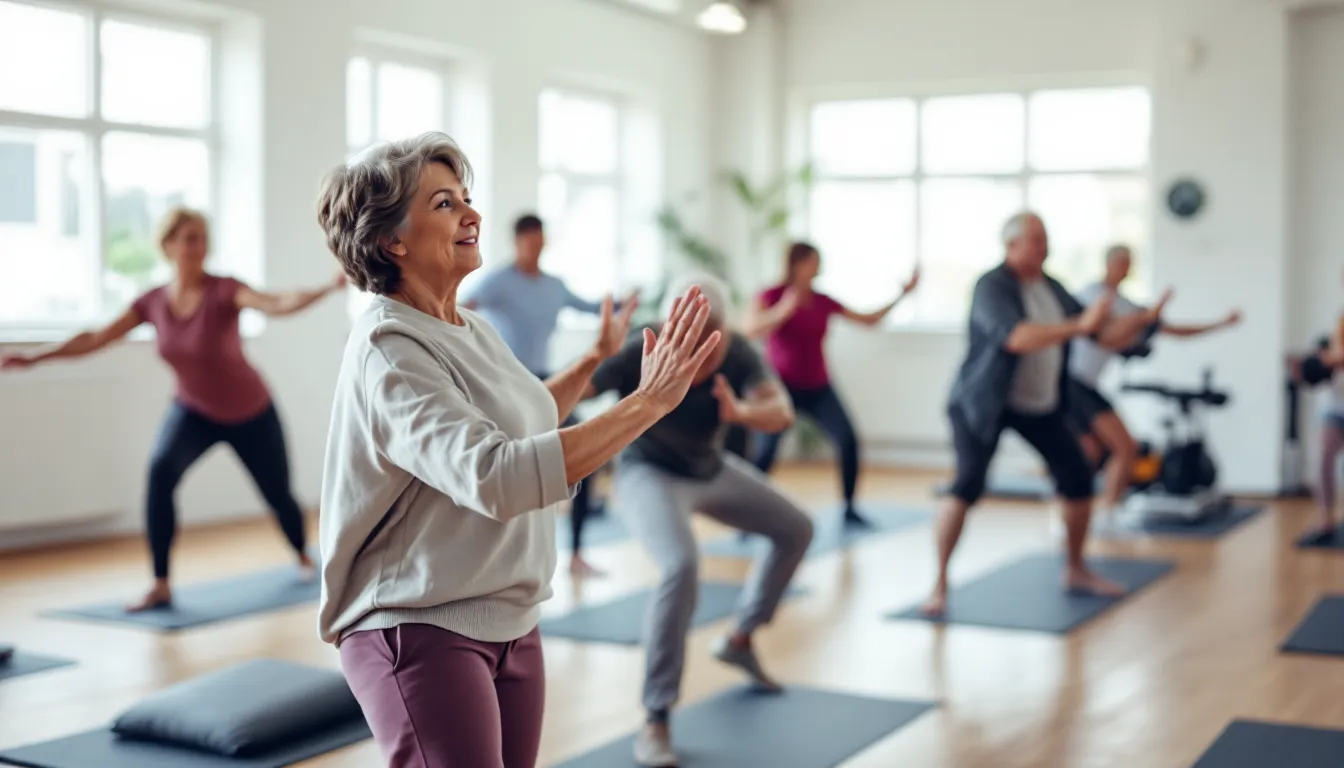
Low impact cardio is any activity that:
- Gets your heart rate up and makes you breathe a bit faster
- Avoids heavy pounding or jumping on your joints
Usually, that means at least one foot stays on the ground, or water/buoyancy supports your body weight.
Common examples include:
- Walking (indoors or outdoors)
- Stationary cycling or a recumbent bike
- Swimming or water aerobics
- Elliptical machine at an easy, controlled pace
- Chair exercises (seated marching, leg lifts, arm movements)
- Gentle yoga or Pilates
- Light resistance or band training done in a flowing, continuous way
If you’re unsure whether something “counts,“ ask yourself:
Does this make me breathe a bit harder, but I can still talk in short sentences?
Am I moving without sharp pain in my joints or lots of pounding?
If the answer is yes to both, you’re likely in low impact cardio territory.
Health Benefits Backed By Science
Low impact doesn’t mean low results. Research on older adults shows that regular, moderate activity, like walking, cycling, or water exercise, can make a real difference.
Here’s what low impact cardio for seniors can do for you:
Stronger heart and healthier blood vessels
Studies on older adults show that regular walking or cycling can:
- Lower blood pressure
- Improve cholesterol levels
- Cut the risk of heart disease and stroke
You don’t need intense intervals. Consistency, most days of the week, matters far more than intensity.
Better mobility, flexibility, and balance
Moving your body through a comfortable range of motion helps:
- Keep your hips, knees, and ankles from stiffening up
- Support better posture and spinal health
- Improve balance and coordination, especially when combined with strength exercises
Water aerobics, tai chi, and walking on varied terrain have all been shown to support balance and reduce fall risk in seniors.
Easier joints and less arthritis pain
It’s easy to assume, “I have arthritis, so I should rest more.“ But complete rest often makes things worse.
Gentle, low impact cardio:
- Increases blood flow to your joints
- Helps lubricate them with synovial fluid
- Strengthens the muscles that support those joints
Many people with knee or hip arthritis find cycling or water exercise especially comfortable.
More stamina and everyday energy
Regular cardio helps your body use oxygen more efficiently. That can mean:
- Less huffing and puffing on stairs
- More energy for errands, grandkids, hobbies, or travel
- Shorter recovery time after activity
Stronger muscles and bones
While strength training is the main driver of muscle gain, low impact cardio still helps maintain leg and core strength, especially when you’re walking on slight inclines, using a bike with some resistance, or doing water workouts.
Weight‑bearing options like walking can also help maintain bone density, which is crucial for preventing fractures.
Better mood, memory, and mental health
Consistent movement is strongly linked to:
- Lower stress and anxiety
- Improved mood and fewer depressive symptoms
- Sharper thinking and memory in older age
Even a 20–30 minute walk can boost feel‑good neurotransmitters and help you sleep more deeply at night.
How To Get Started Safely (At Any Fitness Level)
If you’ve been mostly sedentary, or you’re managing conditions like heart disease, diabetes, or joint replacements, you’ll want to be smart about how you start.
Here’s a simple step‑by‑step plan:
- Check in with your doctor first
Especially if you:
- Get chest pain, dizziness, or shortness of breath with mild activity
- Have uncontrolled blood pressure or heart rhythm issues
- Recently had surgery or a major health event
Ask what types of exercise are safest and if there are any limits on heart rate or movements.
- Start short and easy
A good starting point for most seniors is:
- 10–15 minutes,
- 3–5 days per week,
at a pace where you can still talk, but you feel you’re doing something.
That might look like:
- A 10‑minute indoor walk holding onto a counter or railing
- 10 minutes of easy pedaling on a stationary or recumbent bike
- Use support when you need it
There’s no prize for doing it the hard way. Use:
- A sturdy chair for balance
- A walker or cane if you already use one
- A pool noodle or flotation belt in the water
- Increase slowly
Every week or two, you can gently progress by:
- Adding 2–5 minutes to one or two sessions
- Or, keeping the time the same and going slightly faster or adding a gentle hill/resistance
Think of it as turning a dial, not flipping a switch.
- Use the “talk test” to gauge intensity
During most sessions, you want moderate intensity:
- You can talk in short sentences
- You can’t sing comfortably
If you’re gasping for breath or can’t speak more than a word or two, ease up.
Listening To Your Body And Managing Setbacks
You will have days where your body says, “Not today.“ That’s normal.
Pay attention to:
- Sharp or worsening pain in a joint or your chest
- Dizziness, pressure, or unusual shortness of breath
- Unusual fatigue that doesn’t match the effort you put in
If something feels off, stop. Sit down, hydrate, and give your body a moment.
Some mild muscle soreness, especially when you’re just starting, is common. But:
- Pain that makes you limp, wakes you up at night, or lasts more than a few days needs attention.
- When in doubt, back off, call your doctor, or check in with a physical therapist.
Tracking how you feel (even just a quick note in a notebook or phone) can help you spot patterns and avoid overdoing it.
Building A Weekly Low Impact Cardio Routine
Most health guidelines suggest older adults aim for:
- At least 150 minutes of moderate‑intensity cardio per week
That sounds like a lot, but broken down, it’s about 20–30 minutes a day, 5 days per week.
Here’s one simple framework you can adapt:
- Monday – 20–25 minutes of walking (indoors or outdoors)
- Tuesday – 15–20 minutes of stationary bike + light stretching
- Wednesday – Rest or gentle chair yoga
- Thursday – 20–25 minutes of walking or water aerobics
- Friday – 15–20 minutes of cycling or elliptical at easy resistance
- Saturday – Optional social walk with a friend or family member
- Sunday – Rest, stretching, or very light movement
You can also pair your cardio with 2 days of light strength work (using bands, light weights, or bodyweight). Stronger muscles mean better balance and more protection for your joints.
The best routine is the one you actually enjoy and can repeat week after week. It’s completely fine to start with less and build up.
Sample Low Impact Cardio Workouts For Seniors
Use these ideas as plug‑and‑play sessions. Adjust time, pace, or support to match your current fitness level.
1. Walking workout (20–30 minutes)
- 3–5 minutes: Easy warm‑up walk
- 15–20 minutes: Brisk but comfortable pace (you can talk in short sentences)
- 3–5 minutes: Slow cool‑down walk
- Optional: Light stretches for calves, thighs, and hips afterward
You can do this outdoors, in a hallway, around your living room, or even at a mall.
2. Stationary cycling (15–20 minutes)
- 3 minutes: Easy pedaling, no resistance
- 10–12 minutes: Slight resistance: legs feel like they’re working but not burning
- 3–5 minutes: Easy pedaling to cool down
A recumbent bike (where you sit back with support) is often the most comfortable choice for seniors.
3. Swimming or water aerobics (20 minutes)
In a pool with a lifeguard or class instructor:
- 3–5 minutes: Easy walking or gentle movements in the shallow end
- 10–15 minutes: Laps with a kickboard, or follow a low impact water aerobics routine
- 3–5 minutes: Slow walking and stretching in the water
Water supports your weight, so this is great if you have arthritis or joint replacements.
Chair-Based And At-Home Options
If you prefer to stay home, or balance is a concern, you can absolutely get low impact cardio in a small space.
Sample 15‑minute chair workout
Repeat the circuit 2–3 times:
- 1 minute: Seated marching (lift one knee at a time)
- 1 minute: Seated arm circles (forward and backward)
- 1 minute: Seated leg extensions (straighten one leg, lower, then the other)
- 1 minute: Seated “jacks” (tap one foot out to the side as you raise both arms, then switch)
- 1 minute: Rest or gentle breathing
Move at a pace that gets your heart rate up but still feels controlled. Keep a sturdy chair (without wheels) and, if needed, someone nearby for safety.
Outdoor And Social Options
Combining movement with social time can make it much easier to stick with your routine.
Ideas to try:
- Neighborhood walks with a friend or neighbor
- Community walking groups at local parks
- Group water aerobics or gentle fitness classes for seniors
- Walking paths at botanical gardens, lakes, or indoor malls in bad weather
You get a double benefit: cardio + connection, which is huge for mental health and motivation.
Motivation, Mindset, And Making It Sustainable
The hardest part often isn’t knowing what to do, it’s doing it consistently.
A few mindset shifts can help low impact cardio become a natural part of your life, not just a “program” you start and stop.
- Shrink the goal
Instead of “I’ll walk 30 minutes every day,“ start with “I’ll move for 10 minutes most days.“ You can always do more once you’re out the door.
- Pair it with something you enjoy
Listen to music, a podcast, or an audiobook while you walk or cycle. Or make it your catch‑up time with a friend or family member.
- Track tiny wins
Jot down what you did each day:
- Minutes you moved
- How you felt before and after
Seeing a streak build, 10, 20, 30 days, can be incredibly motivating.
- Expect ups and downs
Travel, illness, weather, or life events will throw you off sometimes. That’s not failure: it’s normal. When you can, simply start again with something small.
- Focus on how it makes you feel, not just numbers
Better sleep, easier movement, calmer mood, more confidence when you’re out and about, those are powerful reasons to keep going.
Remember: every walk, ride, or chair session is a message to your body that you’re still in the game.