
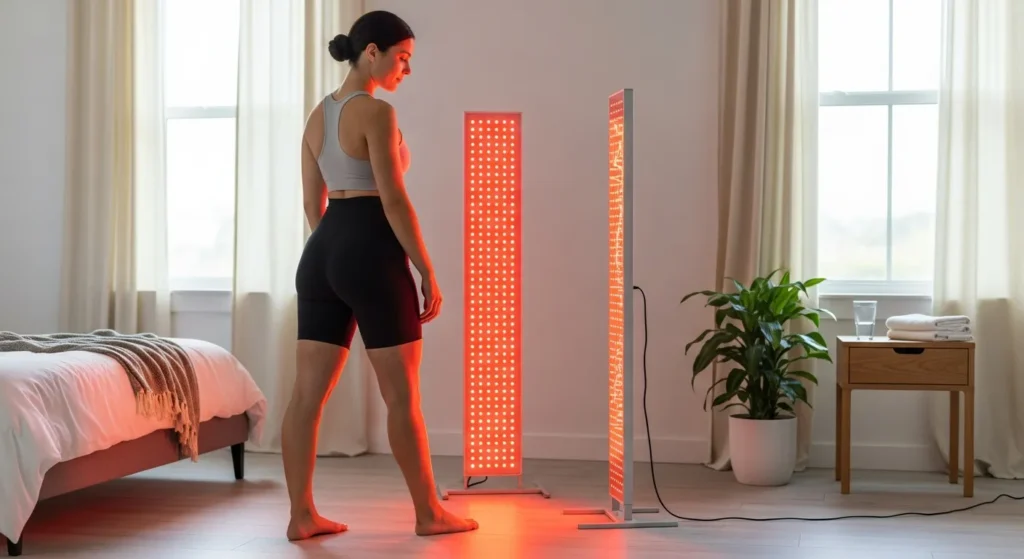
Red light therapy for cellulite is trending hard in wellness clinics, gyms, and at-home devices. But you might be wondering: Does it actually work, or is it just another expensive promise in pretty lighting?
You’re smart to ask. Cellulite is complex, and there’s no single magic fix. But there is some interesting science behind red light therapy that’s worth understanding, especially if you’re already investing in your health with movement, nutrition, and self-care.
In this guide, you’ll learn what cellulite really is (and isn’t), how red light therapy works in your body. Also, what current research suggests about cellulite and body contouring, and how to use it safely as part of a realistic, sustainable plan.
Understanding Cellulite: What It Is And Why It Happens
What Cellulite Actually Is (And Is Not)
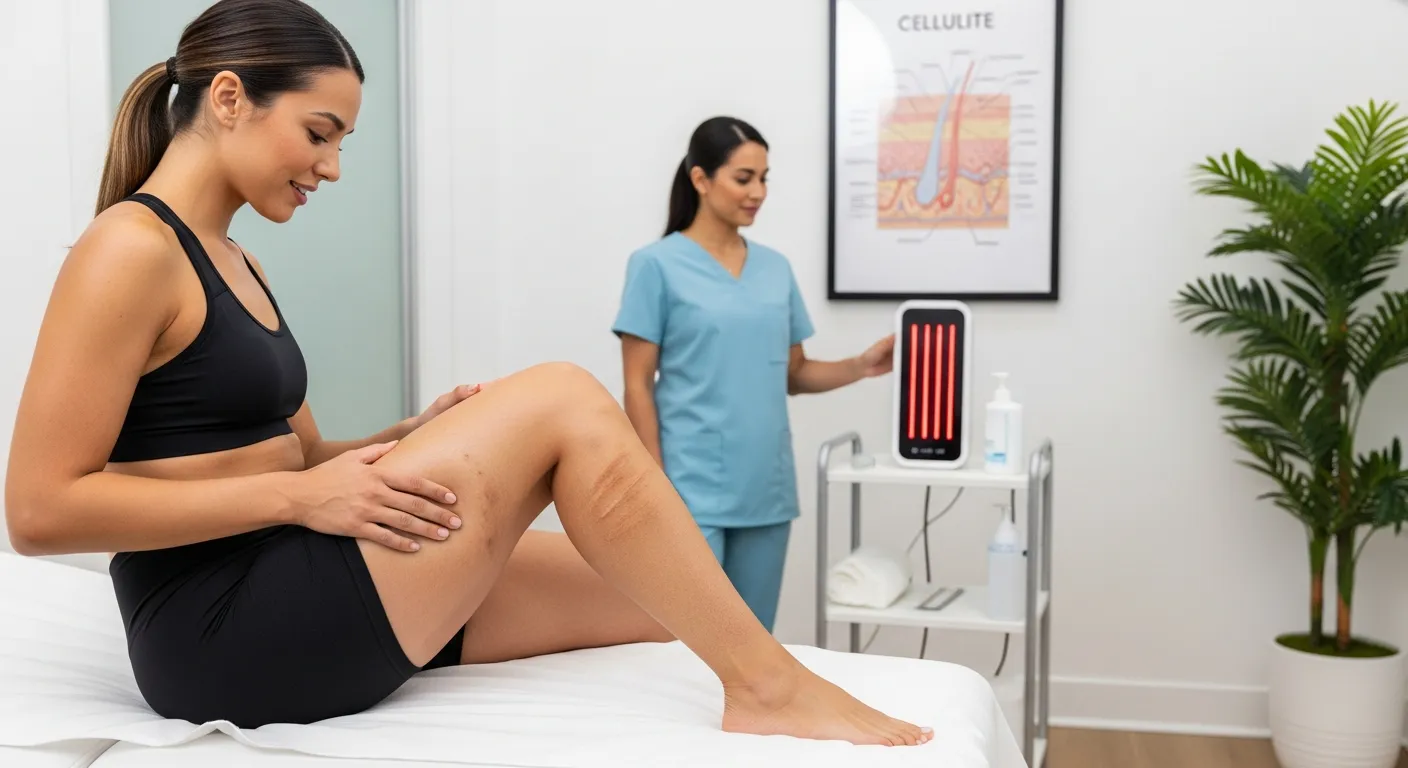
Cellulite is not a disease, and it’s not a sign that you’re unhealthy or out of shape. It’s a structural change in how fat, connective tissue, and skin interact, most commonly on your thighs, butt, and sometimes your abdomen and arms.
Under your skin, fat cells sit in compartments separated by bands of connective tissue (called fibrous septae). In cellulite:
- Some fat cells push upward toward the skin surface
- The fibrous bands pull downward
- The result is that classic dimpled, “orange peel” appearance
Cellulite is extremely common, studies estimate that 80–90% of women will have it at some point. Men can get it too, but it’s far less common because male connective tissue is structured differently.
So if you have cellulite, you’re firmly in the majority.
Key Drivers: Hormones, Genetics, Circulation, And Collagen
Why do some people seem to develop more cellulite than others? A few main factors tend to show up:
- Hormones: Estrogen appears to play a central role. As estrogen shifts with age, pregnancy, or hormonal contraception, it can influence circulation, fat distribution, and collagen.
- Genetics: Your genes help determine skin thickness, collagen structure, and where you tend to store fat. If your mother or siblings have cellulite, you’re more likely to, too.
- Circulation and lymph flow: Reduced blood flow and sluggish lymphatic drainage can lead to more fluid retention and less nutrient delivery to tissues, which may exaggerate the dimpled look.
- Collagen and skin quality: Thin, weakened, or disorganized collagen fibers make dimples more visible. As you age and collagen naturally declines, cellulite often becomes more noticeable, even if your weight doesn’t change.
Cellulite sits at the intersection of hormones, connective tissue, skin health, and circulation. That’s why you often see strategies that target collagen, microcirculation, and inflammation (like red light therapy) being explored.
Why Cellulite Is Not Just About Body Fat
It’s easy to assume cellulite is simply “too much fat.“ But that’s only part of the picture.
You can:
- Have a higher body fat percentage and very little visible cellulite
- Be lean and athletic and still have noticeable dimpling
That’s because cellulite is largely about structure, not just quantity:
- The pattern of connective tissue bands pulling down
- The thickness and elasticity of your skin
- The organization of collagen and fascia underneath
Weight loss can sometimes reduce the appearance of cellulite, but it often doesn’t erase it, especially if skin is thin or collagen is weak.
This is where therapies that may improve collagen, circulation, and tissue quality, like red light therapy, start to make more sense as part of a layered approach.
How Red Light Therapy Works In The Body
The Basics Of Red And Near-Infrared Light
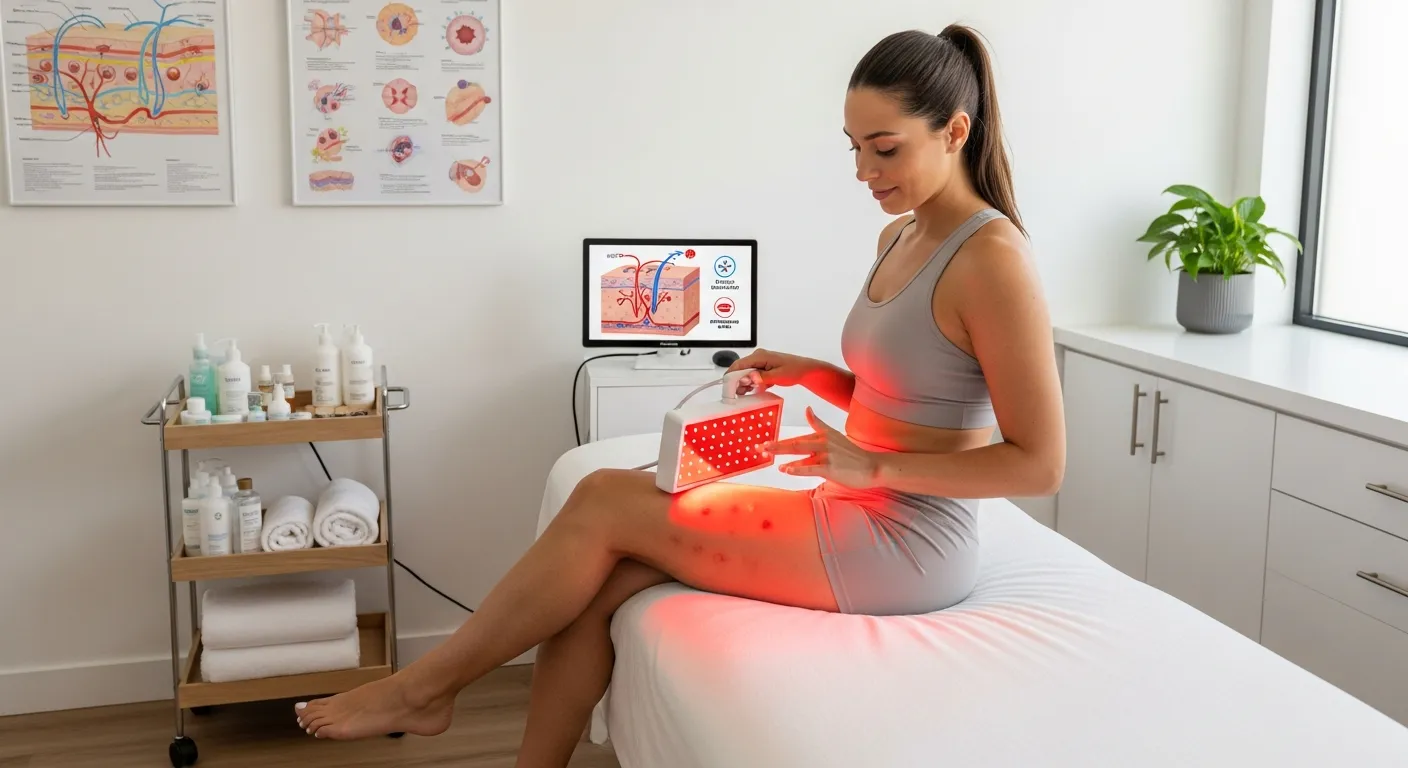
Red light therapy (also called low-level laser therapy or photobiomodulation) uses specific wavelengths of light, usually in the red (around 600–700 nm) and near-infrared (around 800–900+ nm) range.
Unlike UV light, these wavelengths don’t burn or tan your skin. Instead, they penetrate into tissues and interact with cells in a more subtle, biological way.
You’ll see red light therapy used for:
- Skin rejuvenation and fine lines
- Muscle recovery and joint pain
- Wound healing
- Hair growth support
And more recently, for body contouring and cellulite appearance.
Cellular Mechanisms: Mitochondria, ATP, And Inflammation
At the cellular level, red and near-infrared light are absorbed by structures in your cells, especially the mitochondria, your cells’ energy producers.
Research suggests that this light exposure can:
- Increase ATP production: More ATP means more cellular energy to repair and maintain tissues.
- Modulate nitric oxide: Nitric oxide helps relax blood vessels, improving blood flow and oxygen delivery.
- Reduce oxidative stress and inflammation: By influencing pathways related to antioxidant defenses.
Over time, these shifts can support healthier function in skin cells, fat cells, and connective tissue.
Skin And Tissue Effects: Collagen, Elasticity, And Microcirculation
When it comes to cellulite and skin appearance, several potential benefits of red light therapy stand out:
- Collagen stimulation: Studies on facial skin show that red light can increase collagen synthesis and improve elasticity, leading to smoother, firmer skin.
- Improved microcirculation: Better blood flow can enhance nutrient delivery and waste removal in the skin and subcutaneous tissue, potentially helping with fluid retention and puffiness.
- Support for lymphatic flow: While evidence is still emerging, some research and clinical observations suggest red light may gently support lymphatic drainage.
- Modulation of fat cells: Some body-contouring studies using low-level light report modest reductions in girth measurements, possibly by affecting how fat cells handle stored lipids.
These mechanisms don’t “melt fat away“ overnight. But together they may subtly improve skin texture and tissue health, which is exactly what you’re targeting when you’re focused on cellulite appearance.
Can Red Light Therapy Reduce Cellulite? The Evidence So Far
What Clinical Studies Show On Cellulite And Body Contouring
Direct research on red light therapy for cellulite is still limited, but there are a few clues from related studies:
- Some small trials using low-level laser or LED red/near-infrared light on thighs and hips report modest improvements in cellulite scores and skin smoothness when compared with baseline.
- A number of body-contouring studies show reduced circumference (for example, in the waist or thigh) after several weeks of treatment. These changes are often small, think centimeters, not clothing sizes, but measurable.
- Other cosmetic studies show improved skin elasticity and collagen density, which can indirectly make cellulite less visible.
But, many of these studies have small sample sizes, short durations, or combine red light with other methods like massage, suction, or radiofrequency. That makes it hard to credit red light alone.
So far, the evidence suggests:
- Red light therapy may help improve skin texture and firmness
- It may provide small reductions in circumference in treated areas
- It is not a guaranteed or dramatic cellulite cure
How Much Improvement Is Realistic To Expect
This is where expectations really matter.
If you go in expecting red light therapy to erase all cellulite, you’ll likely be disappointed. But if you view it as a supportive tool that can gently enhance your skin quality and complement a healthy lifestyle, it can be more satisfying.
Realistically, with consistent use over several weeks to a few months, you might notice:
- Slightly smoother texture in treated areas
- Skin that feels a bit firmer or tighter
- A subtle reduction in dimpling visibility, especially in good lighting and certain positions
The changes tend to be gradual and modest, not dramatic makeovers.
Who Is Most Likely (And Least Likely) To See Benefits
You may see better results from red light therapy for cellulite if:
- Your cellulite is mild to moderate rather than very deep and fibrotic
- You already support your health with movement, strength training, and a nutrient-dense diet
- Your expectations are realistic and you’re willing to be consistent (3–5 sessions per week for several weeks)
You may see less noticeable change if:
- Your cellulite is severe and has been present for many years
- You’re dealing with significant skin laxity after large weight changes
- You expect results from red light therapy alone, without addressing movement, nutrition, sleep, and stress
In short: red light therapy tends to do best as a booster, not a standalone fix.
How To Use Red Light Therapy For Cellulite Safely And Effectively
Choosing A Device: Wavelengths, Power, And Treatment Area
If you’re considering at-home red light therapy for cellulite, here are a few key points to look for:
- Wavelengths: Look for devices that use red (around 630–670 nm) and/or near-infrared (around 810–880 nm) light, these ranges are commonly studied.
- Power density: Many studies use an intensity in the range of roughly 20–100 mW/cm² at the skin. Consumer devices vary, so check whether the brand provides this data.
- Coverage: For cellulite, you’ll want a device that covers larger areas (thighs, buttocks) rather than a tiny facial wand. Panels, wraps, or pads are usually more practical.
- Reputable brand: Look for clear specs, safety testing, and realistic claims. Be cautious of any device promising “complete cellulite removal.”
Red light therapy cellulite devices from clinics may be more powerful and cover larger areas, but they also come with a higher cost per session.
Recommended Session Frequency, Duration, And Positioning
Protocols vary, but a common, reasonable starting point is:
- 3–5 sessions per week on the targeted area
- 10–20 minutes per session, depending on device intensity and manufacturer guidance
- Distance: Usually 6–18 inches from the skin for panels: wraps and pads sit directly on the skin
For thighs and buttocks, you’ll likely need to:
- Treat the front and back of your legs separately
- Rotate or reposition to cover the outer and inner thighs, if needed
Consistency matters more than perfection. Think of it like strength training for your skin: small, repeated doses over time add up more than one marathon session.
Safety Considerations, Side Effects, And When To Avoid Use
Red light therapy is generally considered low-risk when used as directed, but it’s still important to use it thoughtfully.
Typical experiences:
- A gentle feeling of warmth in the treated area
- Occasionally mild temporary redness, which usually fades quickly
You should avoid or get medical clearance before using red light therapy if:
- You’re pregnant (safety data is limited, so many providers take a cautious approach)
- You take medications that make you light-sensitive (like some antibiotics, acne meds, or certain psychiatric drugs)
- You have a history of skin cancer or suspicious lesions in the treatment area
- You have an active skin infection, open wounds, or severe varicose veins in the region
Always follow the device instructions, don’t stare directly at bright LEDs, and consider using eye protection if the light is close to your face.
Lifestyle Habits That Boost Results And Support Smoother Skin
Movement, Strength Training, And Lymphatic Flow
If you want to get the most from red light therapy cellulite protocols, your daily habits matter just as much as the device you choose.
Support healthier circulation and tissue tone by:
- Walking regularly: Even 7,000–8,000 steps per day improves blood flow and lymph movement.
- Strength training 2–3 times per week: Building muscle under the skin can create a smoother, more lifted appearance and support overall metabolic health.
- Adding low-impact circulation boosters: Think light cycling, gentle rebounding, or simple calf raises throughout the day.
You might also experiment with:
- Dry brushing toward the heart before showers
- Occasional massage or foam rolling to ease tight fascia
These don’t “cure” cellulite but can enhance circulation and help your tissues respond better to any therapy.
Nutrition, Hydration, And Skin-Supportive Nutrients
Your skin is built from the nutrients you eat. To support collagen and tissue repair while you use red light therapy, focus on:
- Protein at most meals: Helps provide amino acids for collagen and muscle (aim for roughly 20–30 grams per meal for many adults).
- Vitamin C–rich foods: Citrus, berries, bell peppers, and leafy greens help your body make collagen.
- Healthy fats: Omega-3s from fatty fish, walnuts, or flax can help modulate inflammation and support skin barrier function.
- Polyphenol-rich plants: Berries, green tea, olive oil, and herbs provide antioxidants that protect collagen from damage.
And don’t forget the basics:
- Hydrate consistently throughout the day so your skin cells stay plump and resilient.
- Aim to keep highly processed, salty, and sugary foods in check, they can increase fluid retention and inflammation, which may make cellulite more visible for some people.
Stress, Sleep, And Hormonal Balance
Because hormones and connective tissue respond strongly to your overall lifestyle, stress and sleep matter more than most people realize.
To support hormone balance and collagen repair:
- Prioritize 7–9 hours of sleep most nights, this is when your body does a lot of its repair work.
- Build in short, daily stress releases: 5–10 minutes of breathwork, a walk outside, or a brief meditation can lower cortisol.
- Watch for chronic, unrelenting dieting: Extreme calorie restriction tends to weaken skin and increase stress hormones, which may work against smoother skin.
Red light therapy might give your tissues a small boost, but you amplify those benefits when your nervous system and hormones are more regulated.
When you line up movement, nutrition, sleep, stress management, and smart tools like red light, you’re not just chasing smoother thighs. You’re building a stronger, more energized version of yourself.
Conclusion
Putting It All Together: A Realistic, Sustainable Plan
If you’re curious about red light therapy for cellulite, you don’t need to buy into miracle claims, or dismiss it as pure hype.
Here’s a grounded way to think about it:
- Cellulite is normal and common, driven by hormones, genetics, circulation, and collagen, not just body fat.
- Red light therapy works at the cellular level, nudging mitochondria, circulation, and collagen in a favorable direction.
- Evidence for cellulite improvement is promising but modest, you’re more likely to see subtle smoothing, not total erasure.
- Results are best when you combine red light with movement, strength, supportive nutrition, good sleep, and stress care.
If you decide to try it, choose a reputable device or clinic, start with conservative session times, and give yourself 8–12 weeks of consistent use before you judge your results.
Most importantly, remember that your worth isn’t defined by how smooth your thighs look. Use tools like red light therapy not from a place of chasing perfection, but as part of a bigger commitment to caring for your body, for your energy, confidence, and long-term health.