
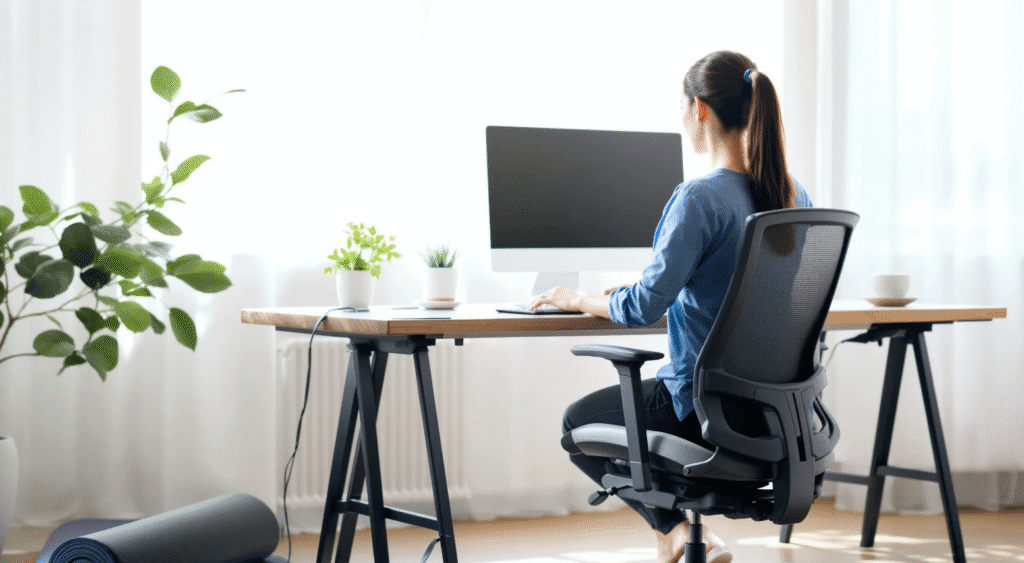
A lot of people often neglect proper posture. They’d choose to type on their laptop, sitting on their bed, or slouch when listening to the teacher in class. However, improper posture leads to serious health issues.
People often underestimate the importance of good posture, but it plays a vital role in the overall health and wellbeing. If you find yourself slumped over a desk or glued to your phone, you’re not alone. Many of us spend hours in less-than-ideal positions, which can lead to discomfort and negative health conditions over time.
But, the good news is that adopting better habits doesn’t have to be a challenging job. Let’s explore some effective posture correction tips that can help alleviate pain, enhance your breathing, and boost your confidence.
Understanding Posture and Its Importance

Good posture is more than just standing up straight: it’s about keeping your spine in a neutral position. This means having your ears over your shoulders, shoulders over your hips, and a slight curve in your spine. Ideally, weight should be distributed evenly across your body.
Why is good posture crucial?
- Reduces pain: Proper alignment can minimize back and neck pain.
- Enhances breathing: Good posture allows your lungs to fully expand.
- Improves function: It can enhance balance and bodily efficiency.
- Increases confidence: Standing tall can improve self-esteem and make you seem more approachable.
By prioritizing good posture, you can enjoy these benefits and contribute to a healthier, more energetic lifestyle.
Common Posture Problems
There are several common posture issues that many people face:
- Forward head / Rounded shoulders (Kyphotic Posture): This often results from prolonged screen time and poor seating positions.
- Excessive low-back arch (Lordosis): An exaggerated arch in the lower back can occur from tight hip flexors or weak abdominals.
- Flat back: This can be caused by sitting improperly or one-sided carrying, leading to a lack of natural spine curvature.
Recognizing these common problems is the first step towards making effective changes in your posture.
Daily Habits for Better Posture
Incorporating small changes in your daily routine can significantly improve your posture:
- Move regularly: Aim to change your position or take a short walk every 30 to 60 minutes.
- Adjust screen height: Keep your phone and computer screens at eye level to avoid slumping.
- Backpacks: Use both straps on your backpack and alternate carrying sides to minimize strain.
By making these small adjustments, you’ll naturally begin to improve your posture.
Stretching and Strengthening Exercises
Regular stretching and strengthening can greatly contribute to better posture:
Mobility/Stretching Exercises:
- Child’s Pose: Stretch your back and hips.
- Cat-Cow: Mobilize your spine and relieve tension.
- Chest Opener: Counteracts rounded shoulders by stretching the chest.
- Hip Flexor and Pigeon Stretch: Opens up tight hips that can contribute to poor posture.
Strengthening Exercises:
- Shoulder Retraction: Strengthens upper back muscles that pull the shoulders back.
- Wall Slides/Angels: Works on shoulder mobility and strength.
- Planks and Glute Bridges: These strengthen your core and glutes, providing better spine support.
- Seated Rows: Engages back muscles while correcting your posture.
Ergonomics in Your Workspace
Your workspace plays a crucial role in your posture. Here are some tips to optimize it:
- Screen height: Your screen should be at or slightly below eye level, about an arm’s length away.
- Chair position: Your hips and knees should be at about 90 degrees, with your feet flat on the floor. Consider using a lumbar support cushion for additional comfort.
- Keyboard and mouse placement: Keep them close, with elbows at a 90-degree angle and shoulders relaxed.
Creating an ergonomic workspace can make a significant difference in maintaining good posture throughout the day.
Mindfulness and Posture Awareness
Being mindful of your posture can help ingrain better habits:
- Set reminders: Use hourly reminders on your phone to check in on your posture.
- Body scans: Practice brief body scans throughout the day, noticing if you’re slouching, and adjust accordingly.
You can foster a greater connection between your mind and body, making it easier to maintain good posture consistently.
Proper Posture Goes a Long Way
Improving and maintaining good posture is an achievable goal with consistent effort. By incorporating targeted stretches, strengthening exercises, ergonomic adjustments, and mindfulness practices, you can set yourself up for long-term success. Remember, progress takes time, and every small effort counts.