
If you’ve ever had one of those weeks where you’re tired for no good reason, your jeans feel tighter by 3pm, and your joints complain after a normal walk… you’ve probably wondered, “Is this inflammation? And can food actually help?”
A 21 day anti inflammatory diet pdf can be a surprisingly helpful reset, not because it’s “detox magic,” but because it gives you a simple structure for three weeks of meals built around whole foods, fiber, healthy fats, and plenty of flavor. You stop guessing, you stop winging it, and you start noticing patterns: what helps your energy, digestion, mood, sleep, and cravings.
Below is a practical, real-life guide to what an anti-inflammatory diet is, what to eat (and what to limit for 21 days), and how to use a PDF-style plan to make it doable even with a busy schedule.
What An Anti-Inflammatory Diet Is (And What It Isn’t)
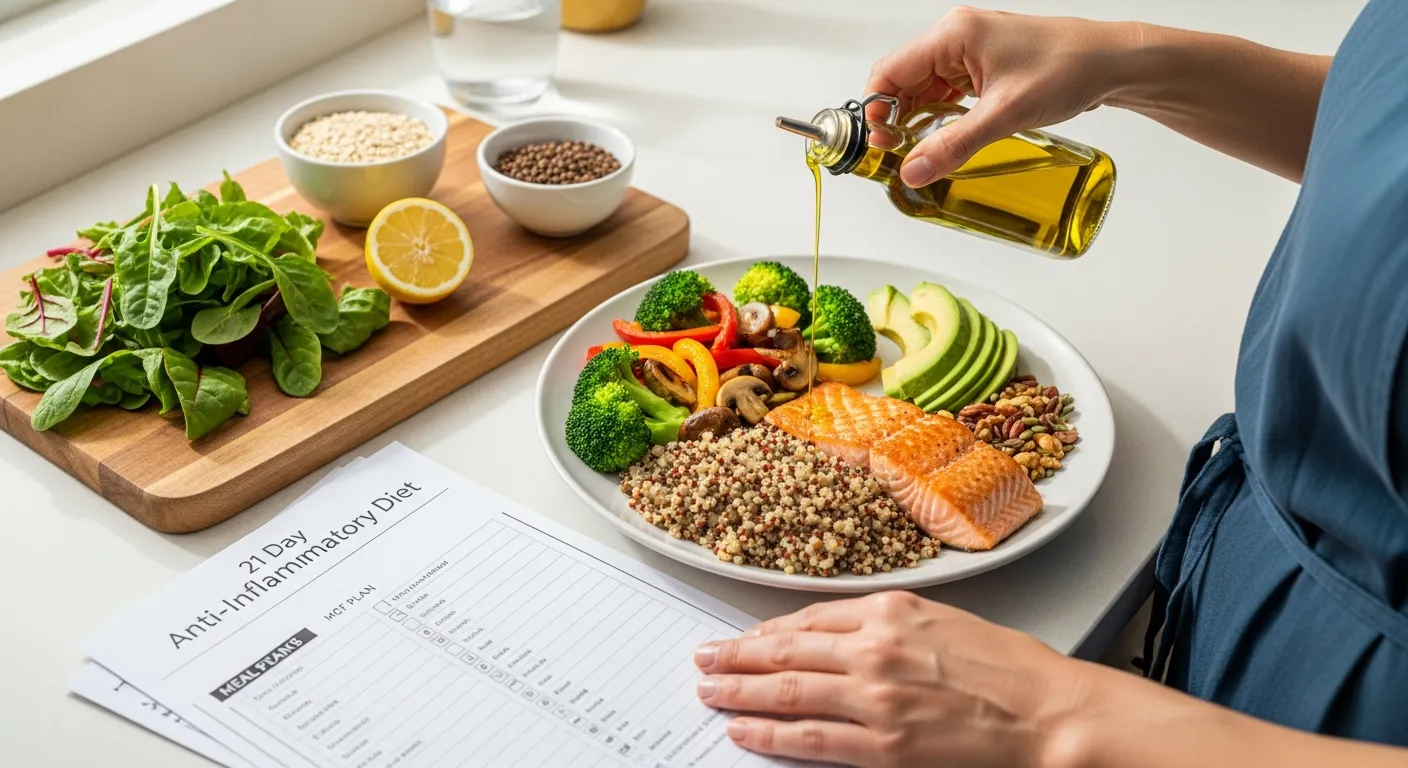
An anti-inflammatory diet sounds trendy, but the core idea is very unsexy: eat more nutrient-dense whole foods and fewer ultra-processed foods so your body has what it needs to regulate inflammation.
It’s not a cleanse. It’s not a moral judgment about food. And it’s not “never touch bread again.” Think of it more like turning down the background noise so your body can do its job.
Inflammation 101: Acute Vs. Chronic
Inflammation itself isn’t the villain.
- Acute inflammation is your body’s short-term response to an injury or infection. You cut your finger: your immune system shows up, repairs the damage, and moves on.
- Chronic inflammation is when that response stays switched on too long. It’s been linked (in research and clinical consensus) to higher risk for issues like cardiovascular disease, type 2 diabetes, and other long-term conditions.
Diet isn’t the only driver, sleep, stress, activity level, and smoking all matter, but food can either nudge inflammation up or help calm it down.
The Evidence-Based Goal: Lowering Dietary Inflammatory Load
The goal of an anti-inflammatory approach is to lower your overall dietary inflammatory load (basically: shift your usual eating pattern toward foods associated with better metabolic and immune markers).
A simple, evidence-aligned way to do this is a “plate method” that shows up in a lot of anti-inflammatory plans:
- ½ plate: non-starchy vegetables (leafy greens, broccoli, peppers, mushrooms)
- ¼ plate: protein (salmon, sardines, chicken, beans, tofu)
- ¼ plate: high-fiber carbs (quinoa, oats, lentils, sweet potato)
- Plus: healthy fats (extra-virgin olive oil, avocado, nuts/seeds)
That combo tends to naturally increase fiber, antioxidants, and omega-3s, while lowering the stuff that often crowds those out.
Who This 21-Day Plan Is For (And When To Talk To A Clinician)
A 21-day anti-inflammatory reset is a good fit if you want to experiment (without going extreme) and you’ve noticed things like:
- frequent bloating or irregular digestion
- afternoon energy crashes
- stubborn cravings (especially sugar)
- joint stiffness after sitting
- poor sleep quality
You should talk to a clinician (doctor or registered dietitian) before changing your diet significantly if you:
- have an autoimmune condition, inflammatory bowel disease, diabetes, kidney disease, or a history of eating disorders
- are pregnant/breastfeeding
- take medications that require stable vitamin K intake or consistent carbs
A good plan should feel supportive, not like you’re walking a nutrition tightrope.
What’s Inside The 21-Day Anti-Inflammatory Diet PDF
Most people don’t fail at healthy eating because they “don’t care enough.” They fail because decision fatigue is real.
A 21 day anti inflammatory diet pdf helps by putting the boring, but essential, pieces in one place: meals, grocery lists, swaps, and a basic tracking system.
(If you’re looking for free downloadable versions, organizations and nutrition practices have published them, examples mentioned often include Fay Nutrition and Rupa Health.)
How The 3-Week Structure Works (Week 1, 2, And 3 Focus)
A smart 3-week plan usually ramps up in a way that feels sustainable:
- Week 1: Build the base
You repeat simple breakfasts and “formula lunches” (think: quinoa + veggies + protein + olive oil). The goal is rhythm, not perfection.
- Week 2: Add variety (without chaos)
More recipes, more flavors: chia pudding, lentil soup, sheet-pan dinners, different proteins.
- Week 3: Make it feel like your real life
You practice flexibility: swaps, eating out strategies, travel meals, and a few “back-pocket” options for busy nights.
What You’ll Track: Symptoms, Energy, Digestion, And Sleep
You don’t need a 40-metric spreadsheet. Track just enough to notice patterns.
Try a simple daily check-in (30 seconds):
- Energy: morning / afternoon (1–10)
- Digestion: bloating, reflux, stool consistency
- Cravings: especially late afternoon or night
- Sleep: time to fall asleep, wake-ups, how rested you feel
- Body signals: joint stiffness, headaches, skin flare-ups
Why track at all? Because it turns the plan into an experiment. You’re not just “being good.” You’re learning what actually changes in your body.
How To Customize Calories, Protein, And Meal Timing
A PDF plan is a starting point, not a law.
To adjust calories, tweak portions before you overhaul ingredients:
- More active or hungrier? Add a cupped-hand portion of carbs at meals, or an extra snack.
- Trying to lean out gently? Keep protein steady, increase veggies, reduce “bonus” snacks.
Protein: Many people feel best aiming for a solid protein anchor at each meal (exact needs vary by body size and goals). If you lift, walk a lot, or you’re trying to stay fuller, bumping protein slightly can help.
Meal timing: A common, practical rhythm is eating every 3–4 hours (meals + optional snack). If you do better with three bigger meals, that’s fine too, just keep the “anti-inflammatory plate” structure.
Foods To Emphasize (And Why They Matter)
If you only remember one thing: anti-inflammatory eating is less about a single “superfood” and more about stacking small wins, fiber + healthy fats + colorful plants + consistent protein.
Core Staples: Fiber-Rich Plants, Omega-3s, And Fermented Foods
These are your big levers:
- Fiber-rich plants (vegetables, beans, lentils, berries, oats)
Fiber supports gut health and helps regulate blood sugar, both of which can influence inflammatory pathways.
- Omega-3 sources
Fatty fish like salmon, sardines, trout, and mackerel are well-known omega-3 staples. If you don’t eat fish, chia, flax, and walnuts help (though conversion to EPA/DHA is limited, so some people consider an algae-based omega-3 supplement).
- Fermented foods (yogurt/kefir, kimchi, sauerkraut, miso)
Not everyone tolerates them, but many people find small daily amounts support digestion and regularity.
A simple weekly goal that feels doable: 2–3 fish meals, 1–2 legume meals, and 1 fermented food most days (even if it’s just a few forkfuls).
Best Fats: Extra-Virgin Olive Oil, Nuts, Seeds, And Avocado
Fats are where a lot of people accidentally go off-track, either too little (and then they’re starving) or mostly from ultra-processed sources.
Anti-inflammatory-friendly fat staples:
- Extra-virgin olive oil (EVOO): use it on salads, drizzled on veggies, or to finish soups
- Nuts and seeds: walnuts, almonds, pistachios, pumpkin seeds, chia, flax
- Avocado: on toast (if you’re doing bread), in salads, blended into sauces
Tip: If you’re using a PDF plan, keep one “default fat” in your kitchen (EVOO) and one snack fat (nuts). That alone makes the plan easier to follow.
Anti-Inflammatory Flavor Boosters: Herbs, Spices, And Polyphenols
This is the fun part, and it’s not just about taste. Many herbs/spices contain polyphenols, antioxidant compounds studied for their potential role in lowering oxidative stress.
Go-to flavor boosters:
- Turmeric + black pepper (pepper helps absorption of curcumin)
- Ginger (tea, stir-fries, smoothies)
- Garlic and onions (base for basically everything)
- Cinnamon (oats, yogurt, chia pudding)
- Berries, green tea, cocoa (unsweetened) for polyphenols
If you’re bored by “healthy food,” it’s usually a seasoning problem.
Foods To Limit For 21 Days (Without Getting Extreme)
Limiting doesn’t mean banning forever. For 21 days, you’re just reducing common irritants and inflammatory drivers enough to see what changes.
Common Triggers: Added Sugar, Refined Grains, And Ultra-Processed Foods
These are the usual suspects because they tend to:
- spike blood sugar quickly
- displace fiber and micronutrients
- come packaged with additives and low-quality fats
For three weeks, aim to cut back on:
- sugary drinks, candy, pastries
- refined grains most of the time (white bread, many crackers, typical boxed cereal)
- ultra-processed snacks and fast foods
You don’t have to be perfect. But you do want consistency, because consistency is what makes the “before vs. after” noticeable.
Alcohol And Highly Processed Oils: Practical Guardrails
Alcohol can affect sleep, gut lining, and recovery (even if you don’t feel hungover). For a 21-day experiment, the cleanest approach is no alcohol.
If that’s not realistic, set guardrails:
- 0–2 drinks per week
- never on nights you already slept badly
- always with food, not on an empty stomach
For oils, prioritize olive oil and limit frequent intake of highly processed seed oils commonly found in fried/packaged foods. You don’t need to fear oils in general, just reduce the ultra-processed sources where they’re part of the “junk food package deal.”
Dairy And Gluten: When Elimination Makes Sense (And When It Doesn’t)
This is where people get extreme fast.
- If you know dairy triggers acne, congestion, reflux, or bloating, a 21-day dairy break can be useful.
- If you suspect gluten is an issue, a trial can help, but keep it honest (meaning: don’t replace bread with gluten-free cookies and call it “anti-inflammatory”).
When elimination doesn’t make sense:
- you tolerate these foods well
- removing them makes the plan stressful and unsustainable
A reasonable middle ground for many people: keep plain yogurt/kefir (if tolerated) and choose higher-fiber carbs most of the time, whether they contain gluten or not.
21-Day Meal Plan Framework (With Swaps For Real Life)
You don’t need 63 brand-new recipes. You need a framework that survives Wednesdays.
Here’s a flexible structure many 21-day PDFs use, plus realistic swaps.
Breakfast, Lunch, Dinner, And Snack Templates
Breakfast templates (pick 1):
- Berry-oat bowl: oats + chia/flax + berries + cinnamon + Greek yogurt (or soy yogurt)
- Savory eggs: eggs + sautéed greens + tomatoes + avocado
- Smoothie that actually fills you up: protein (Greek yogurt/protein powder/tofu) + berries + spinach + nut butter + chia
Lunch templates:
- Big salad formula: greens + crunchy veg + protein + beans or quinoa + EVOO/lemon dressing
- Leftover bowl: roasted veggies + protein + whole grain + sauce (tahini, olive oil + herbs)
Dinner templates:
- Sheet-pan dinner: salmon/chicken/tofu + broccoli/peppers/onions + olive oil + spices
- Stir-fry: veggies + shrimp/tofu/chicken + ginger/garlic + brown rice or cauliflower rice
- Soup & salad: lentil/vegetable soup + side salad + olive oil
Snack templates (optional):
- apple + nut butter
- yogurt + berries
- handful of nuts + fruit
- hummus + carrots
If your PDF includes a full menu, use it, but keep these templates as your backup plan.
Vegetarian, Pescatarian, And Higher-Protein Options
Vegetarian:
- lentil soup, chickpea curry, tofu stir-fry
- add pumpkin seeds/hemp hearts to salads for extra protein
Pescatarian:
- salmon bowls, tuna salad (olive oil–based), sardines on whole-grain toast (if doing gluten)
- shrimp + veggie stir-fries
Higher-protein (for training, satiety, or muscle):
- add an extra palm-sized portion of protein at lunch and dinner
- include protein at breakfast (eggs, Greek yogurt, tofu smoothie)
- choose snacks that aren’t “naked carbs” (pair fruit with yogurt or nuts)
Smart Eating Out And Travel Strategies
Eating out doesn’t cancel your 21 days. You just need a default script:
- Choose grilled/baked protein + two veggies + olive oil when possible
- Swap fries for salad or extra vegetables
- Ask for sauces/dressings on the side
- Aim for “mostly whole foods,” not perfection
Travel day trick: build a convenience-store anti-inflammatory mini-meal:
- plain Greek yogurt + berries
- a bag of nuts
- a piece of fruit
- a ready-to-eat salad + olive oil packet
Not glamorous. Very effective.
Grocery List And Meal Prep System For Busy Weeks
This is where the plan either becomes easy… or collapses.
A good 21 day anti inflammatory diet pdf usually includes a grocery list and meal prep guide because willpower doesn’t cook dinner, systems do.
One-Trip Shopping List By Category
Use this as your base list and adjust for preferences:
Produce
- spinach or mixed greens
- broccoli, cauliflower, zucchini
- bell peppers, onions, garlic
- cucumbers, cherry tomatoes
- berries, apples, citrus
- avocados
Proteins
- salmon (fresh or frozen), tuna/sardines
- chicken or turkey
- eggs
- tofu/tempeh
- canned lentils/beans
Carbs (high-fiber)
- oats
- quinoa or brown rice
- sweet potatoes
Healthy fats & extras
- extra-virgin olive oil
- walnuts/almonds
- chia/flax/hemp seeds
- tahini
Fermented (optional, if tolerated)
- plain Greek yogurt or kefir
- sauerkraut/kimchi
Flavor
- turmeric, ginger, cinnamon
- dried oregano, basil, cumin
- low-sugar mustard, vinegar, lemons
Batch-Cook Basics: Proteins, Grains, And Roasted Veggies
If you do one prep session (even 45 minutes), make these “mix and match” pieces:
- Protein: bake salmon or chicken: pan-cook tofu
- Grain/legume: a pot of quinoa or lentils
- Veggies: two sheet pans of roasted vegetables (broccoli + peppers + onions)
Now you’ve got 6–10 meals hiding in your fridge.
5-Minute Assembly Meals For Low-Time Days
When time is tight, assemble, don’t cook.
- Quinoa bowl: quinoa + roasted veg + canned salmon + olive oil + lemon
- Anti-inflammatory snack plate: hummus + carrots + olives + nuts + fruit
- Fast salad: greens + rotisserie chicken + avocado + pumpkin seeds + olive oil/vinegar
- Breakfast-for-dinner: eggs + sautéed spinach + berries on the side
If you’re juggling work tools, calendars, and a million tabs (relatable), treat meal prep like project management: fewer decisions, repeatable templates, and a “good enough” fallback plan.
How To Know It’s Working (And What To Do If It Isn’t)
By day 21, you’re not just hoping it worked, you should have clues.
Simple Markers: Cravings, Bloating, Joint Stiffness, And Afternoon Slumps
Common “green flags” people notice within 2–3 weeks:
- fewer intense sugar cravings
- less bloating or more regular digestion
- steadier afternoon energy (fewer 3pm crashes)
- less morning stiffness or puffiness
- better sleep quality (even if sleep duration didn’t change)
One important note: the scale might not move much, and that’s not the point. Focus on how you feel and function.
Common Roadblocks: Hunger, Headaches, And Social Friction
If you feel worse at first, you’re not broken. A few common reasons:
- Hunger: meals are too low in protein or fat
Fix: add protein at breakfast, add EVOO/avocado/nuts, increase portion size.
- Headaches: caffeine shifts, dehydration, or lower sugar intake
Fix: hydrate, add electrolytes, taper caffeine instead of quitting overnight.
- Social friction: friends/family push back
Fix: use a simple line, “I’m doing a 3-week experiment to help my energy. I’m still eating, promise.”
When To Adjust Fiber, Caffeine, Or Meal Timing
A few small tweaks can make the plan way more comfortable:
- Too gassy/bloated: you may have ramped fiber too fast. Add beans/fermented foods gradually and cook veggies well.
- Too sleepy after meals: try smaller portions of starch at lunch, and keep protein/veg high.
- Waking at 3am: reduce alcohol (ideally none), don’t overload spicy foods late, and experiment with moving caffeine earlier.
If symptoms are intense, persistent, or scary (blood in stool, severe pain, rapid weight loss), don’t “push through”, get medical advice.
Conclusion
A 21 day anti inflammatory diet pdf works best when you treat it like a short, structured learning phase, not a lifelong food punishment.
For three weeks, you’re doing something refreshingly simple: more whole foods, more fiber, better fats, steady protein, and fewer ultra-processed extras that quietly drag your energy down.
If you want the biggest payoff, keep it basic:
- pick 2–3 go-to breakfasts
- batch-cook one protein + one grain + roasted veggies weekly
- track a few signals (energy, digestion, sleep) so you know what changed
And when day 21 comes? Don’t rush back to “normal.” Keep the pieces that made you feel good, loosen what felt unnecessary, and build your own sustainable version. That’s the real win.